
Cairo
Designed by: gunter, Günter Burkhardt
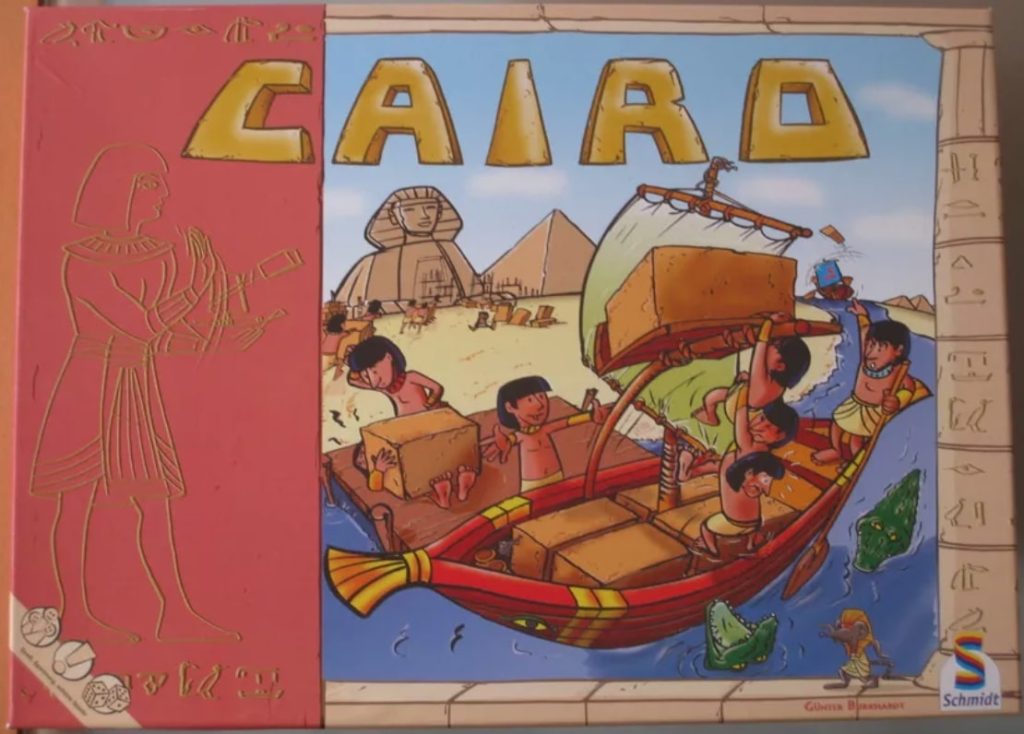
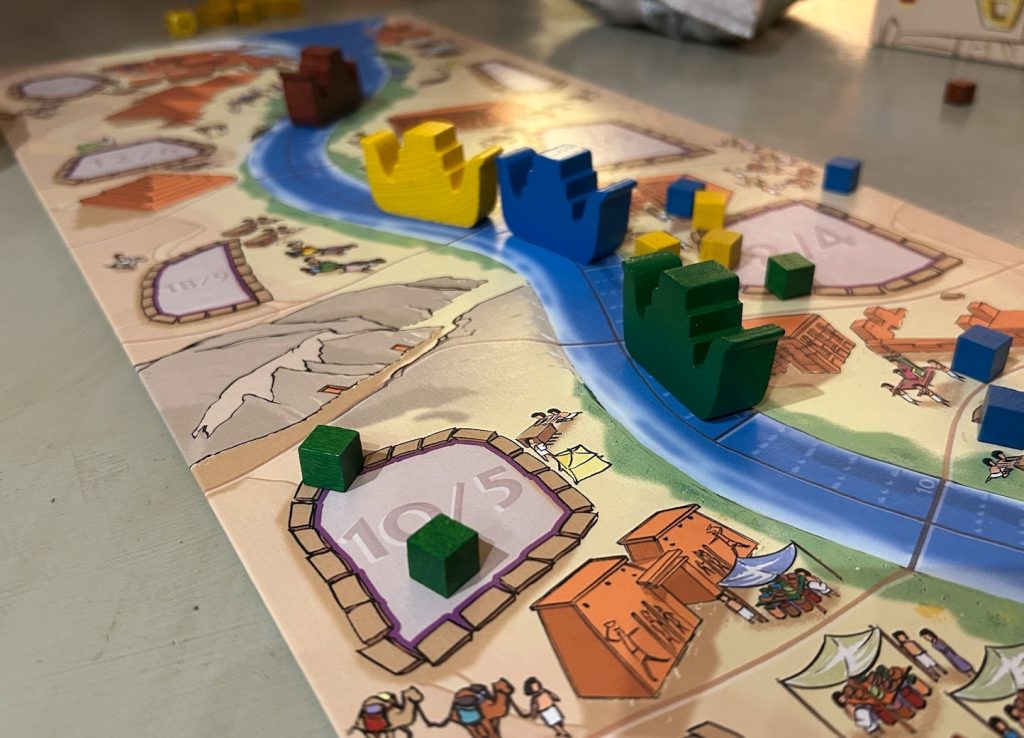
Dating back from 2002, copies of Cairo still pop up online and for a deceptively silly party game – one where your flick cubes around with various fingers and thumbs – it’s a worthy diversion.
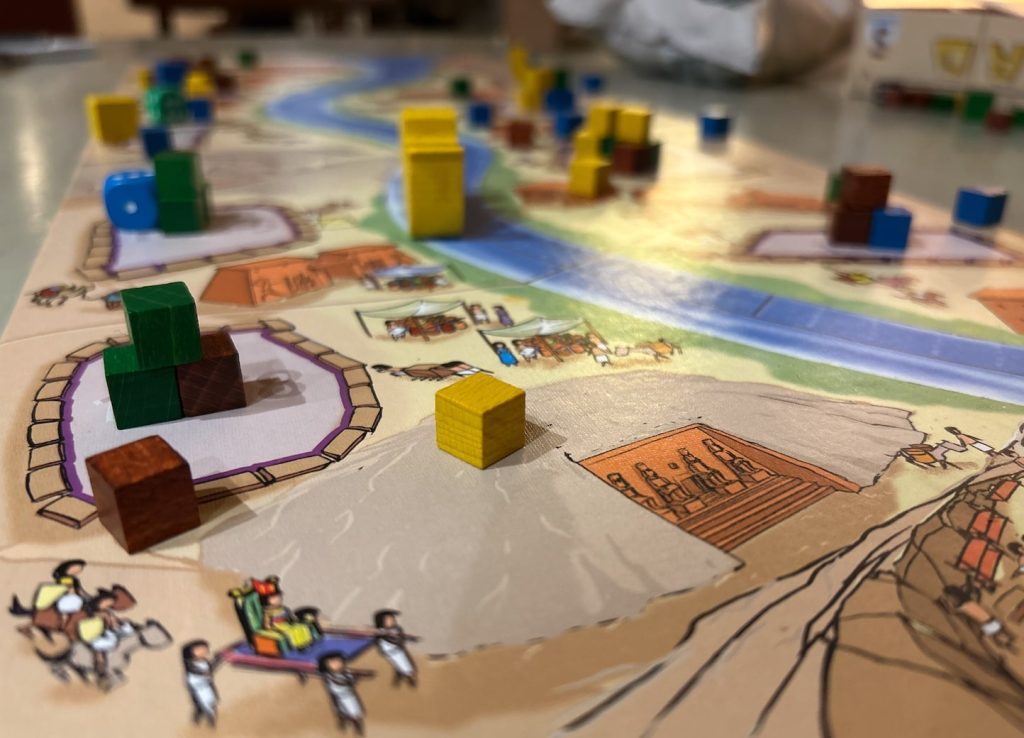
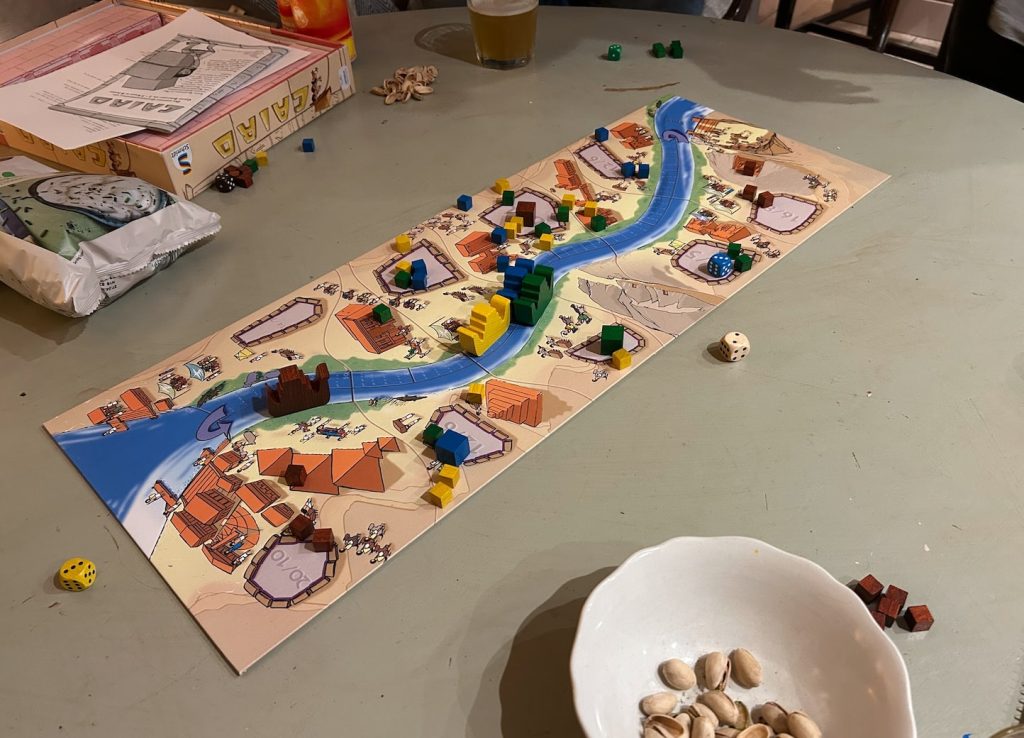
The board is split into sections through which the Nile River runs through. Each player places their boat at the bottom of the board and takes pieces of their own colour: a bunch of small cubes, one big cube, and a single die. The theme is that we are building pyramids, but as builders we are both lazy and haphazard and our methodology is hurling the required stones from our boats towards the building sites: get them there, and we’ll score points… as long as nobody knocks them out again.
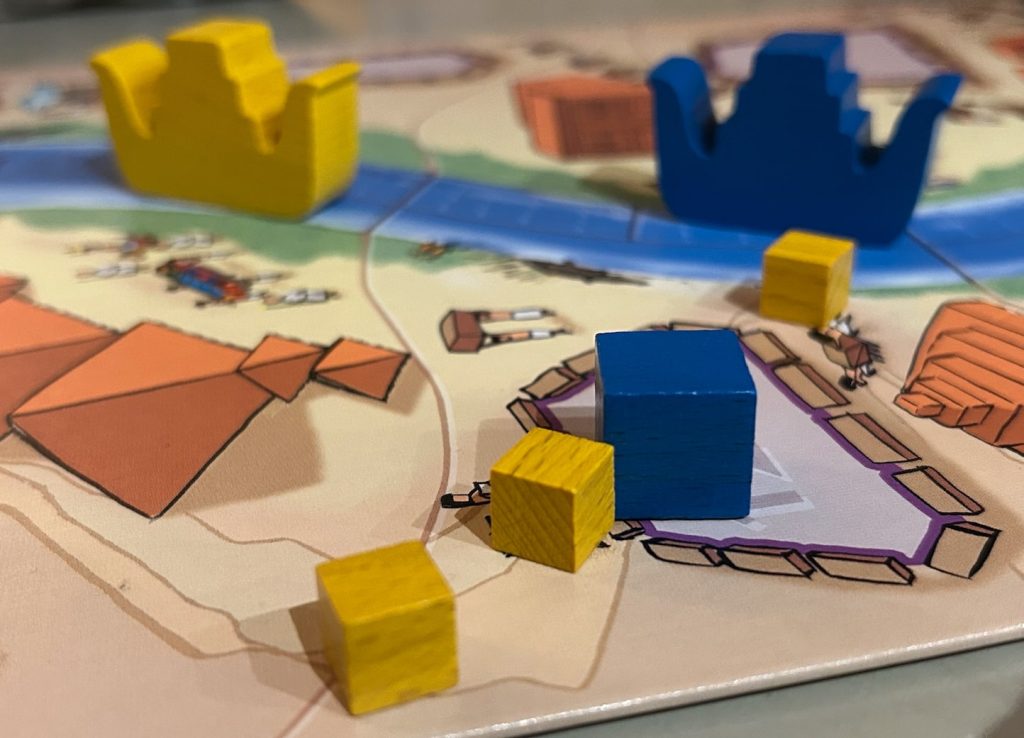
On your turn, you roll a die and move your boat that many spaces, ignoring any occupied by other boats in the way. Once your boat stops moving you choose what you’ll flick from the top of your boat towards a building site – any building site, it doesn’t have to be the one your boat is closest to – choosing from your large cube, your die, or three small cubes. The goal, as stated above, is to land them in the building site, and the significant catch here is that the dice roll for movement also decides which finger you use to flick with: 1 is the thumb, 2 is the index and so on down to 5 being your pinky (-a 6 lets you use any finger). As well as flicking your own stuff in, you can also use this opportunity to knock others out, or potentially form pyramids: if your cube lands in a building site and it’s the third, fifth or sixth, you can pause your turn and build a pyramid there out of all the cubes – which will come in handy for scoring (see below).
Your boat can also gather pieces – if you stop in a section of the board where you have cubes or your dice not sitting in a building site, you can pick them up again, which means you get to flick them again (there’s a lot of missing in this game!). As soon as all but one player runs out of things to flick, that player gets one last turn and then the game is over and you score each building site.
The sites reward points for first and second places, and this is worked out by how many cubes you have present. By default, the player with the most cubes scores the first place, and the player with the second-most scores the second place. But a large cube is worth 3 small cubes, and a die is worth whatever side if showing face-up. Additionally, any pyramids still standing will score the height of the cubes in it: each cube at the bottom is still worth one, but the next level are worth two and the third level are worth three and so on. So pyramids can be good – but they also make an easy target to knock down!
Sam says
Cairo’s vibe is really one of organised chaos, and the results can sometimes come down to what happens on the very last flick – you can be subject to bad luck, bad rolls, and targeted by the other players – especially if you’re ahead. So for a lot of people it might feel, not unreasonably, a bit too kitchen-sink. But we enjoy it for what it is – usually closer to 30mins than 60, and just giving everyone around the table opportunity to, among regular lamenting of their terrible flicking skills, once in a while feel the triumph of an accurate boulder-delivery service in ancient Egypt.
-

Take That!
You can find your delicately-flicked and accurately-landed cubes bludgeoned off the board
-

Fidget Factor!
Pretty minimal. When it's not your turn you can watch others imploding
-

Brain Burn!
The heat in Cairo emanates from the party silliness rather than anything else. You're just trying to be dominant in as many building sites as possible (although note some of them score more than others)
-

Again Again!
Repeat visits here rely on the vagaries and wildly-variable flicking results. It's not elegant, but it's not trying to be


