
Canvas
Designed by: Andrew Nerger,Jeff Chin
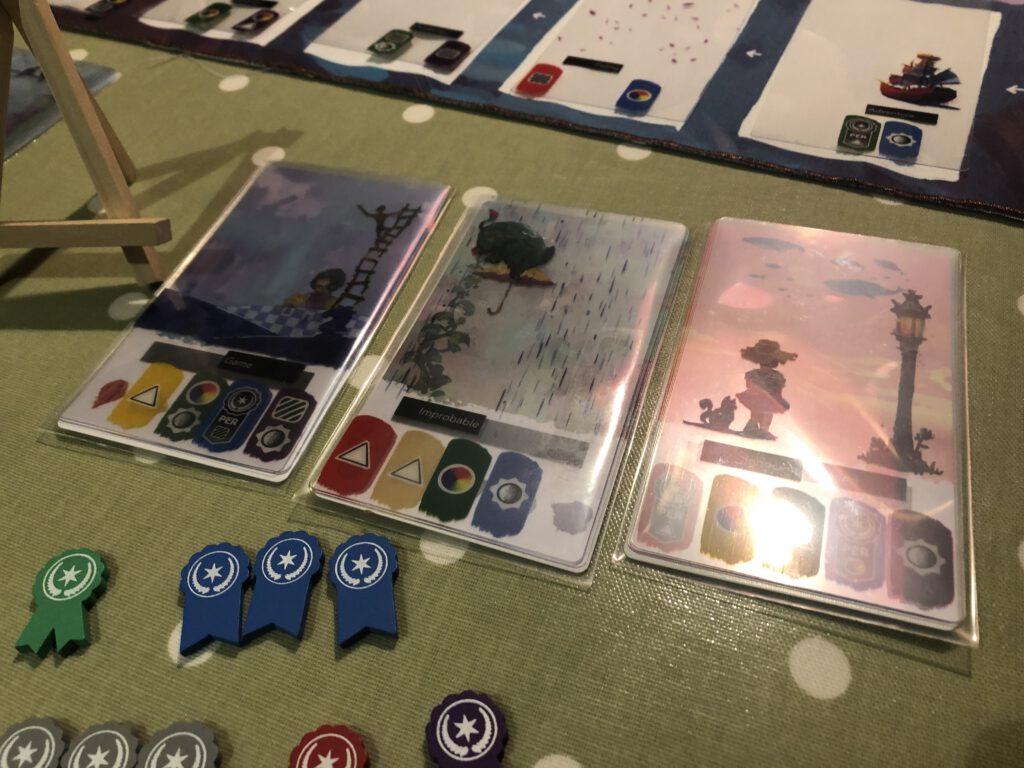
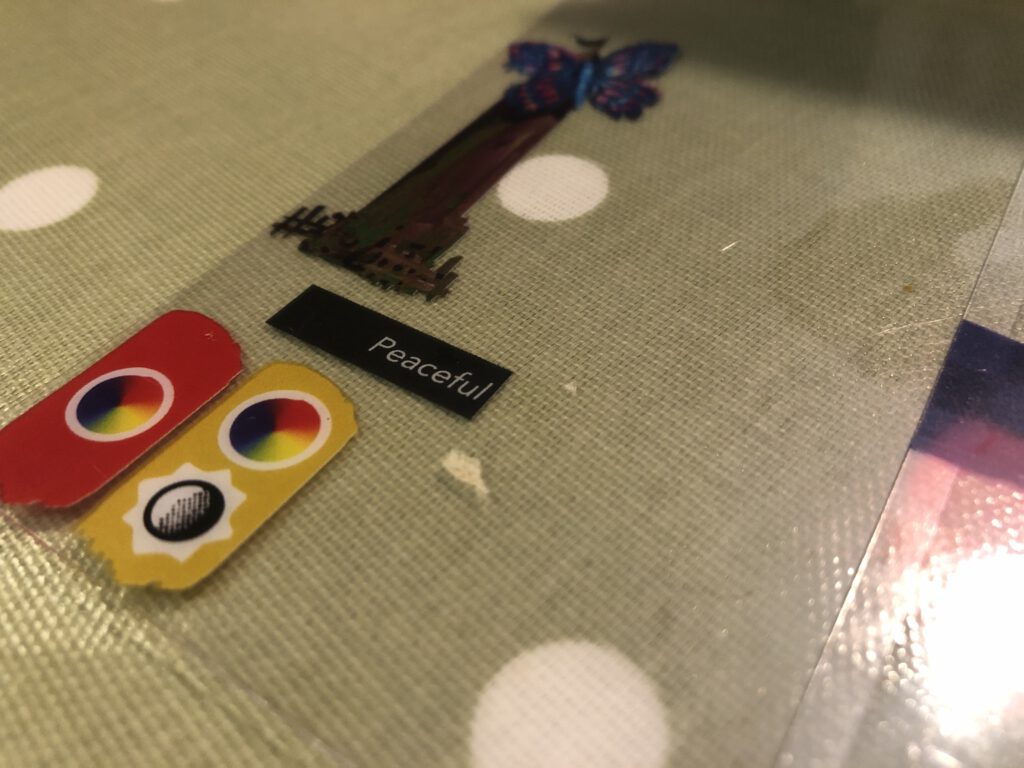
In Canvas players are painters competing to win an art competition by submitting the best painting. How this is achieved uses a mechanism of overlapping cards to create a unique image.
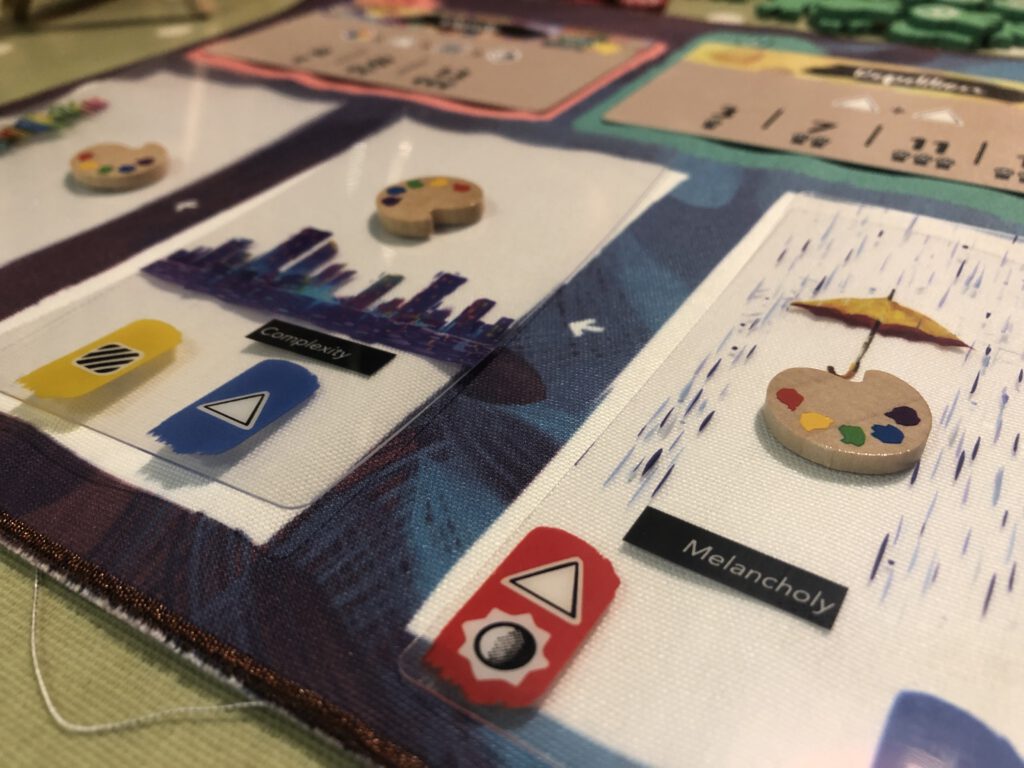
The board is a type of canvas itself, rolled out to create a place for both Scoring cards, which define your success (or lack of), and a display of available Painting cards, which are translucent plastic with painted elements on them. Each player begins the game with three background cards in plastic sleeves and four palettes, which are a type of currency: on your turn, you can take the left-most card on the display, or pay a palette to every card you skip past (going left to right) to take a different one. If you choose a card with palettes on, you get the palettes too.
Instead of taking a card, however, you can combine three of your cards into a painting: sliding them into one of the sleeves your background cards occupy and a presenting it to the other players with as much dramatic flourish and intellectual arty justification as you’d like to summon. Ultimately, the image isn’t important however, but the visible symbols at the bottom of it.
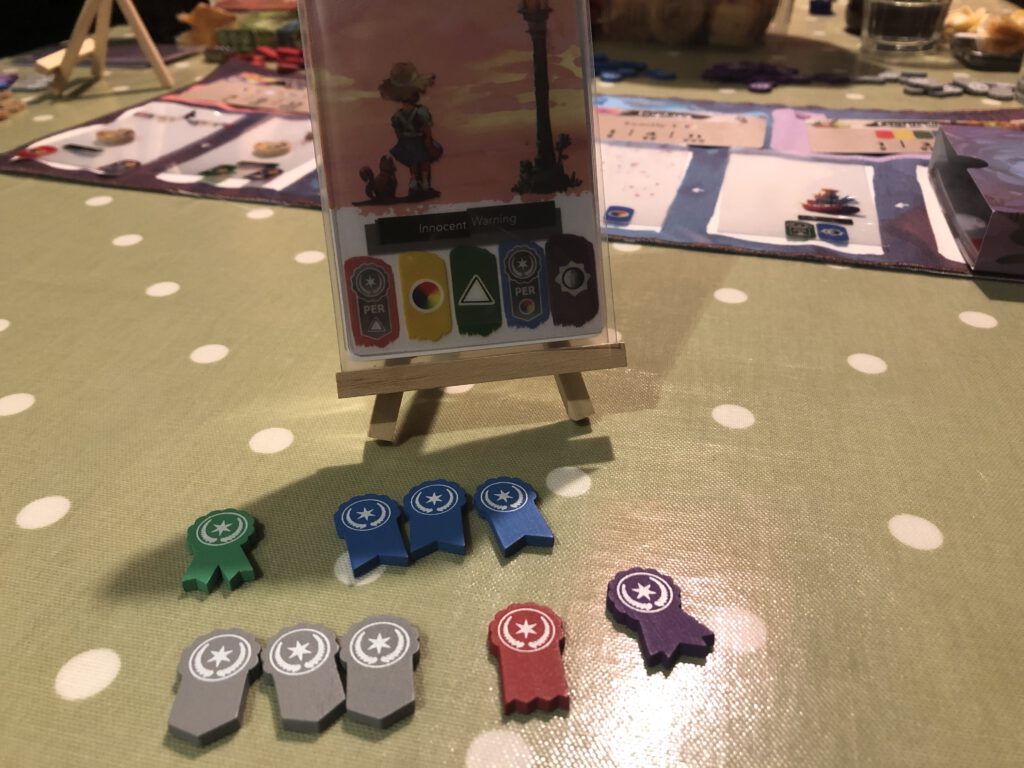
The objective cards for each game – there are several, although we’ve only played with the simplest starter-set – reward points for the symbols present on your painting. It might be having all five colours (also visible on the palettes) or two of a certain symbol, or a mix of symbols, and although it’s easy enough to score for one objective, ideally you want your painting to hit at least two, and four is certainly possible if you’ve gathered the right painting cards (note: you can only have a maximum of five painting cards at any one time, so may be obliged to paint when you’re not really feeling it). Whenever they match the scoring criteria, you are rewarded with a rosette, and at the end of the game score points for the number of rosettes you have in the various colours: one of a colour is generally a single point, but three is more rewarding.
The game continues until all players have painted three paintings, at which point scores are tallied. Note that additional (grey) rosettes can be collected by having certain symbols present in your painting along with the rosette symbol – they don’t score a huge amount but could be the difference between victory and defeat. Oh, and we left out the skulls! The skulls appear on the dice. If you roll three or more skulls, you re-roll (the same rule applies to the wild clovers, which are more helpful) But one or two skulls give you one or two damage. There’s a way to mitigate this (level up your cleric!) but in the early game, skulls are bad. try not to roll them.
Sam says
Ten years ago the environmental footprint of a game wouldn’t have occurred to me, but that was ten years ago. Now I’m more conscious of consumption and sustainability, so a box teeming with plastic feels like, whilst not an instant veto, something that really needs to justify itself in terms of the experience it offers in return. And I’m afraid to say as an experience Canvas was underwhelming: it’s a nice moment when players present their paintings and perhaps wax lyrical about them if they’re so inclined. But the pictures are otherwise irrelevant to the game itself, which uses the card selection system seen in numerous other games (eg Century, Firenze, Through the Ages) and marries it up to an essentially solitary activity of collecting symbols an attempt to optimise your own little puzzle. The overlapping objectives save it from being completely vanilla, as they give you something to think about in combining these divergent goals into one, but it doesn’t do much else and the images, especially after the first couple of plays, feel like a gimmick.
-

Take That!
Very little - the worst that can happen is someone else takes a card you wanted.
-

Fidget Factor!
The game is pretty breezy, and players can use downtime between turns to figure out the best combinations and what they might need next
-

Brain Burn!
Reasonably low - the goal is simply to collect a good combination of symbols. But be aware it's not just the symbols you collect but also the way you overlay your painting cards: there's an extra level of puzzling here.
-

Again Again!
Numerous painting cards and a variety of objective cards guarantee enough randomness to hopefully satisfy wanna-be painters


