
Citrus
Designed by: Jeffrey D. Allers
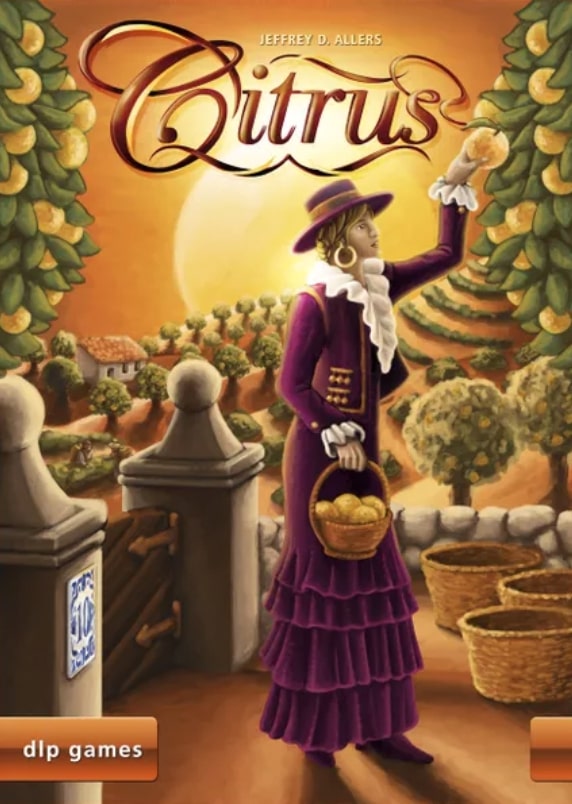
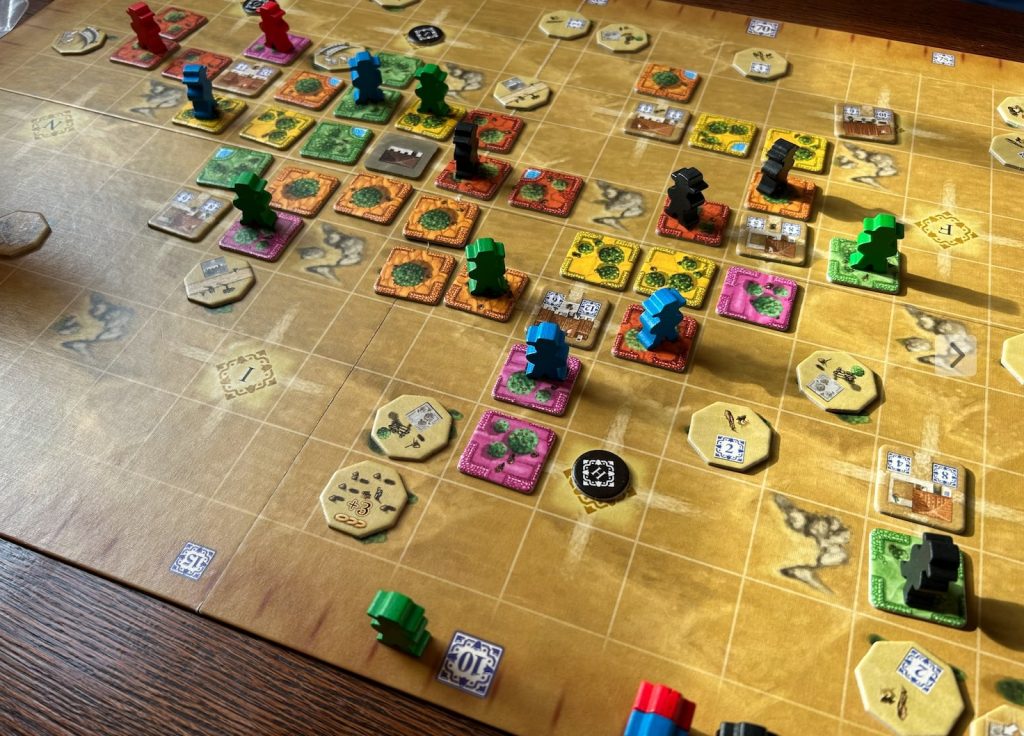
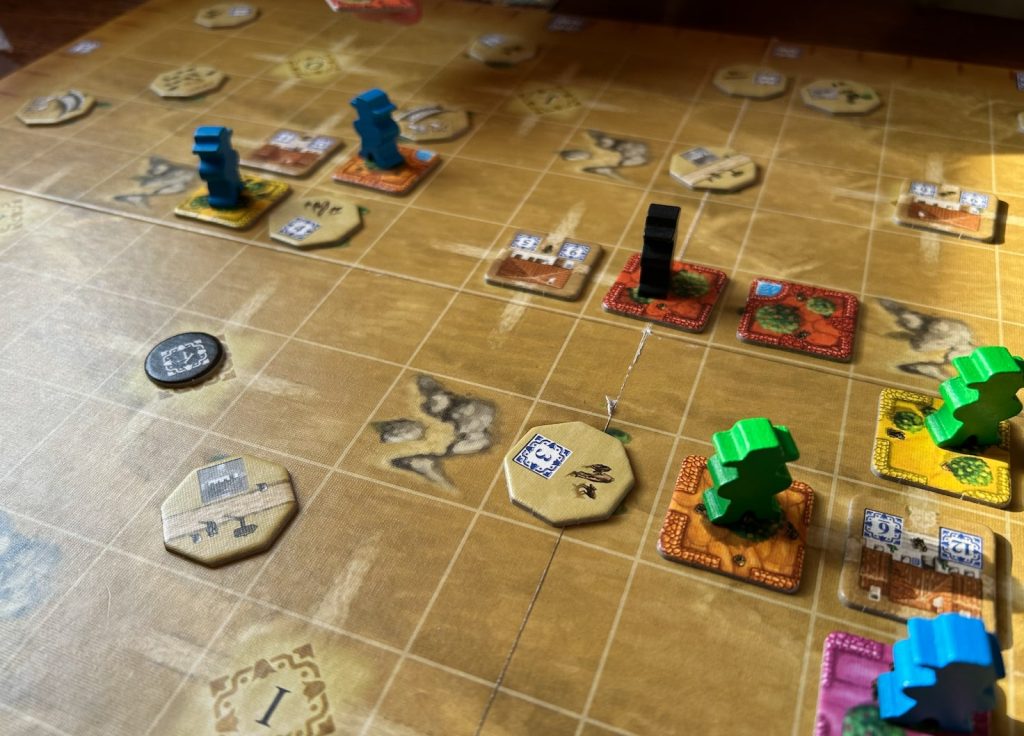
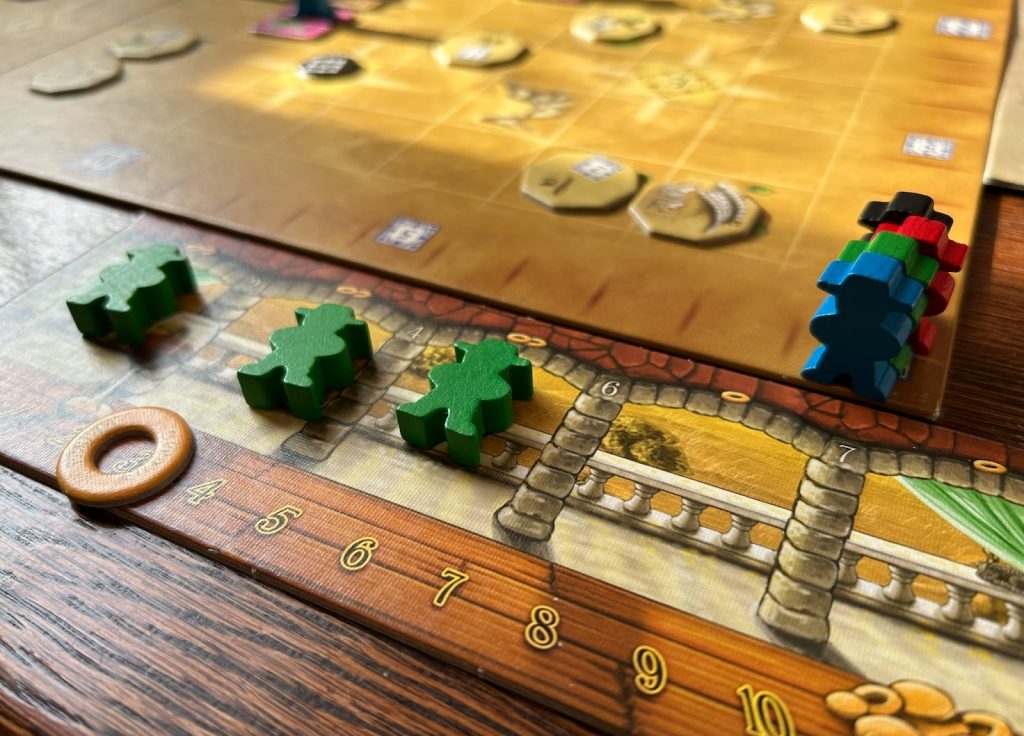
In Citrus, we are farmers growing oranges, lemons, limes, blood oranges and grapefruit. But unlike most farms, our land is shared, and who grows what fruit where is entirely up for grabs. The rulebook does offer a simpler introductory version, but we’ll describe the full game here.
The board is pretty much empty at the start of the game, save for some finca buildings from where our plantations will begin, and some bonus Landscape tiles, which we’ll come to later. A separate board – the Plantation market – is populated with plantation tiles (representing the various fruits) drawn randomly from a bag, and players have a small personal board that harbours your unplaced workers and tracks your cash reserves.
Each turn, you’ll either build or harvest. Building is a matter of buying plantation tiles, putting them on the board and placing workers on them. You must purchase all tiles from a single row in the plantation market (-the smallest row is two tiles), and then add them to the main board: either starting from one side of the fincas and adding a worker, or expanding an existing plantation where you already have a worker: workers can look after a swathe of connected plantation tiles of the same type. Note that each finca can’t have the same type of fruit connected to it more than once: if you’re growing limes on one side, I can’t begin a lime plantation on the other. We also can’t connect rival plantations of the same fruit type together, or build across the rocks printed on the game board.
If you don’t build – either because you’re out of cash or workers, or don’t want to – you can harvest instead. This is a matter of withdrawing at least one worker back to your player board, which will score a point for each tile (and each well printed on a tile) that worker was controlling. Additionally, you’ll gain some cash from the bank, replenishing your funds.
As the game proceeds, the fincas will slowly get surrounded by fruit tiles and the moment they are completely surrounded, players count up every adjacent tile they control – and every connected tile to the adjacent tiles! For example your lemon plantation of spreads for 6 tiles, and all of those count towards a majority scoring: the players with the first and second-most tiles connected like this pick up points, and at the end of the game – when the tiles run out – all remaining unsurrounded fincas will score a smaller amount for the most-connected player.
That’s pretty much it, except for the Landscape tiles that are dotted across the board. If you build onto one of these spots, you pick up the tile and can either use it during play – five different kinds offer some kind of one-off boost – or keep them unused for extra points at the end of the game.
Sam says
It looks beiger than a faded 1970’s corduroy suit, but as you play it Citrus fills up with literal and metaphorical colour. It demands strategy because you don’t want to find your spatial opportunities blocked out. It demands tactics because the board state and what tiles are available constantly changes. And it demands timing: managing a very tight economy, where having to remove workers from the board before you want to can cost you big points. Despite those competing aspects however Citrus keeps the gameplay pretty speedy, and generally plays in about an hour or less. It’s a little abstract, sure – I don’t think real plantations work quite this way – but that shared space on the board keeps things spicily interactive, and even late-game there are opportunities to be spotted and exploited. In these days of colossal boxes, deluxified components and intricate puzzles, sometimes a classic trope of gaming is forgotten: a shared sense of play. Citrus has it in spades.
-

Take That!
Present, but not overwhelming. Whilst the vibe isn't overtly combative, players definitely need to get in each other's way.
-

Fidget Factor!
Low to moderate (see Brain Burn below)
-

Brain Burn!
The game does a good job of sidestepping overwhelm by keeping available tiles, workers and money pretty frugal. As a result, you're rarely working with a huge array of options.
-

Again Again!
Whilst Citrus doesn't shower you in variability in the set-up, there is still some randomness there. But the key thing for each play is how player decisions inform everyone's thinking.


