
Cluedo
Designed by: Anthony E. Pratt
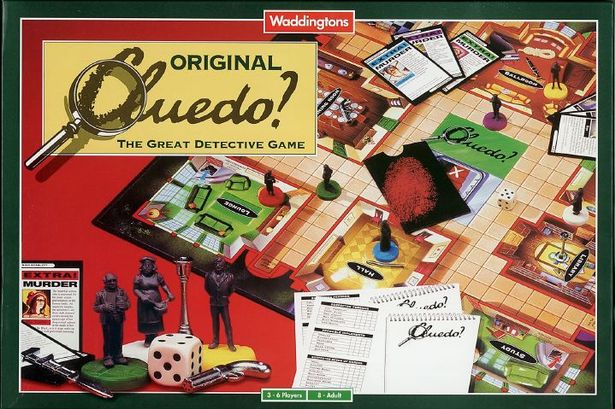
This fits in to the same bracket as Monopoly – a ‘classic’ that many people will have played at some point in their lives, but one that has been improved upon by a swathe of more recent games over the last thirty or so years. In a nutshell, players attempt to solve a murder: the who, where and with what. Was it Colonel Mustard in the Library, with a Candlestick? The deduction part is fun, but players are almost guaranteed to be frustrated by the movement of their detectives on the board, who are subject to the whim of dice rolls. That part is less fun, and seems to take up a significant part of the game… As with a few other High Street staples (eg Monopoly) Cluedo’s inclusion here is really to help suggest other games that use deduction and sleuthing to far more enjoyable end.
Sam says
The deduction aspect of Cluedo is fun. However, it’s hobbled by the dice-rolling element of trying to get around the board – the first person to figure out Colonel Mustard committed the murder with a candlestick in the conservatory can spend the rest of the game struggling to get across the board, rolling ones and twos and ending up a mere spectator. I think Mystery of the Abbey is neat updating that dispenses with dice altogether, although admittedly it’s a more complex game, and Awkward Guests has a lot more interaction between players. For two players, Mr Jack is a good option.
-

Take That!
Largely from the frustration of the dice.
-

Fidget Factor!
Not too much.
-

Brain Burn!
This is a logic puzzle, and a pretty solid one. But the movement rules do get in the way of that fun.
-

Again Again!
The 'whodunnit' aspect is never solved as the combination of perpetrator, location and weapon will change from game to game. Unfortunately, what never changes is spending multiple turns plodding slowly from one room to another.


