
Cornish Smuggler
Designed by: Henry Jasper,The M.N.G. Collective
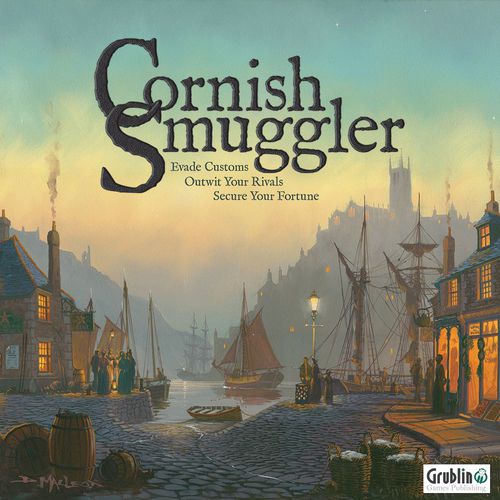
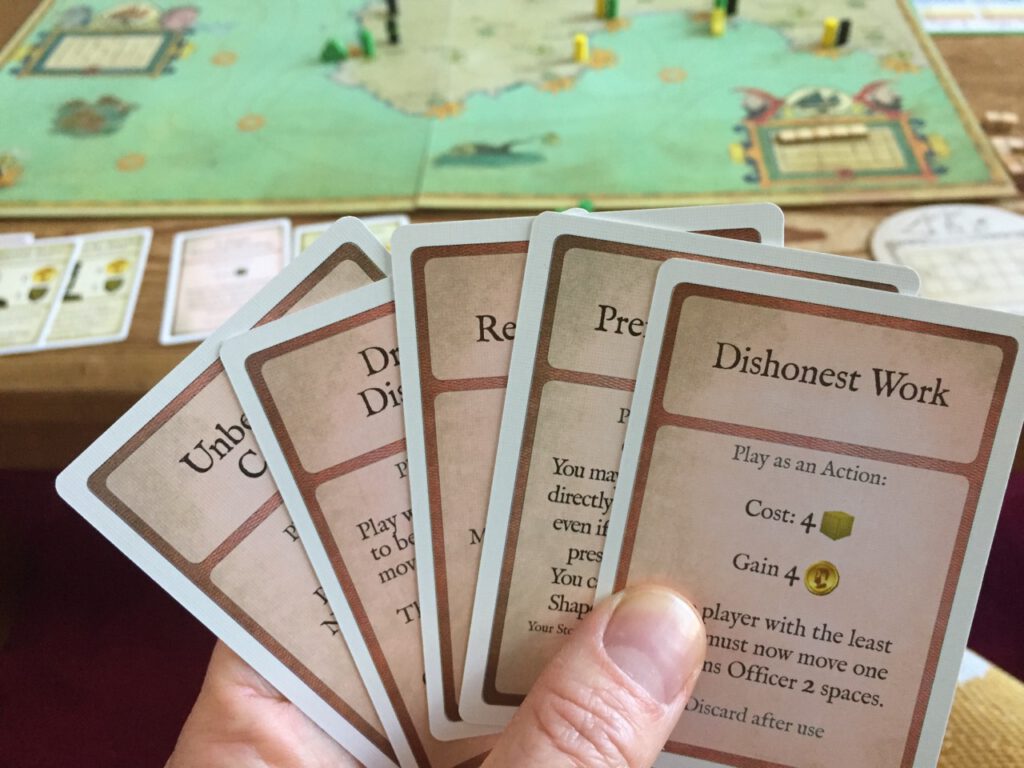
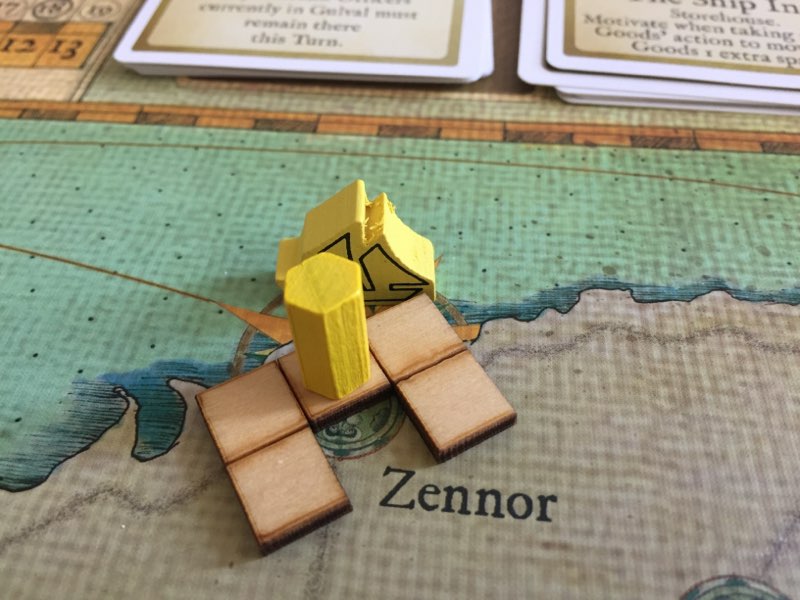
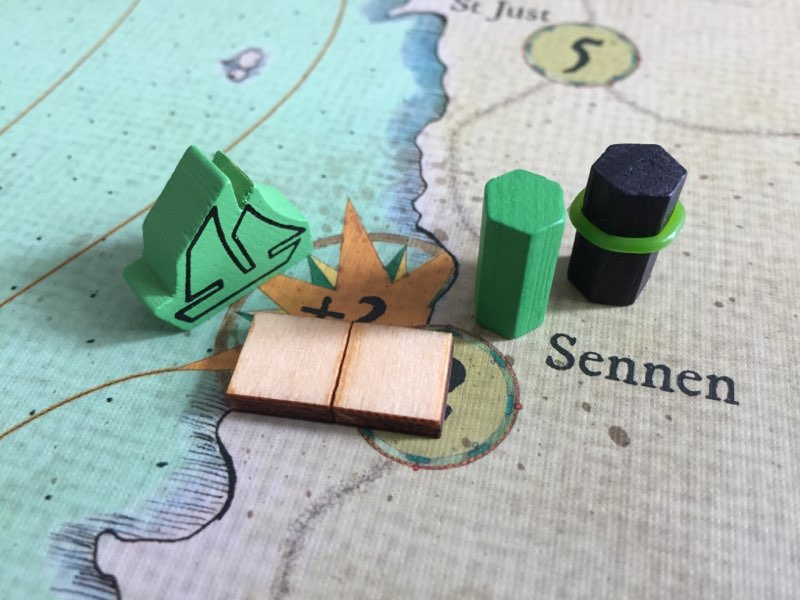
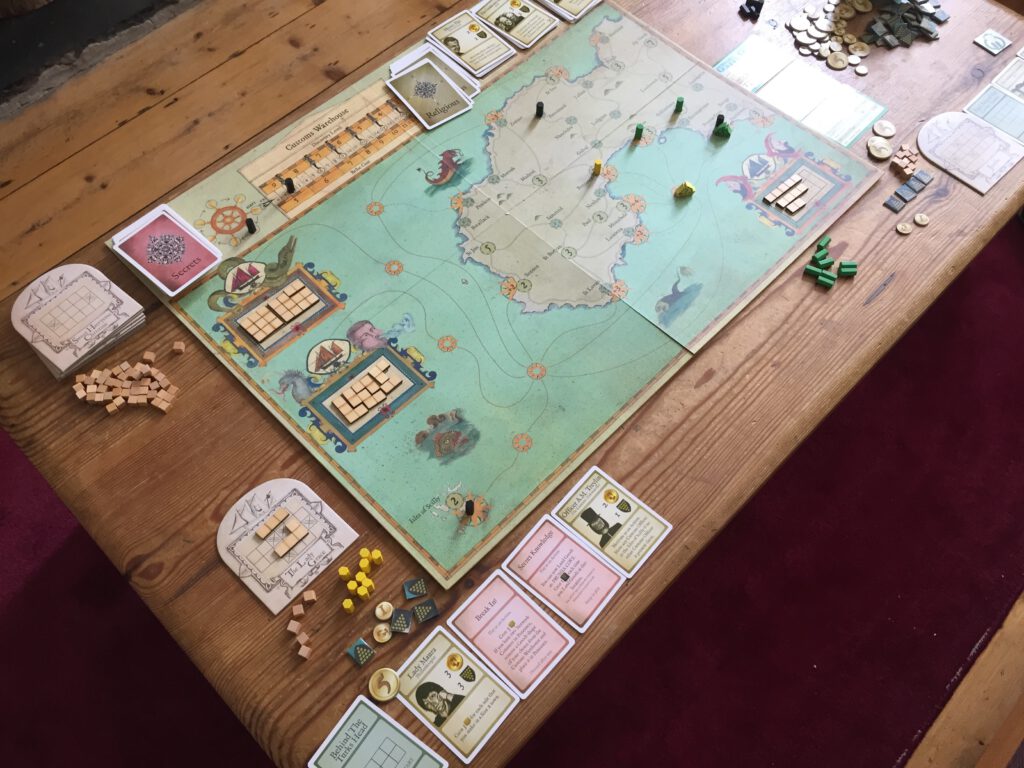
In Cornish Smuggler players are trying to establish themselves as the richest smuggler in olde Cornwall, and riches are measured in both gold and reputation.
The board shows a map of west Cornwall, dotted with nautical routes, various landing places and inland towns. Your objectives are to load up your boats in the distant climes (- merchant spots on the board), land them safely and sell them in town – all the while avoiding the attention of the customs. Players begin with a little gold, a little influence, and an embryonic network that will grow over the course of the game.
Each round sees the players taking actions, which are too numerous to go into detail on here. Suffice to say, they all – or almost all – relate to the objectives above, and involve a cost in gold or influence. Players out of gold can take the honest work action to line their pockets, and players out of influence are probably going to pass. As soon as everyone has passed, a new round begins with players receiving influence equal to the number of reputation they have. More reputation can be gathered by hiring extra characters as part of your network – but this costs money. And throughout the game the menacing customs officers are gathering strength – as a marker (triggered by your nefarious activities) moves up the customs track, they increase their numbers on the board: spotting your activities easier, and getting harder to bribe!
When the customs track marker reaches the end of the track (or when the last goods piece is purchased) the end of the game is triggered, and players will finish that turn before tallying up the scores. Most gold and reputation combined is the winner.
Sam says
The way the customs ramp up pressure on everyone as the game proceeds is great, and with all the character cards taking the names of genuine folk from Cornish history one can feel the love that’s gone into the game. But turns can drag a bit. If all you want to do is move your ship, and you have to wait for everyone else to take a bunch of actions before you can shift it a single space, that may well tick a thematic box – sailing isn’t quick – but it’s not exactly fun.
Second are the Secret cards, which can be purchased by anyone. These feel a weak link from a design perspective; more like a tacked-on tombola than a shrewdly integrated aspect of the game. Spend two gold on a secret, and you might come up with something completely useless. Equally, you might get a card that lets you target an unsuspecting opponent, and effectively turn the whole game in your favour. In a short, frivolous game of dice-chucking that’s fine, but in a long game of tactics and strategy both of those eventualities can be unsatisfying. Ripe for a house-rule, perhaps, as I enjoyed what else was going on. Ultimately though Cornish Smuggler felt to us like a game striving to tell a story, and while that story was palpable, it was a little at odds with the design aspects rather than smoothly dovetailing in a way that made sense.
-

Take That!
Plenty. Players can pay the customs officers to apprehend (or at least approach) other players, nab unattended goods from each other, and play Secrets cards (see Sam Says)
-

Fidget Factor!
Low to moderate.
-

Brain Burn!
The basic rules aren't too heavy, but there are a lot of options to start with. Add in the character and secret cards and the game is not exactly breezy.
-

Again Again!
But there's plenty of variation here, and each game tells its own story.


