
Creature Caravan
Designed by: Ryan Laukat
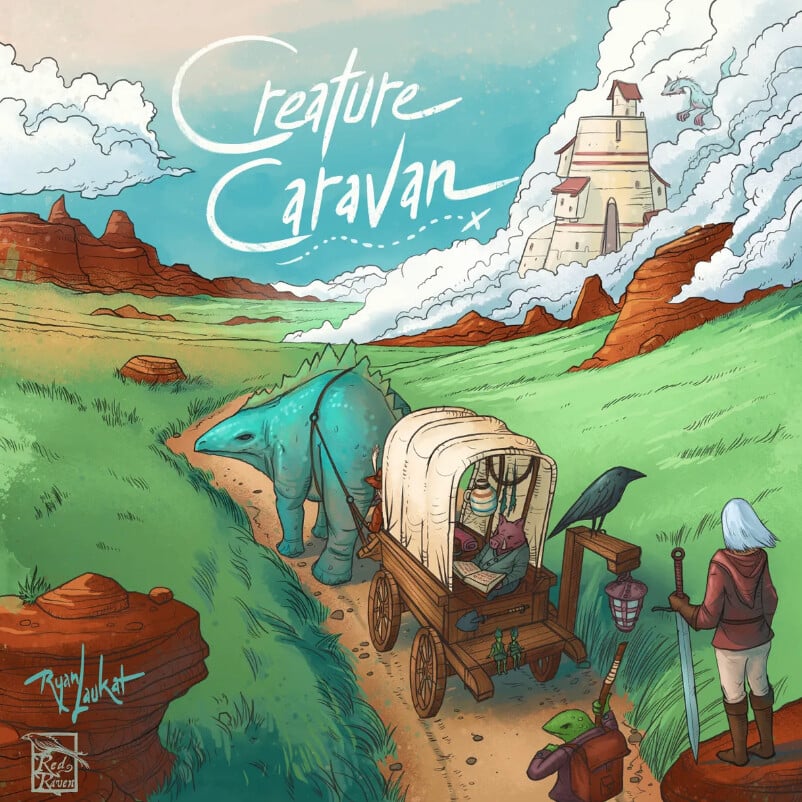
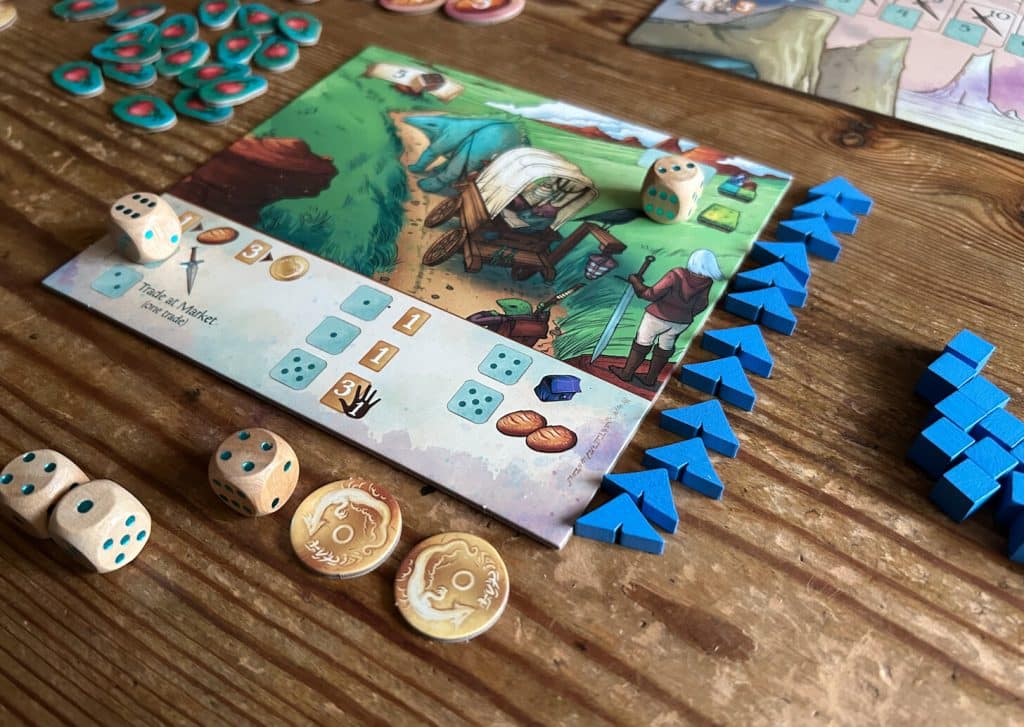
In Creature Caravan, players move their caravan across the board towards the mythical city Eastrey, collecting new members as you go. Just beware of zombies.
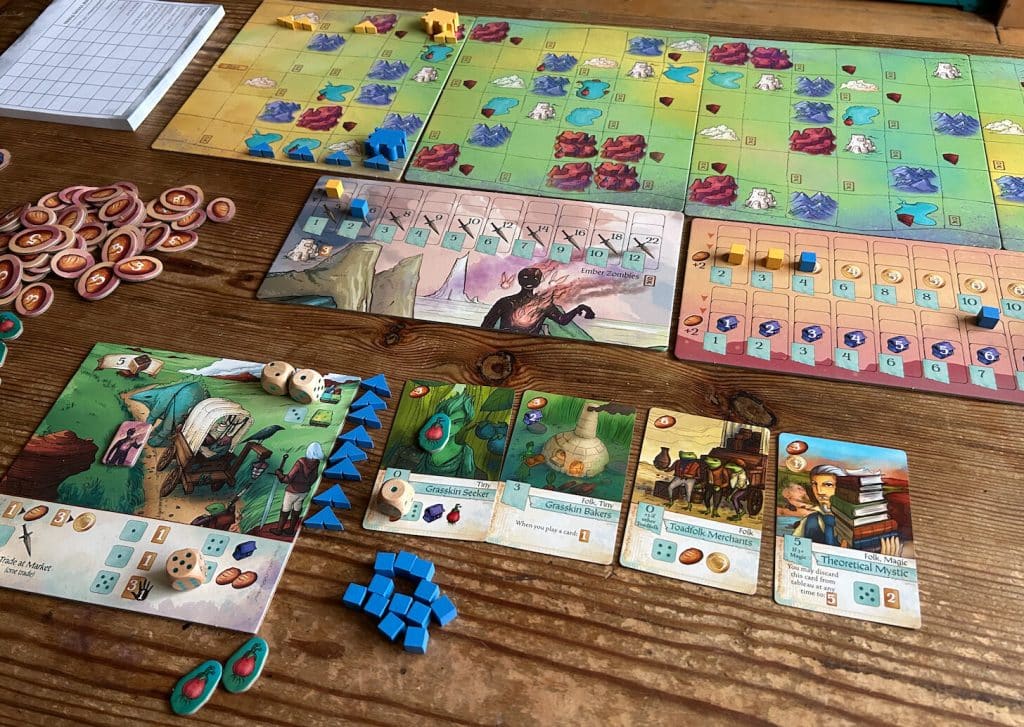
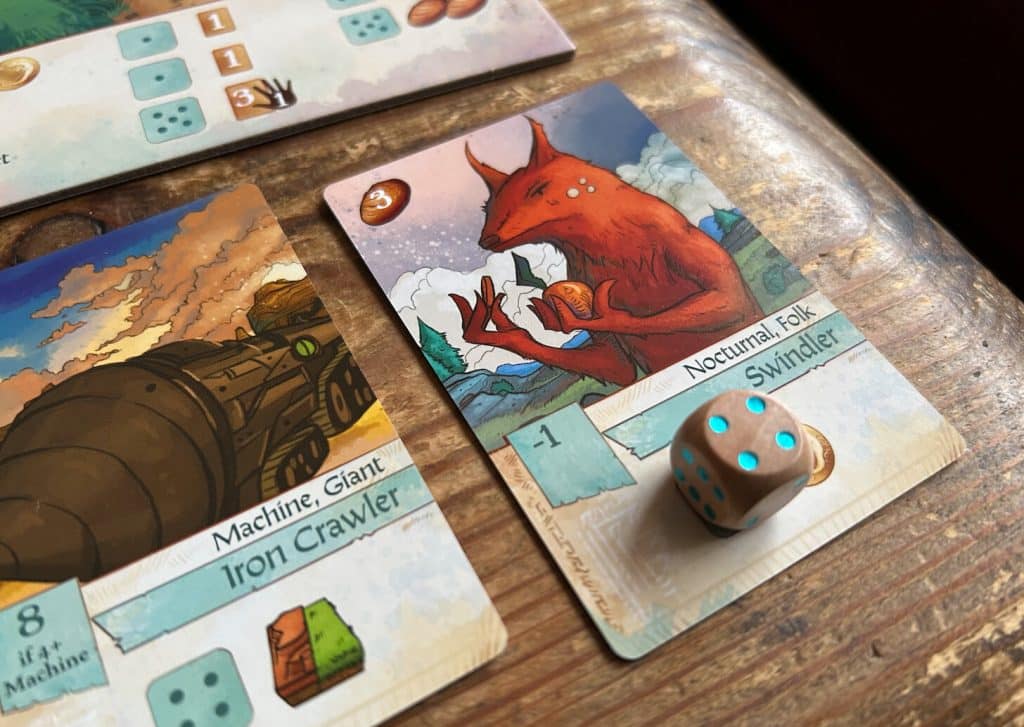
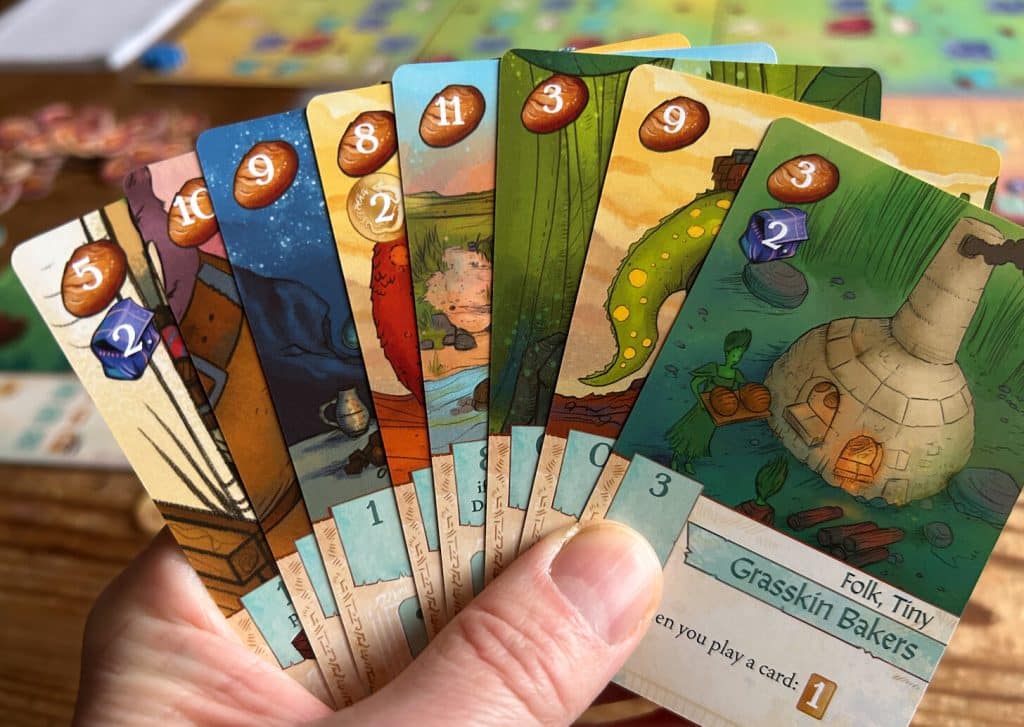
The game takes place over 12 rounds and in each round, players will take turns simultaneously, rolling your five dice and choosing how to assign them. On your player board are some simple actions: you can spend dice to move your caravan, or get bread or bags – the use of which we’ll come to – or discard them to gather coins or cards. The cards represent potential new members of your caravan: playing them from your hand to the table adds them, but doing so costs you – usually in bread, as each new member arrives hungry, but sometimes in coins and bags as well. When these new members join, they also bring a benefit of some kind: an ongoing special ability, or a new spot for dice assignment. The catch here is that each die spot shows a minimum value for the dice you need to place there.
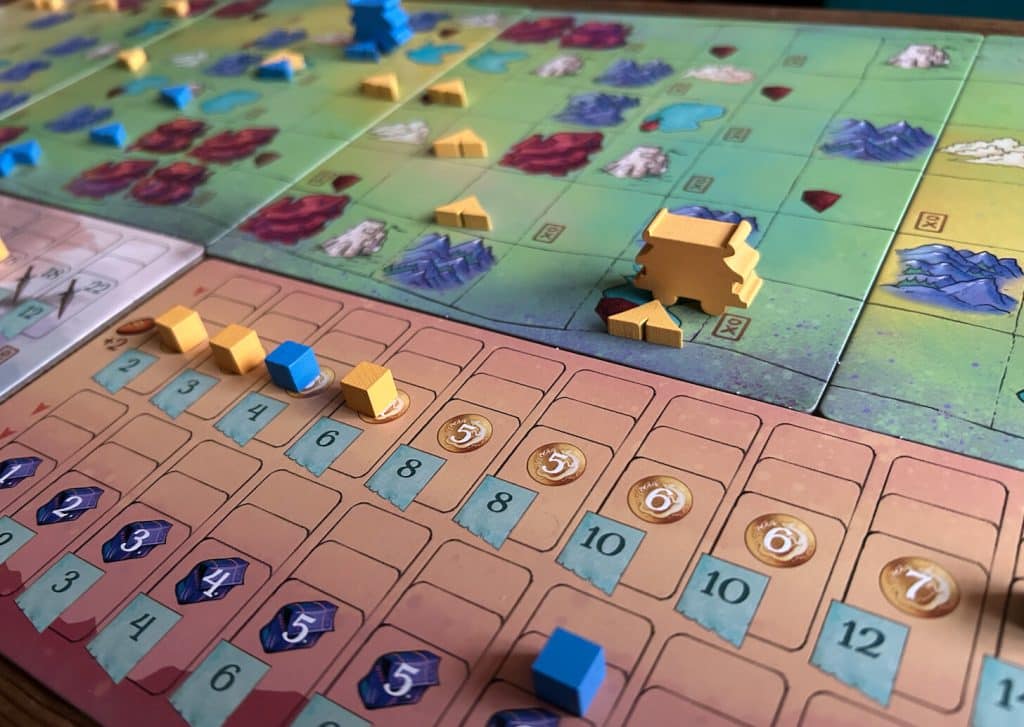
Bags and coins are also used for trade: beside the main board showing your journey is a Market board where you can trade resources (and gather points at the end of the game for having done so). Note that spaces on this board are limited however – and the same goes for the zombie board…
Some locations on the main board have a threat symbol: if your caravan moves into one of these spaces you now must take a Zombie from the supply: zombies are minus points at the end of the game, but you can rid yourself of them by fighting: you’ve one dice space on your player board for this, but additional cards in your caravan may give you more fighting opportunities as well. Defeated zombies are worth points! Wherever you end up at the end of your turn – even if you don’t actually move – you must place a camp of your colour on the board.
Other geographical features on the map are the harder-to-navigate canyons, lakes and mountains (needing two dice instead of one) and the Fruit and Treasure Chests – if you end your turn on a space with either of these, you take one from the supply. Fruit can be placed on a card and make the requisite minimum die value a very accessible, permanent 1. Treasure chests are a randomised reward – often just points, but you may stumble on a coin or some fruit.
After the twelfth and final round points are awarded across a variety of categories: how far you made it across the map (with a bonus for reaching Eastrey), points for defeating zombies and completing trades at the market, and how many camps you placed in distinct spots (ie three camps in the same spot would only be one point, whereas three in three different spots would be three points).
Sam says
I enjoy the sense of development from my tiny, just-me caravan travelling eastwards and escalating in power and options as time (and each turn) passes. That part of the game is really well done, and will scratch a particular itch extremely well. It’s nicely presented, accessible to teach and learn, and does give a sense of a journey, of sorts. Where the game falls down for me personally is a lack of drama: the fighting of zombies and trading at the market feel very similar to each other, a matter of having enough stuff to do it: if you don’t, don’t do it. But there’s precious little drama around the table as well: these games that allow players to take simultaneous turns can work when the experience is short and silly, but Creature Caravan can be an hour and a half and for my tastes that’s too long a time to be all taking turns that, outside of taking up space on the trade/zombie boards, have absolutely zero impact on each other. I’ve read a lot of love for Creature Caravan out there so take my opinion with a big pinch of salt, but I’d imagine it’s best as a solo game for those reasons.
-

Take That!
Almost entirely absent
-

Fidget Factor!
Minimal - everyone takes their turns at the same time
-

Brain Burn!
There's a little strategy in where you focus you energies: travel, zombie fighting, trade, or building a big caravan. The latter is certainly critical no matter what you do, as it expands and empowers your actions as the game develops.
-

Again Again!
The deck of creature cards is huge, and the board set-up is modular, meaning there's a hefty chunk of variability built in here


