
Harmonies
Designed by: Johan Benvenuto
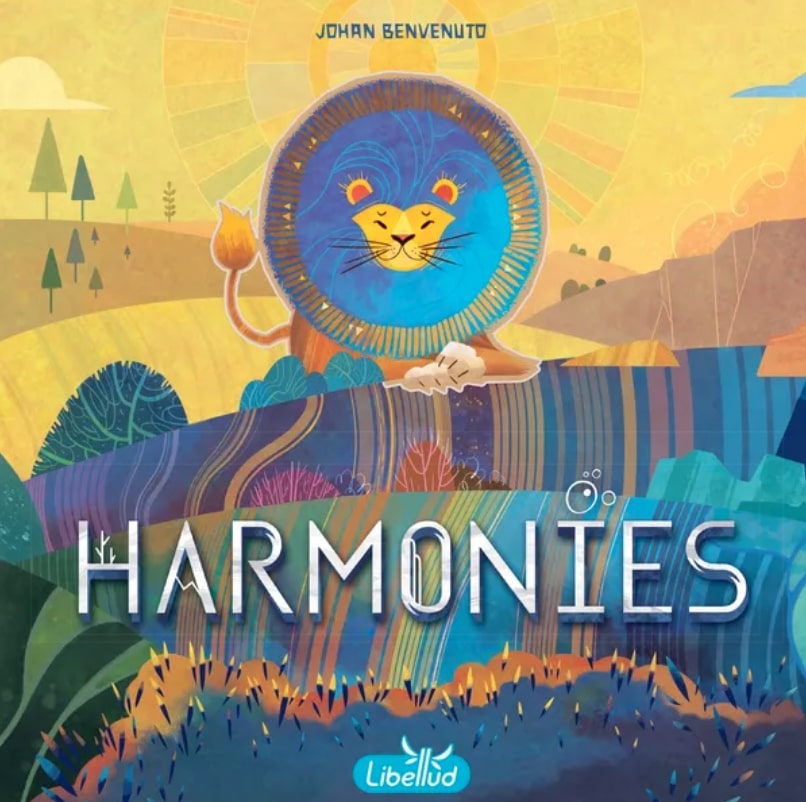
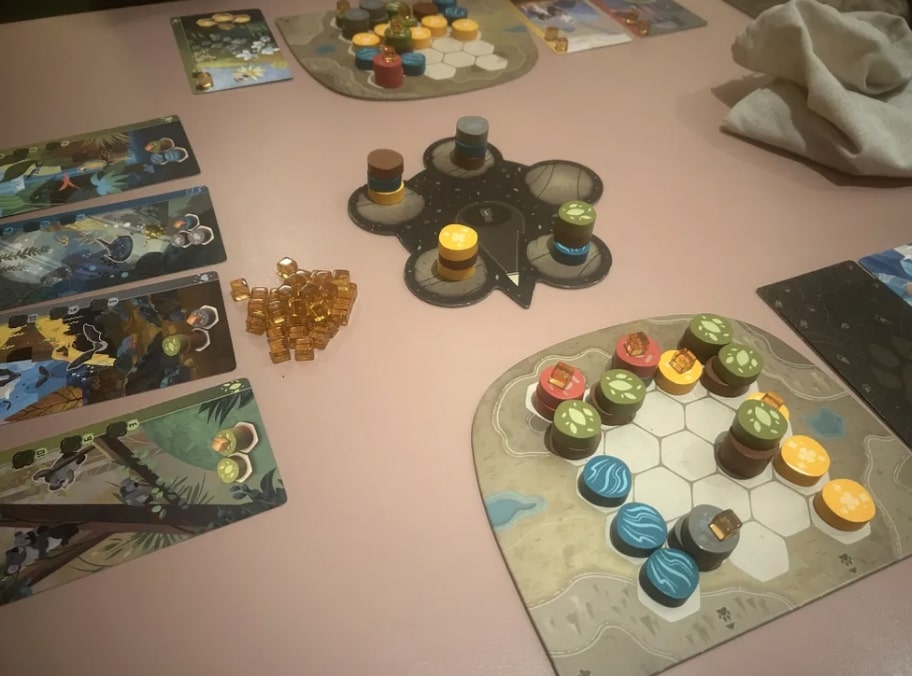
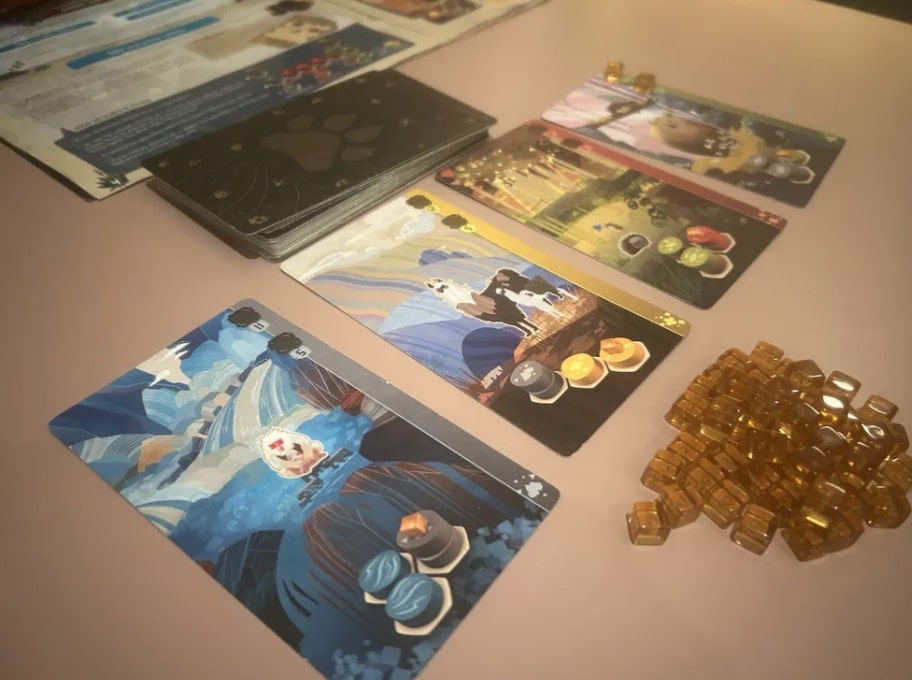
In Harmonies, players are building a habitat for animals; each round, you add three new elements to your board – but which ones are best?
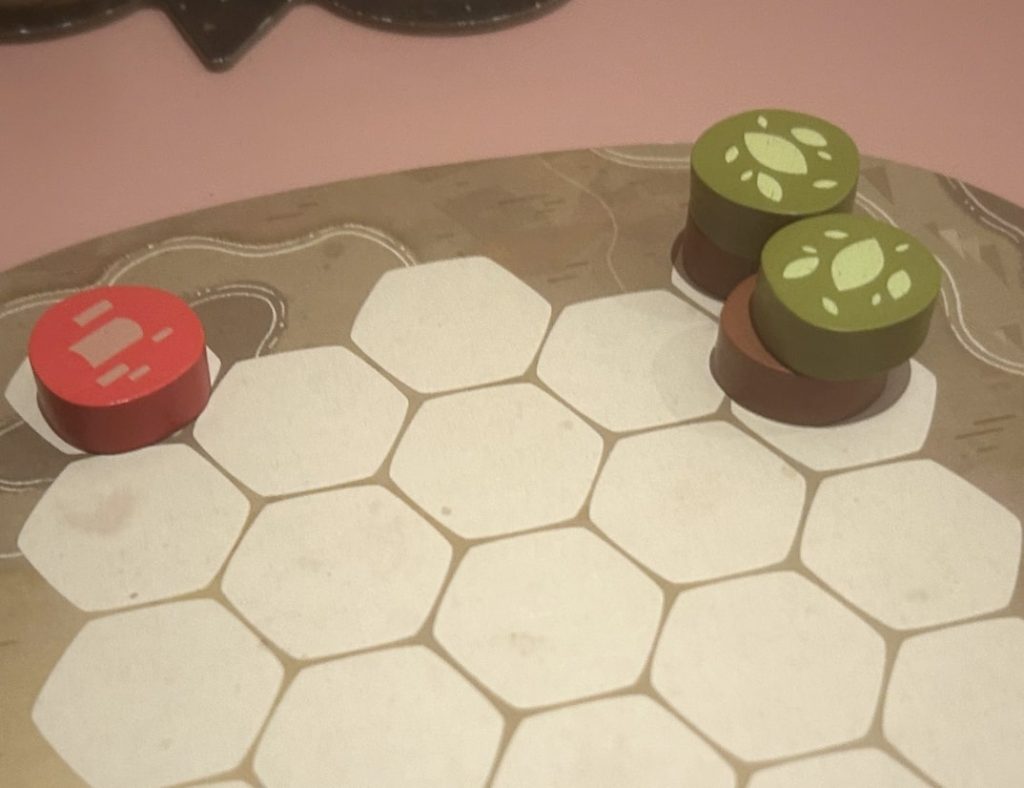
There are always five options to choose from on the central board. Your own board is your own habitat, and the elements (wooden disks of various colours) you add represent meadows, trees, mountains, water and buildings. Optionally, you can also take one of the four face-up animal cards: these are another route to scoring, as each animal will inhabit your board when the conditions – shown on the card – are met. So over various turns you always take more disks, then you may take an animal (you can have up to four of your own at any one time) and may also place a cube representing that animal onto your board. Note that the elements on your board may ‘double up’ as animal habitats: the tree needed by a bear and a frog on separate cards, for example, can be the same tree on your board.
There are two ways the game can end: either when the discs run out, or when any player has two or less empty spaces on their board. At that point the current round is played to the end – so all players get an equal number of turns – then scores are totalled. You’ll score the points shown on your animal cards for any animal cubes placed, and also each type of land terrain, which all score in different (but relatively simple) ways. Most points wins!
Sam says
Harmonies is the kind of game sometimes referred to as a ‘take and make’: we take something from a shared area, and make something on our own board. The critique of these games is that there is zero interaction: we are basically playing duplicate games around the table and comparing who did best at the end. I get that criticism – and indeed, my overall preferences are for a ‘shared space’ to game in – but nonetheless I found Harmonies a pleasant experience, especially for two. It’s thinky but not overwrought, light but not disposably so, and aesthetically speaking very pleasant to look at the finished habitats around the table. I haven’t fallen in love with the game, but I can certainly appreciate its qualities.
-

Take That!
Outside of somebody taking the discs you wanted, there is zero take-thatery.
-

Fidget Factor!
With four players there will be a little down-time, but the game feels best suited to 2 or 3 anyway.
-

Brain Burn!
Like Cascadia, it’s the overlapping points possibilities of landscape scoring and animal scoring: dovetailing them in the most symbiotic fashion is where the juice is.
-

Again Again!
The discs and animal cards are always shuffled up in a bag and a deck respectively. If you feel you’re ready for an extra challenge, the game comes with an expansion in the box.


