
Hunger Games: District 12 Strategy Game
Designed by: Andrew Parks, Bryan Kinsella, Christopher Guild
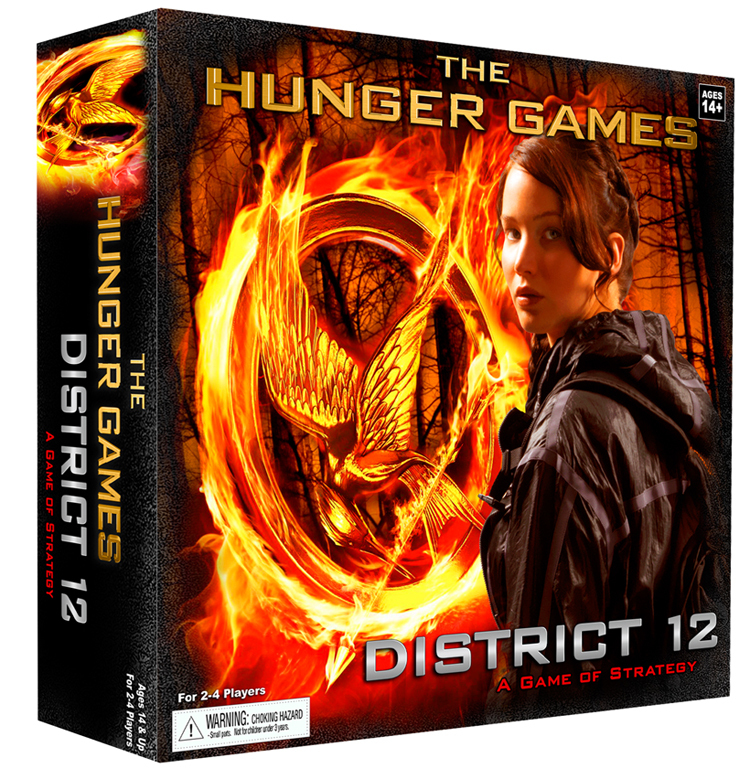
Tabletop games based on movie franchises are historically, much like their video game counterparts, largely hand-rubbing cash-ins with poor attention to detail and quality. But in recent years, the rise in popularity of strategic board games has rubbed off on even the lowly game-of-the-film sector, and a few publishers are producing excellent movie and TV tie-ins, from Game of Thrones to Homeland and Spartacus.
If you buy Hunger Games: District 12 expecting to be facing off against tributes from the other districts in a vicious, blood-thirsty battle to survive, you’ll be massively disappointed. What you have instead is a simple game of resource collection – over fourteen rounds players move around District 12 collecting or trading resource cards of food, fuel, clothing and medicine. At the end of the game, the person with the most resource points wins. In fact, at the very moment one player is chosen to be tribute and join the Hunger Games – the ‘call to adventure’ in the story – the game is over, and that player loses.
On every few turns, the Capital demands tythes in the form of the resource cards you’ve gathered, and these taxes get heavier each time. If you can’t or don’t want to pay your precious resources (these are points that will win you the game), you can instead simply add cards of your colour to the ‘Glass Ball’, the dreadful tombola from which one unlucky player will be picked to lose at the end. So the game is a simple trade-off – build up the most points, but increase your chances of being brutally removed before your winning score gets totted up.
Sam says
A simple game built around a simple premise. Like the story that inspired it, it’s pretty brutal!
-

Take That!
The moment where the unlucky loser is picked from the hat is the highlight of the game - though this could cause upset, the rest of the game is not really competitive enough to get too worried about.
-

Fidget Factor!
Each player does one thing on each round, so the fourteen rounds fly by just quickly enough to not stagnate, before the big reveal at the end.
-

Brain Burn!
Very little to trouble the brain cells here - even the make up of the Glass Ball is easy to track if you're so inclined.
-

Again Again!
It's a game with one central entertaining idea, which has an element of luck in it anyway, so it's unlikely to become a staple of family games night for years to come. That said, there's something undeniably moreish about navigating the space between points in hand vs chances to get knocked right out of the game.


