
Iliad
Designed by: Reiner Knizia
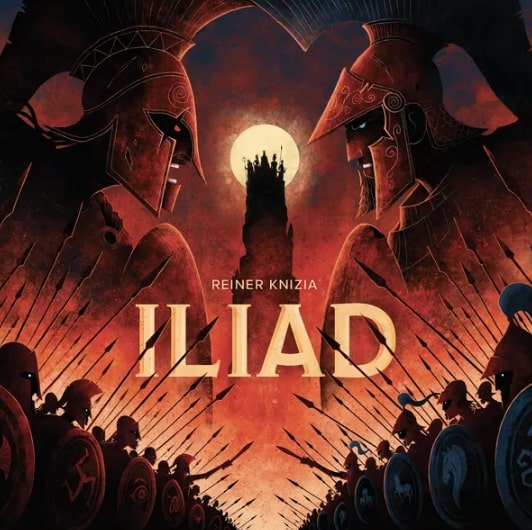
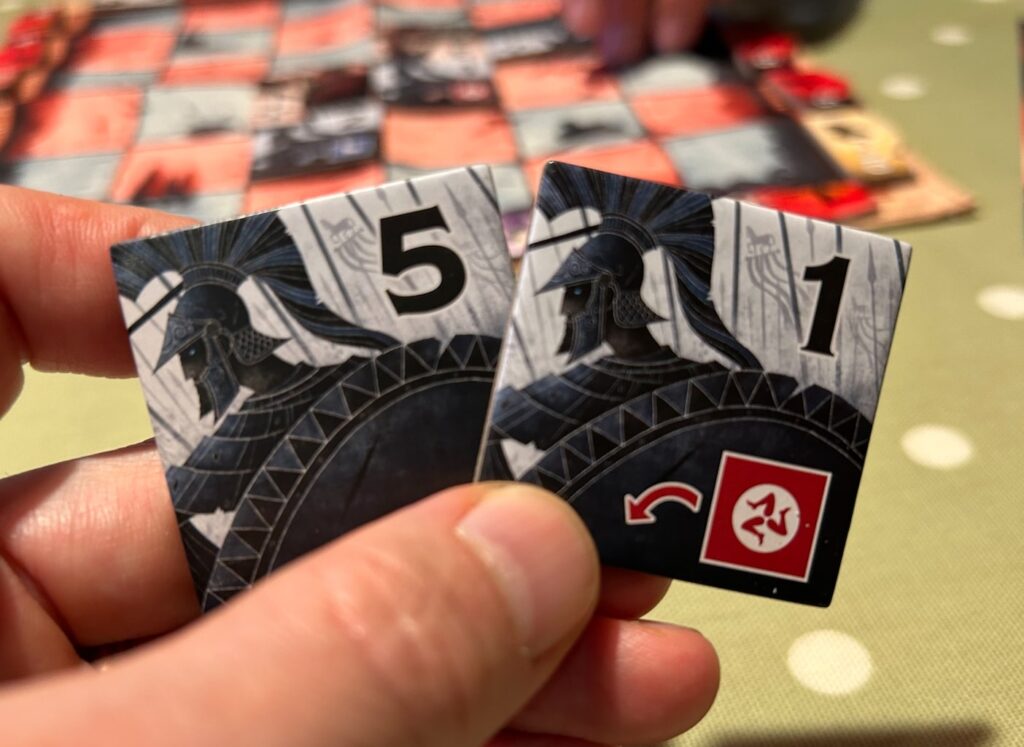
Iliad is a two-player abstract game of placing tiles and claiming points – but which points?
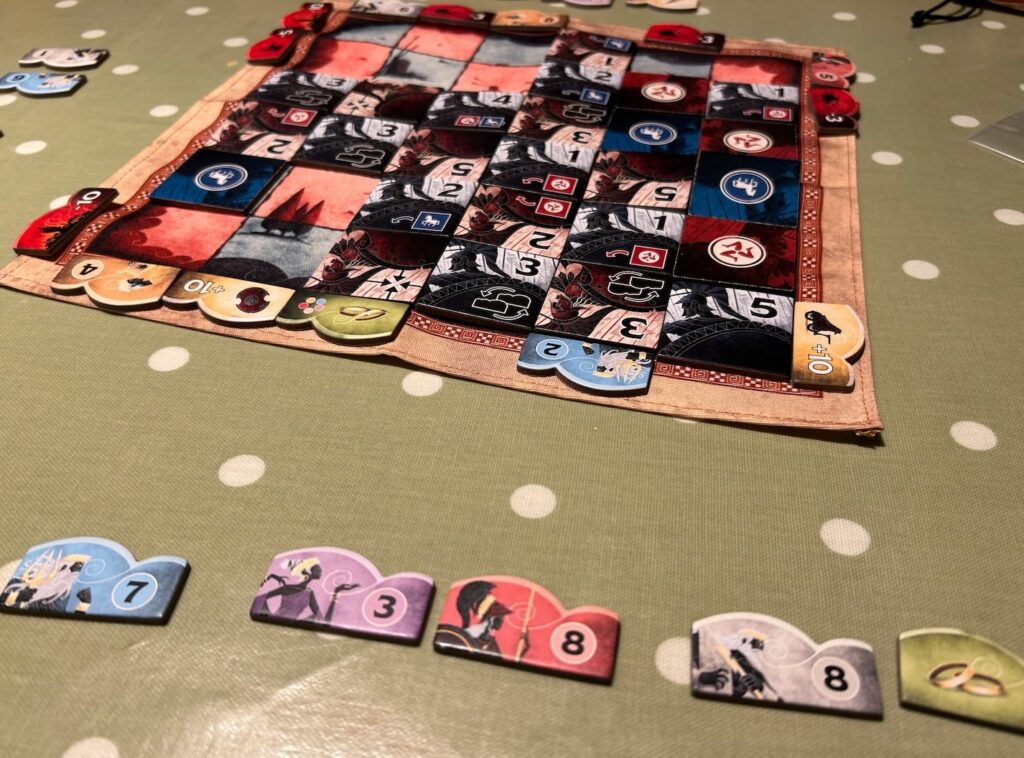
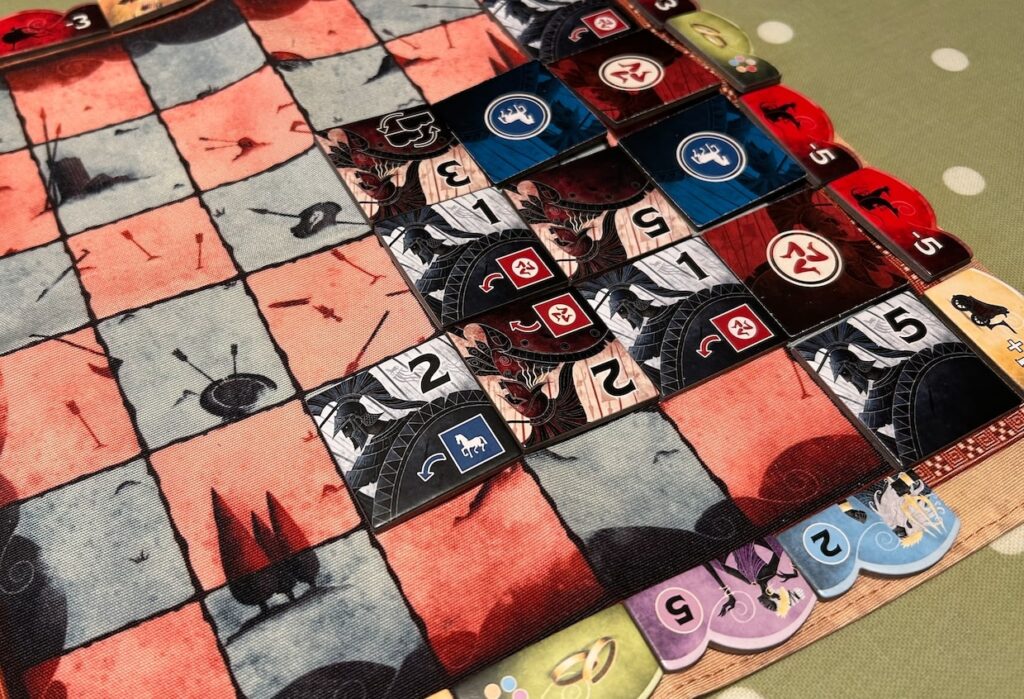
The board – actually a cloth – is laid between players, showing a chess-like grid of blue and red squares: the red player will lay tiles on the red squares and the blue player is confined to blue squares. Before play begins, both players place two random numbered tiles in the middle two squares, and scoring tiles are assigned randomly to both ends of each row and column of the board. The leftover scoring tiles are placed to one side as a pool of extras.
The game is played by players taking turns to add a tile to the board (you always have a choice of two) where they must be placed adjacent to an already-placed tile. Generally speaking, your goal is to have the largest collective tile value in a row or column when it’s completed: whomever achieves this gets first choice of the two scoring tiles, and the other player gets whichever one is left over. The game will end when the last tile is played and scoring tiles claimed: if only one player has a scoring tile of each of the five colours, they instantly win. If both players have managed this, then players score their highest-valued tile in each colours and – if you have them – factor in any +10 or minus tiles.
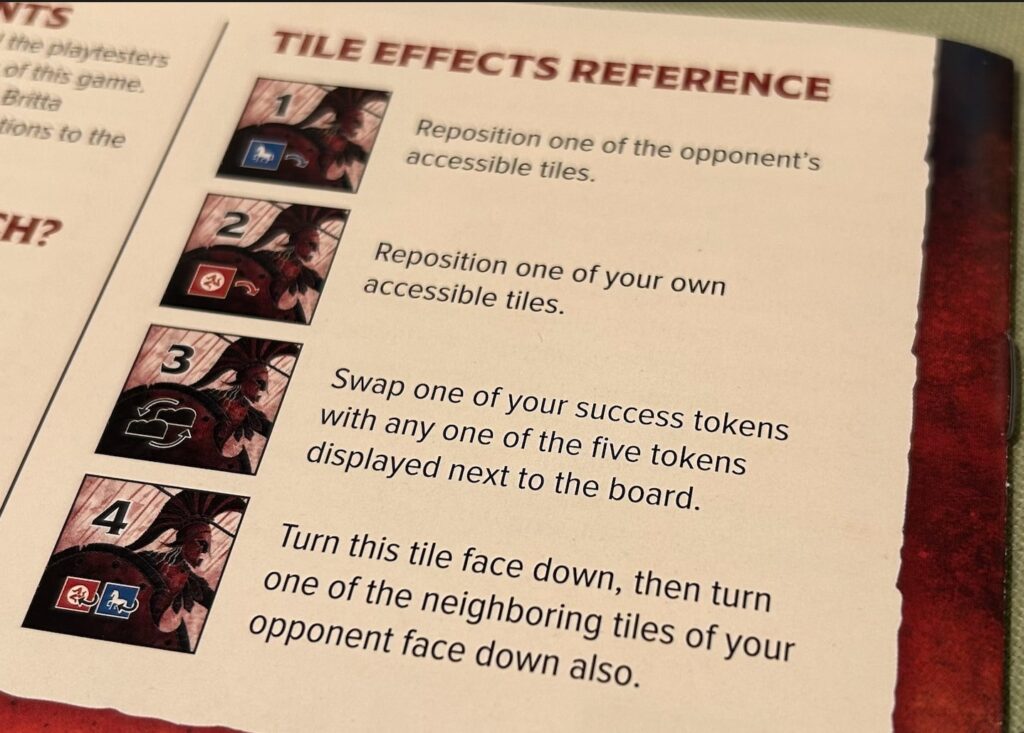
At its core, it’s quite simple. But apart from the high-value 5 tiles, each number also has an optional special power. With a 1 tile, you can reposition an opponent’s tile somewhere else on the board. With a 2 you can move one of your own. With a 3 you can swap a scoring tile you’ve claimed – even one of the miserable minus-point tiles – with one from the pool. With a 4 you can flip both the 4 and an adjacent opponent’s tile face-down. And there’s one special tile called the Dolos: this scores the combined value of the tiles either side of it.
Sam says
A clever design, but one that for me has too many if/but aspects to really give me a play-again itch. But I’m by no means a default abstract gamer and despite the alleged Greek/Trojan war theme, and abstract is most definitely what this is. It’s quite thinky, but there is some luck at play as well – you draw your hand of two randomly from a bag and getting certain numbers at certain times can be very helpful. For the right two players this will bring a lot of fun over repeated joists, but for me it sits in the respected-but-unenthused list.
-

Take That!
The Greeks and Trojans famously didn't get on
-

Fidget Factor!
You'll only ever have one opponent, so whilst the game can be thinky, it shouldn't take as long as the actual war did
-

Brain Burn!
It's a wrestle for control with strategy - which columns/rows are you prioritising? - and situational decisions.
-

Again Again!
There's enough variables here that whilst the game is always feisty, it won't get predictable with evenly-matched players


