
Kahuna
Designed by: Gunter Cornett
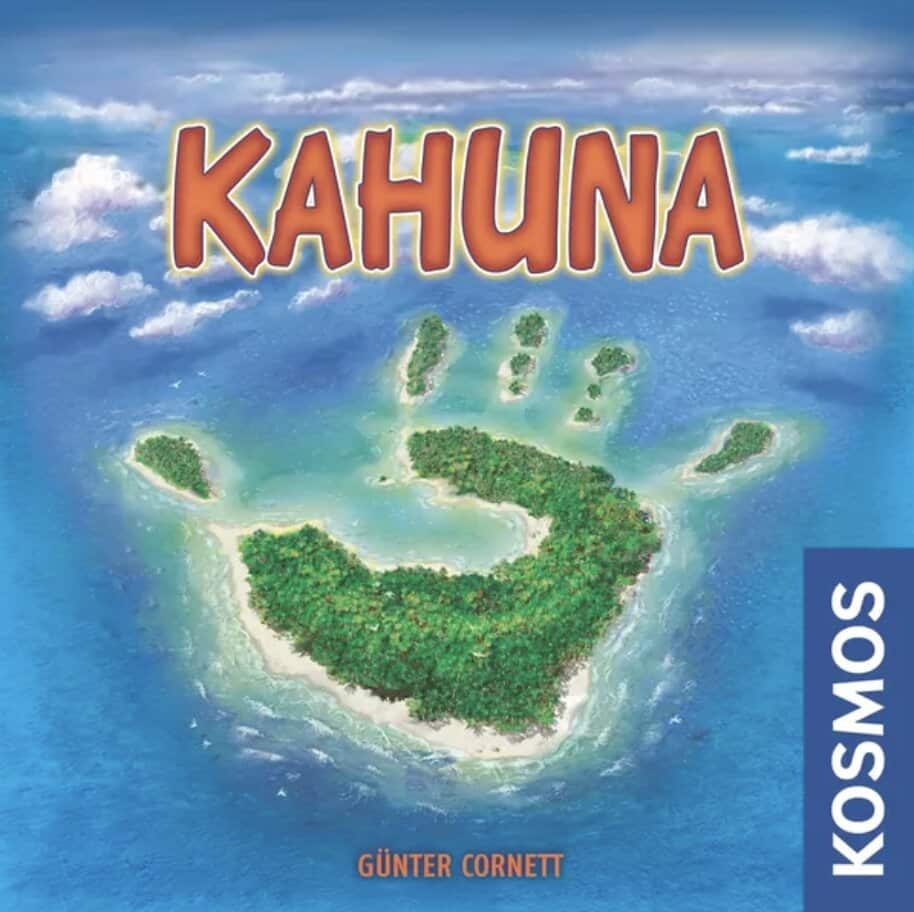
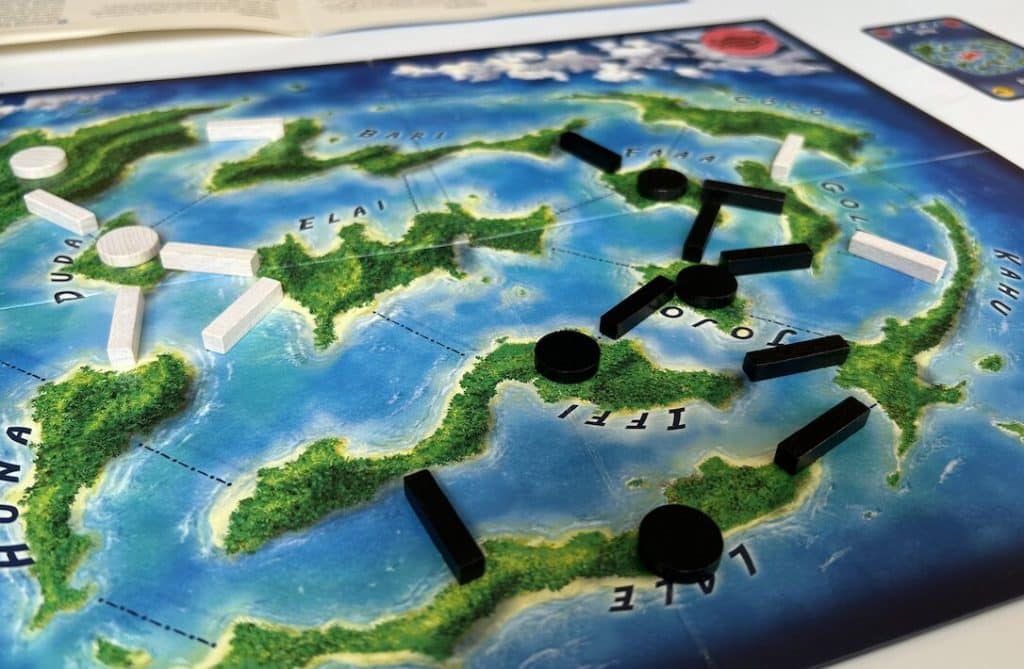
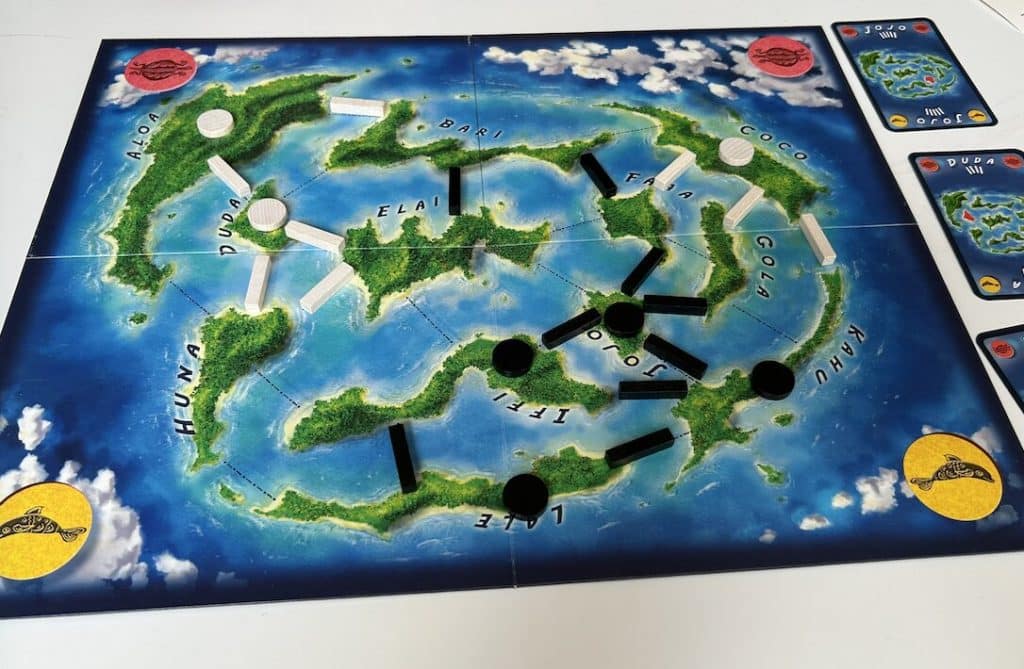
Kahuna is a fairly abstract game of control: controlling islands on the board by virtue of having built the most adjacent bridges. But bridges can also be removed, as we shall see…
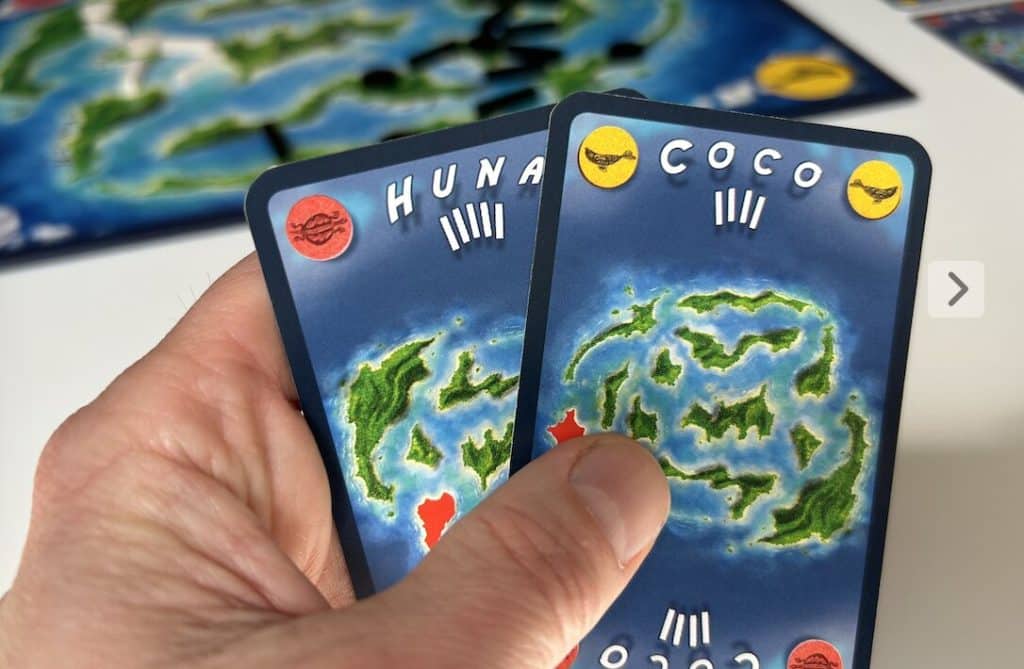
The board shows the twelve islands players will be competing over. Each player gets a bunch of bridge pieces – for bridges – and marker stones, with which to denote who controls the island. At the start that’s nobody, but players will be dealt a hand of three cards, and each card has a specific island name on it.
On your turn, you can play as many cards as you like from your hand (including none) and then pick up a single card, either from a face-up row of three or the top of the deck. When you play cards, you can add a bridge to the islands named on them or – if you play two cards – remove your opponent’s bridge. In this case, the two cards must be either one of (or both) the two islands that bridge connects.
When your turn is over, players assess who – if anyone – controls the islands. If your bridges are the majority (ie more than half) of the possible island connections, you can add a marker stone to the island. When this happens, all opponent bridges that connect to that island are also removed! This can sometimes – especially late in the game – lead to a chain of events as one island affects another, which affects another and so on (if there is a tie for control; for instance both players have 2 bridges on an island with four connections, a stone marker should be removed but all bridges stay).
There are three rounds and each one ends when the draw cards run out. In the first round the player with the most stone markers gets a point, in the second they get 2 points, and in the third the player with the most stone markers on the board scores the difference between the two players’ total: for example, if you have six and I only have two, you’d get 4 points.
Sam says
A solid title from a few decades ago now, Kahuna still stands up. I guess there is potential for frustration at times in the cards, where you might want that frustration to ideally be coming only from your opponent, but for a half-hour battle of wits this is verging on a nitpick. It’s important to try and get a grip on the board, but managing your hand is also critical: regularly being with no cards and drawing one at a time is a risky way to build momentum. It’s not a classic for me personally – my gaming is more often multi-player than two, and there are few abstracts that genuinely excite me. But I think it’s good, and would never balk at the offer to battle it out in the South Seas with a like-minded enterprising architect/dastardly saboteur.
-

Take That!
High
-

Fidget Factor!
Fairly low. It's not exactly a roller coaster and both players will need pauses for thought. But choices are restricted enough that the game doesn't collapse in on itself
-

Brain Burn!
Moderate. You're looking for opportunities on the map to both strengthen and sabotage. There's luck in how and when the cards become available.
-

Again Again!
Simple enough to bust out and play without lengthy rules-refreshers, it's also deep enough to stand up to repeat visits


