
King of Tokyo: Duel
Designed by: Richard Garfield
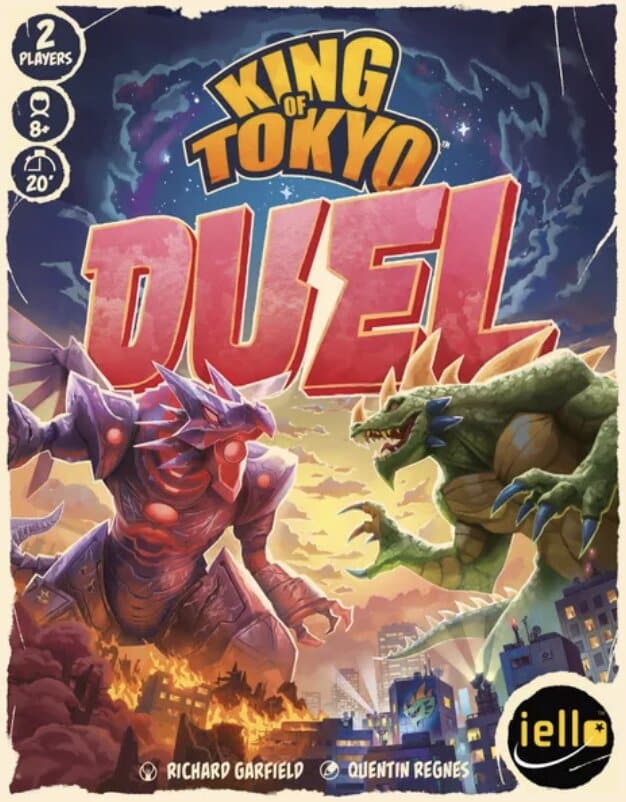
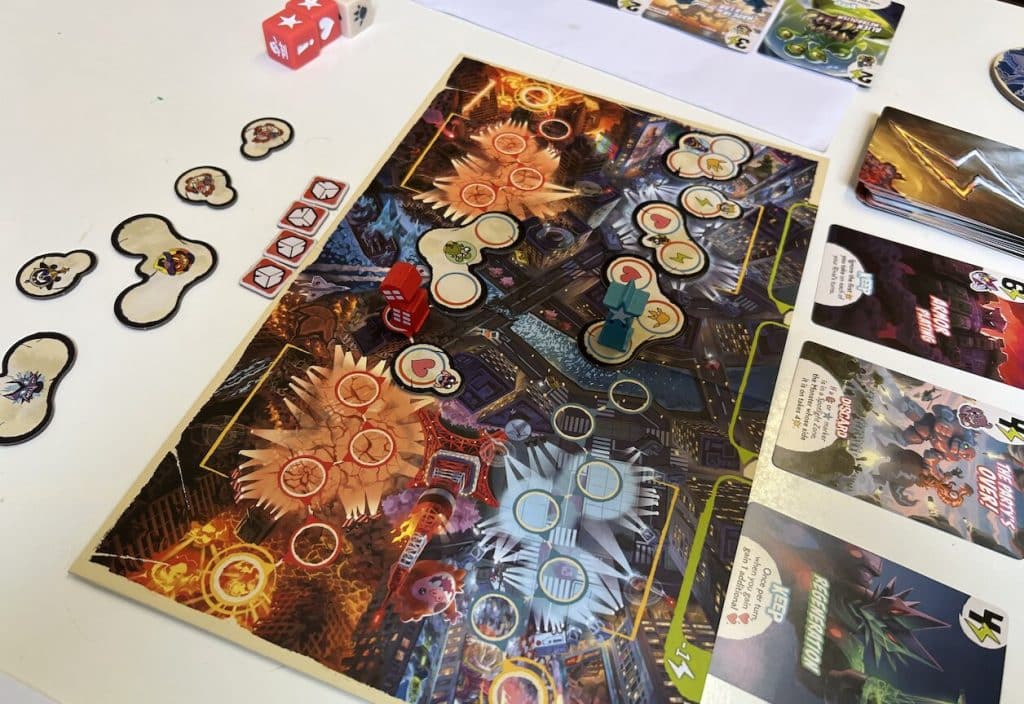
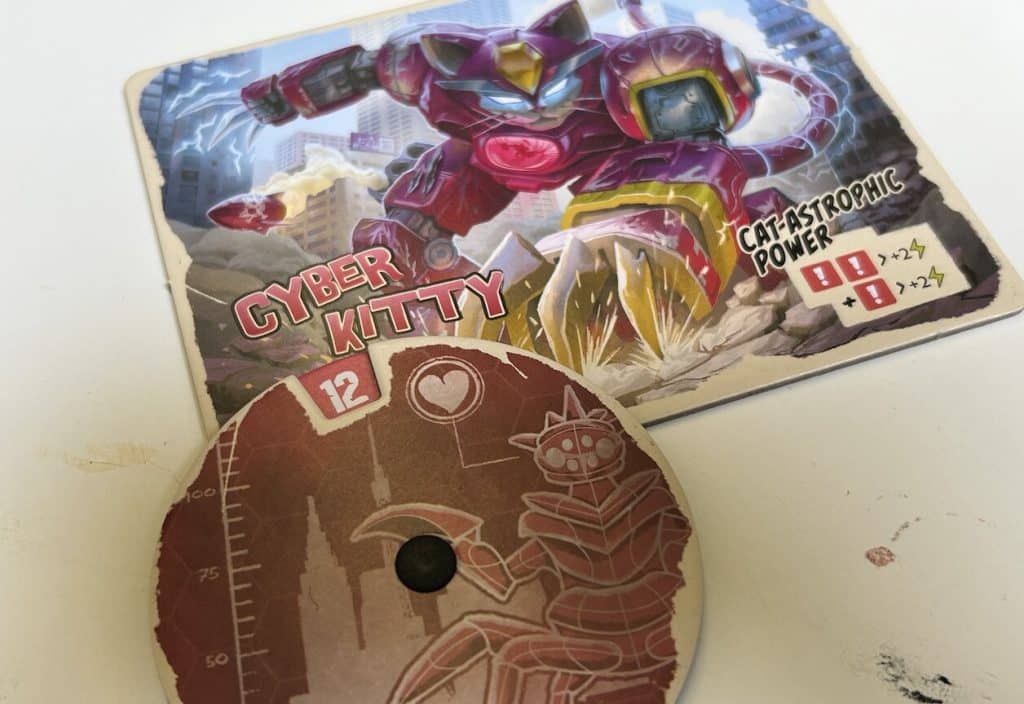
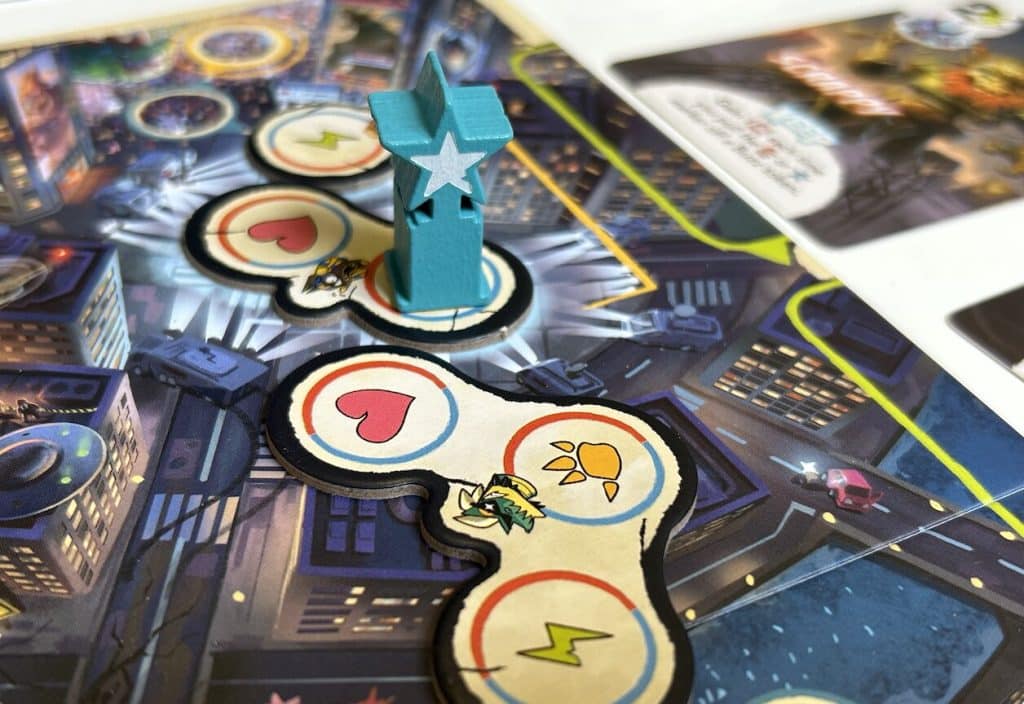
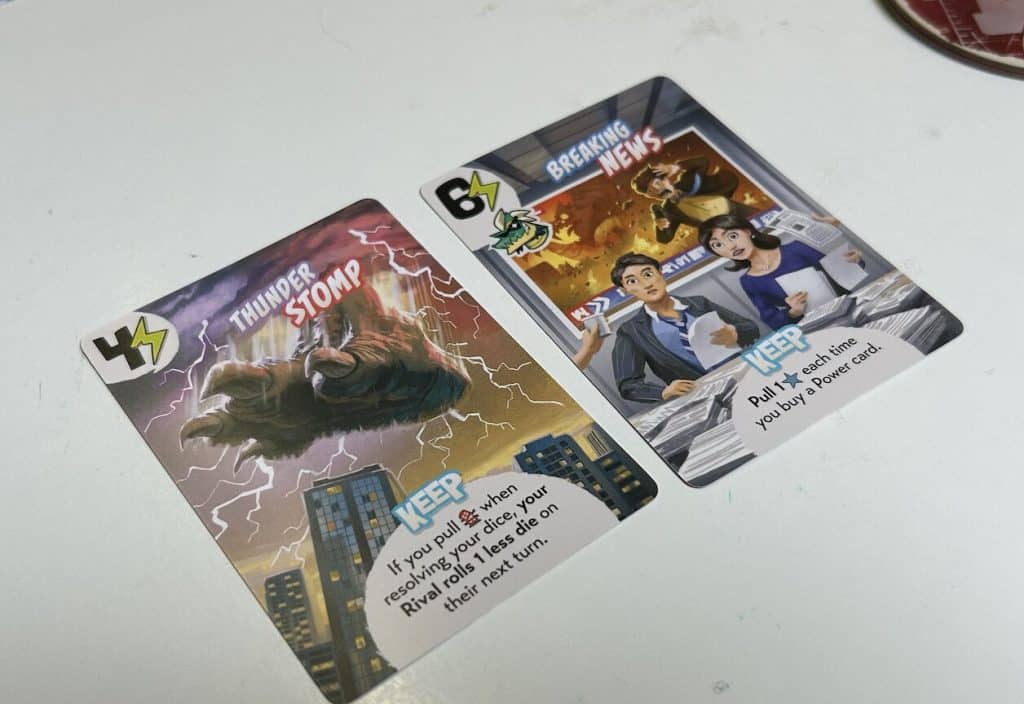
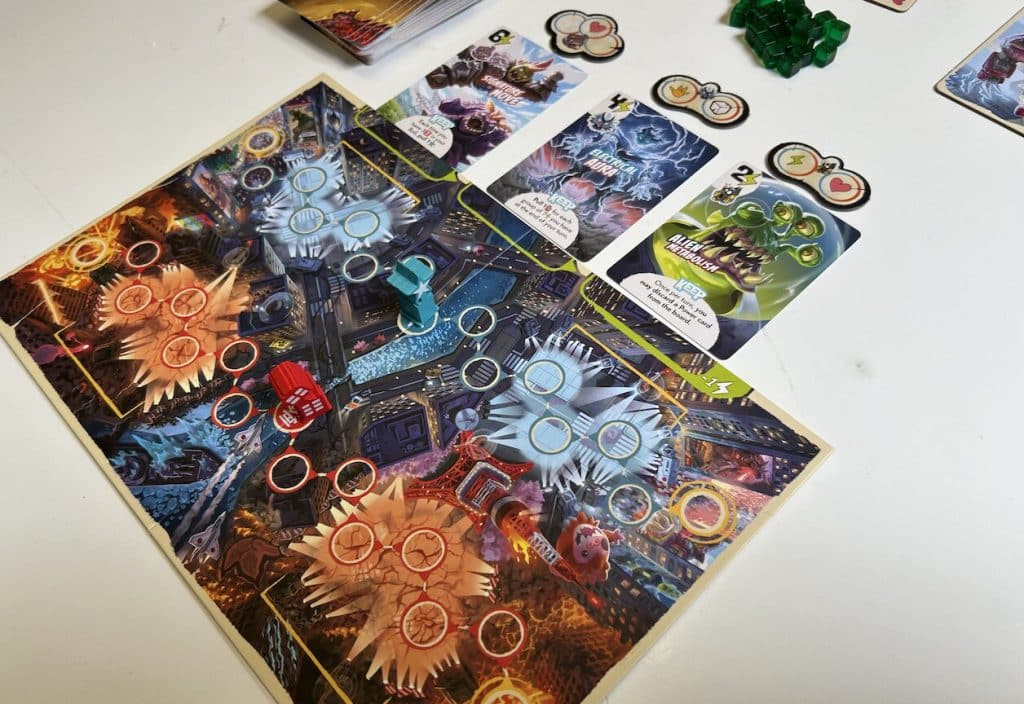
King of Tokyo: Duel takes the monster-rampaging dynamic of the original King of Tokyo and redesigns it specifically for two players. Whilst it’s still a fairly simple game, this duel iteration does bring in a little extra complexity, not least in that there are four different ways to win.
The board has two distinct tracks running between the players: Fame and Destruction. These are essentially tugs-of-war: pull either marker all the way over to your side of the board and you win, having become either super-famous or uber-destructive. You can also triumph by having both markers far enough to your side of the board that they are both in the ‘spotlight’ area (see pics). The final way to win is besting your opponent, by driving their health score down to zero.
Each player has a Monster board that shows your special ability, and a dial to track your health. Monsters start with between 12-15 health, and lose the game if they reach zero. As with the original game, turns are taken by rolling dice. You get three rolls in total and can re-roll as many dice as you like over them. After your third and final roll, your dice results get assigned: if you’ve rolled at least three Fame symbols, move the Fame marker towards you. If you’ve rolled at least three Destruction symbols, move the Destruction marker. Heart symbols bump up your health, Exclamation symbols activate your special power, Claw symbols do damage to your opponent and Energy symbols get you Energy, in the form of green cubes.
At the end of each turn you can spend energy to buy cards, which in turn give you more special abilities: either one-off (-discard the card) or ongoing (keep it in front of you). If you can’t afford (or choose not) to buy a card, then you get a single energy cube from the supply. The abilities all relate to the above: circumstantial ways to move markers, do damage, get health and so on. Some cards also gift you with tokens that customise the Fame or Destruction track, giving rewards to certain spots or making the path longer or shorter. Some cards give you extra dice!
The game continues as this back-and-to affair with players fighting on all three fronts (Fame/Destruction/Death) and probably stronger on some than others. The addition of the cards gives a built-in sense of escalation: not only do they give a sense of strategic direction, they also make you more powerful. As soon as any of the win conditions are met, the game is over.
Sam says
The original game has been a huge success, breaking out of hobby shops and into the high street, but I was always a little vanilla on it: happy to play, but not a game I own; I think because it feels slightly repetitive to me, combined with lots of referencing of special powers and a game length that, even at 20-30 minutes, felt a little long. I think this is the more interesting game, not least because of the different demands on you: simply go all out in attack and you may regret neglecting the Fame and Destruction tracks. Play conservatively and you may find your health in a perilous state after just a few turns. The little track customisations seem like such a minor thing at first, but played shrewdly they can be pivotal to victory. It certainly – to me – makes for a more intriguing challenge. Maybe it sacrifices a little of its big siblings’ set-up-and-go charm for something marginally more dense. But it’s still light enough to teach and play to youngsters pretty easily, and I do see this as an evolution of the system.
-

Take That!
It's comic-strip rampaging rather than Game of Thrones stuff, but the battle is certainly palpable
-

Fidget Factor!
Mostly low, very occasionally straying into moderate if someone has numerous special powers to juggle
-

Brain Burn!
It's light enough to feel very accessible, without being completely flippant
-

Again Again!
There's various monsters to play, and entire deck of special powers and not least the wildly varying dice rolls


