
League of Six
Designed by: Vladimír Suchý
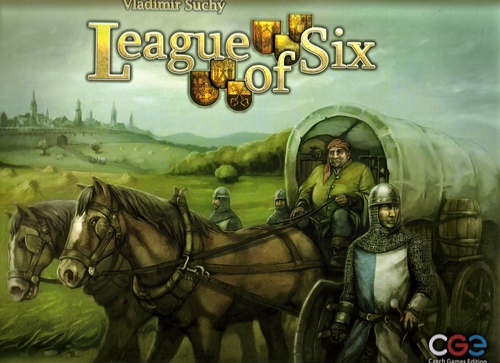
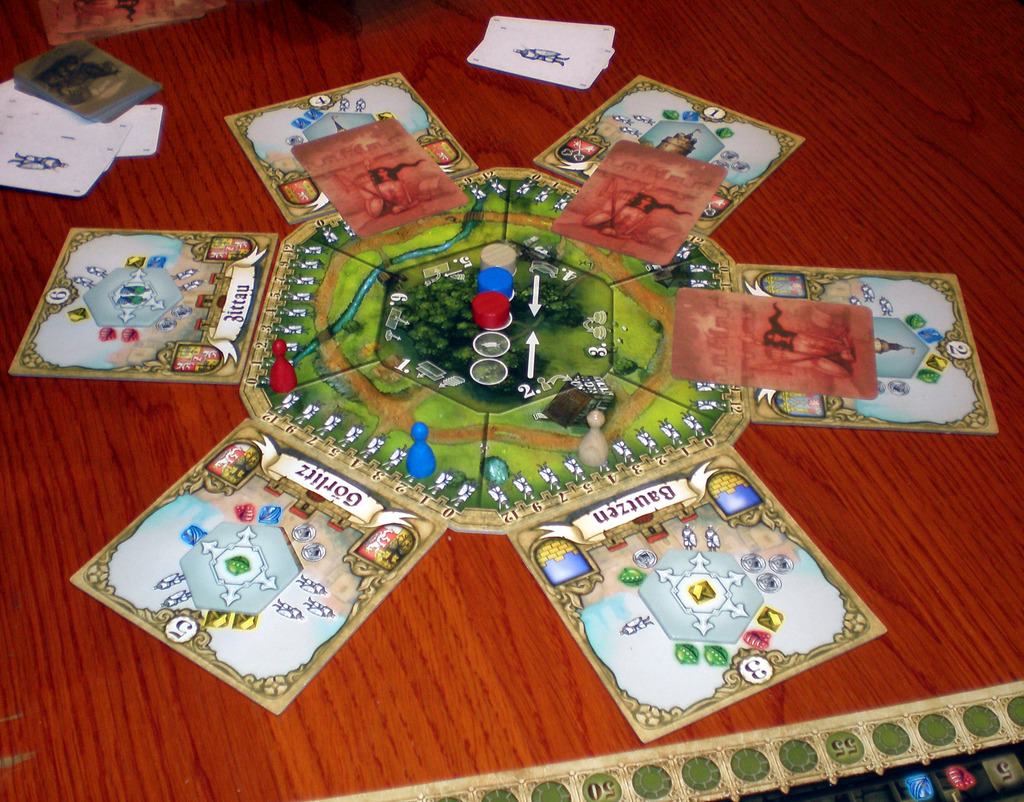
In League of Six the players get to be what, no doubt, you have always dreamed of being: tax collectors.
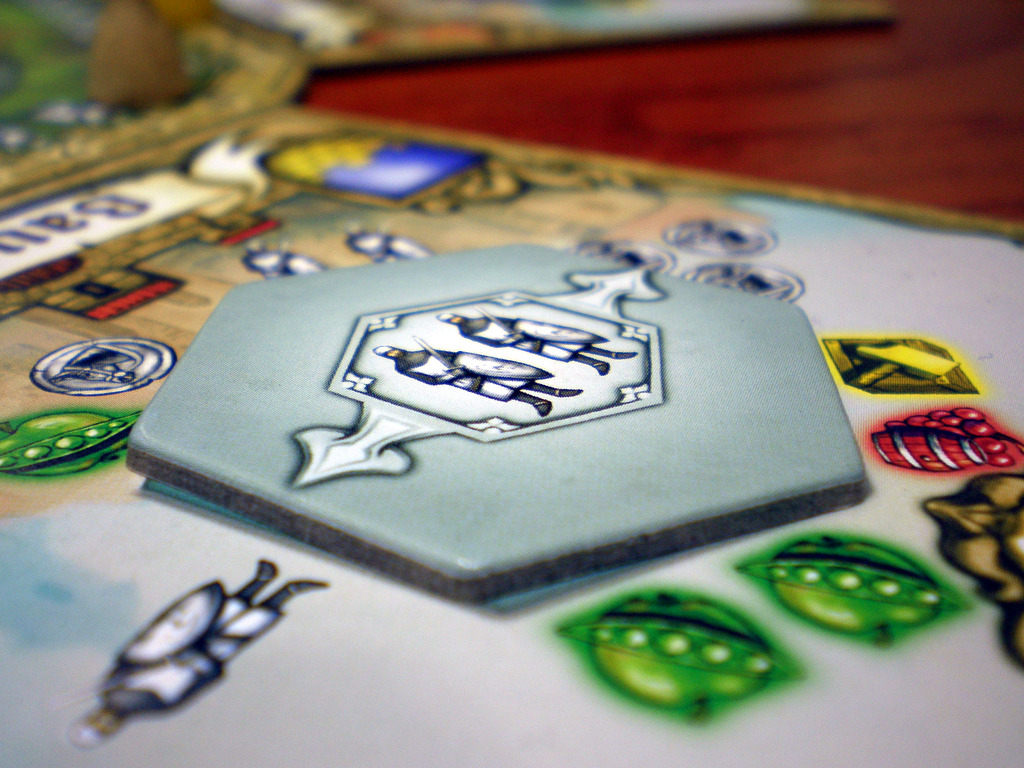
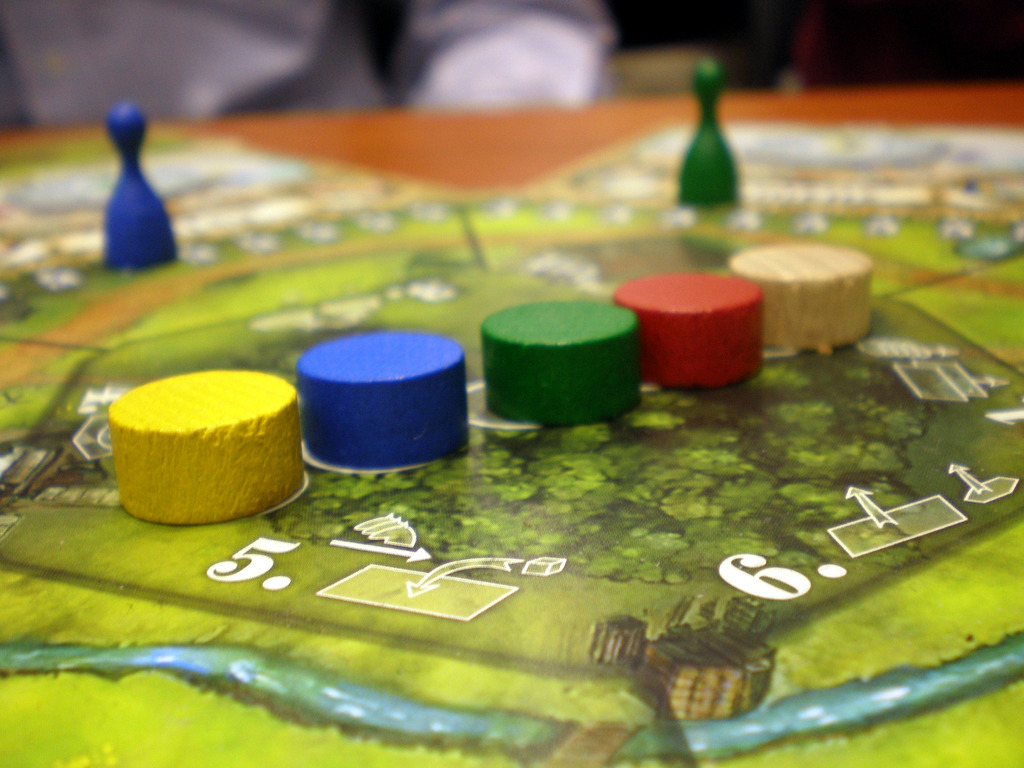
The league in question was a historical one: formed by six Lusatian towns in 1430 in order to try and bring stability to the region. But within the league, there is of course still room for competition. Each player uses a certain number of guards for the privilege of taxing a particular city. Players squabble over which city they get to tax by bidding guards from their personal supply: outbidding a player in a city means paying them the bid, and bumping their tax collector to an adjacent city. Each city will give a combination of goods (used for getting points and bonus cards) guards (used for choosing a city), horses (used for player order) and more bonus cards (used at the end of the game for scoring).
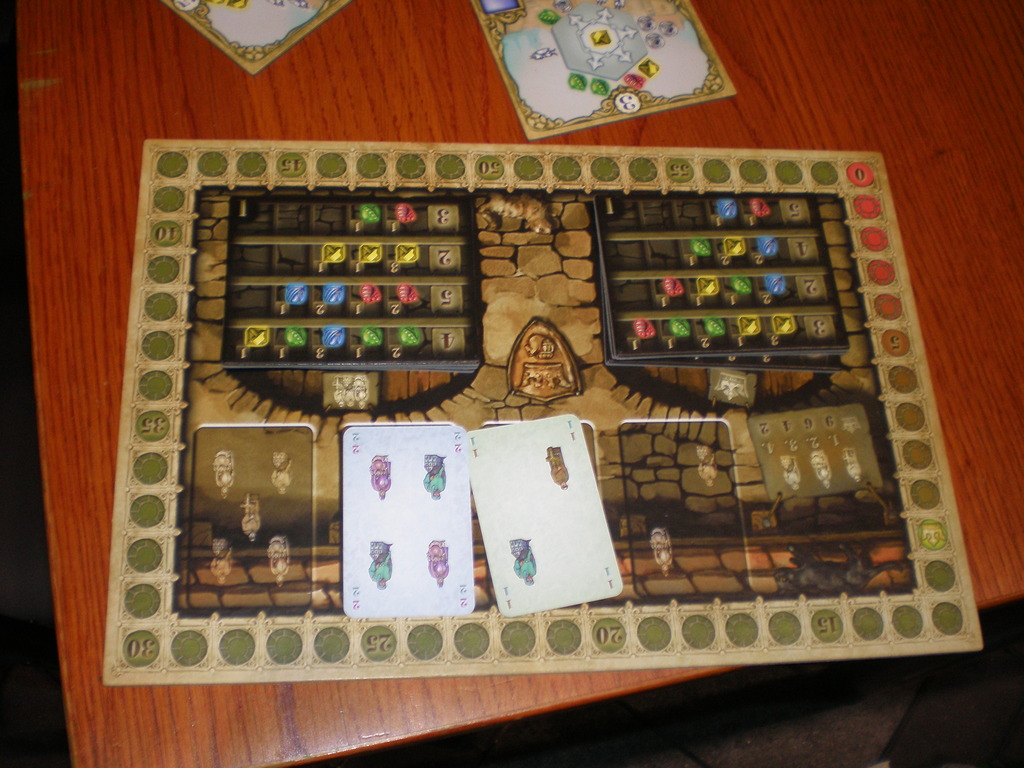
Once everyone has stopped jostling for position in the cities, the players deliver their procured taxes to the royal stores: here, turn order is crucial, as who gets to put their stuff in when decides how big a reward they receive for their trouble. The player with the most horses gets the fastest carriage to transport stuff in, and the least horses will obviously be trailing in behind everyone else. There is a reward for filling each row in the store; but you’re obliged to complete in-progress rows before starting a new one, so your best-laid plan to fill a row by yourself may be stymied by another player going first. There is a points reward for delivering anything, but the bonus is only there for the player who completes a row: these bonuses score you points at the end of the game and can be the difference between winning and losing.
After these deliveries are made, the board is reset and the next round begins. After the sixth round, the game ends.
Sam says
I like the combative nature of claiming the cities. But in the event tax-collecting is on your bucket list, you’d be disappointed by how unthematic League of Six is. It’s an abstract, multi-player puzzle, involving too much calculus to engage younger players and possibly erring on too lengthy to fully win over older puzzlers. Feels very niche both in its subject matter and the way the game works – clever, but outside of the bidding, it doesn’t really grab me in the way some of this designer’s later games – Pulsar, Underwater Cities – do.
-

Take That!
Plenty. Getting the city you want - or at least a bunch of guards out of your opponent - will be a jostle for position.
-

Fidget Factor!
High on a first play, dropping to moderate - as long as you don't have a player prone to deliberating at chess-like lengths.
-

Brain Burn!
Brain-burning is present. You're balancing the spending commitment with the guards with the rewards you get from the King - but also trying to keep tabs on where and when your goods will be placed.
-

Again Again!
There is randomness not only in the game (city cards can vary) but how the players approach it.


