
Nidavellir
Designed by: Serge Laget
In Nidavellir you are, thematically-speaking, hiring dwarves to defeat the dragon Fafnir. Each round players bid on particular dwarves to add to their growing battalion. The best battalion will win!
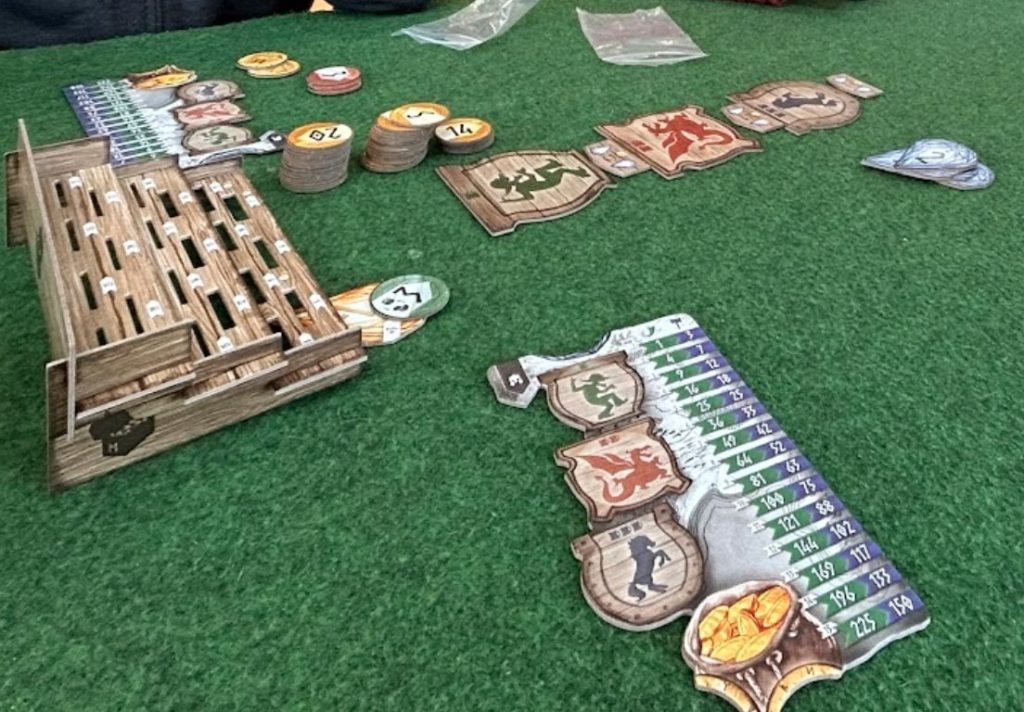
Each round sees a number of dwarf cards flipped up from the deck and placed into the three ‘inns’ of the game, as though gathering for a few beers. Then players compete for first choice of the dwarfs there by bidding coins face-down, before all are revealed: the highest bidder gets pick, second-highest next pick and so on until all the bids are resolved. Starting coins are low-value and include a zero, but there is a way to boost your coins: if you play your zero coin as a bid, you get to discard your highest unplayed coin this turn and take a new coin worth the value of both unplayed coins: for example: don’t play your 5 and 2 coins, lose the 5 but gain the 7. Hence players coin count and bid power escalates during the game.
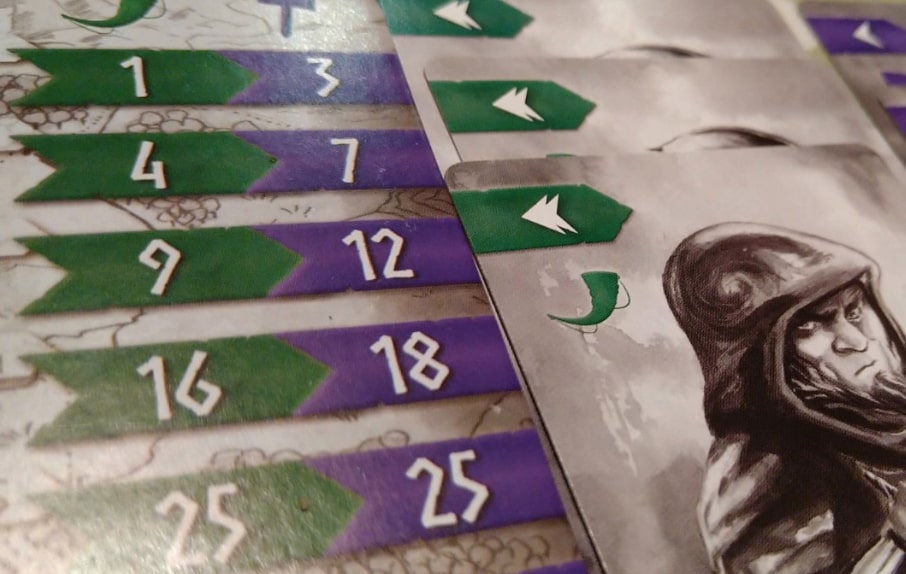
There are five numbered dwarf suits, and when you claim a dwarf you place it into a growing column of dwarves of the same suit in front of you on the table. How many of each suit you add to these ‘battalions’ defines your score at the end of the game (along with any coins you have). Blue cards simply score points. Red score points too, but the player with the most red will also score their highest coin again. Green and purple dwarves score according to the chart on your handy player board, where your bids are placed: they begin fairly worthless, but increase in value incrementally according to how many you have. The last suit, orange, scores in a quirky way: number of orange cards you have multiplied by the sum total of numbers on them.
So specialising in colours is rewarding… but so is diversifying, because every time you have a new set (a dwarf in all five colours) you get to take a Leader card from an available array of them. We won’t list them all here, but suffice to say they are powerful cards that can swing the game your way.
Halfway through the game, players also receive bonuses for having most dwarves of a type. Again, we won’t list them all here, but once you grasp the nub of the game they slot in as coherent booster-packs that give each player a fillip on their way to, hopefully, victory.
Sam says
It’s a very mechanical game, where the setting of dwarves and battalions does kind of fall away as you play and focus on the suits and numbers. What Nidavellir does well is the push-pull of rewards for sets of same-suited cards versus the alluring leaders, which you get for having cards of all different colours. Aligned to that is the canny bidding system, where oftentimes you want first choice in more than one inn, but neglect upgrading coins at your peril. I didn’t fall in love with the game, but I was pleasantly surprised by it and happy to play again. Good for 2 or 3 players particularly.
-

Take That!
Extremely limited: you can and no doubt will be outbid, but you’re always picking up something.
-

Fidget Factor!
It’s pretty fast-moving.
-

Brain Burn!
Nothing too onerous: collecting big sets is good, but completing ranks for bonuses is also extremely helpful. Finding a balance between the two is the juice.
-

Again Again!
There’s no real narrative here: it’s a game of collecting sets and triggering bonuses. But it’s a clever and speedy enough one that it still engages after a few plays.


