
Onirim
Designed by: Shadi Torbey
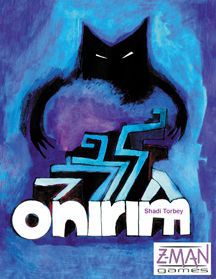
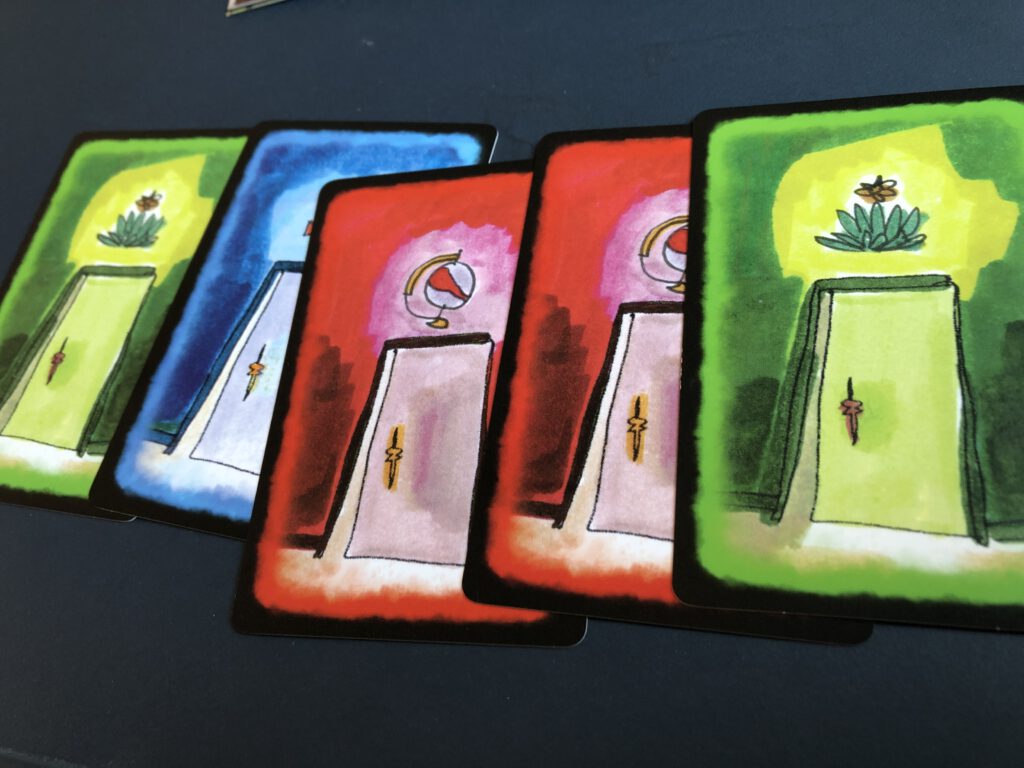
Onirim is predominantly a solo game (it does come with rules for two as well) where you are stuck in the world of dreams, and must find your way out before you succumb to the Nightmares. Everything is contained in a large deck of cards, so your fate is wrapped up in how they play out – but you do have at least some control over that.
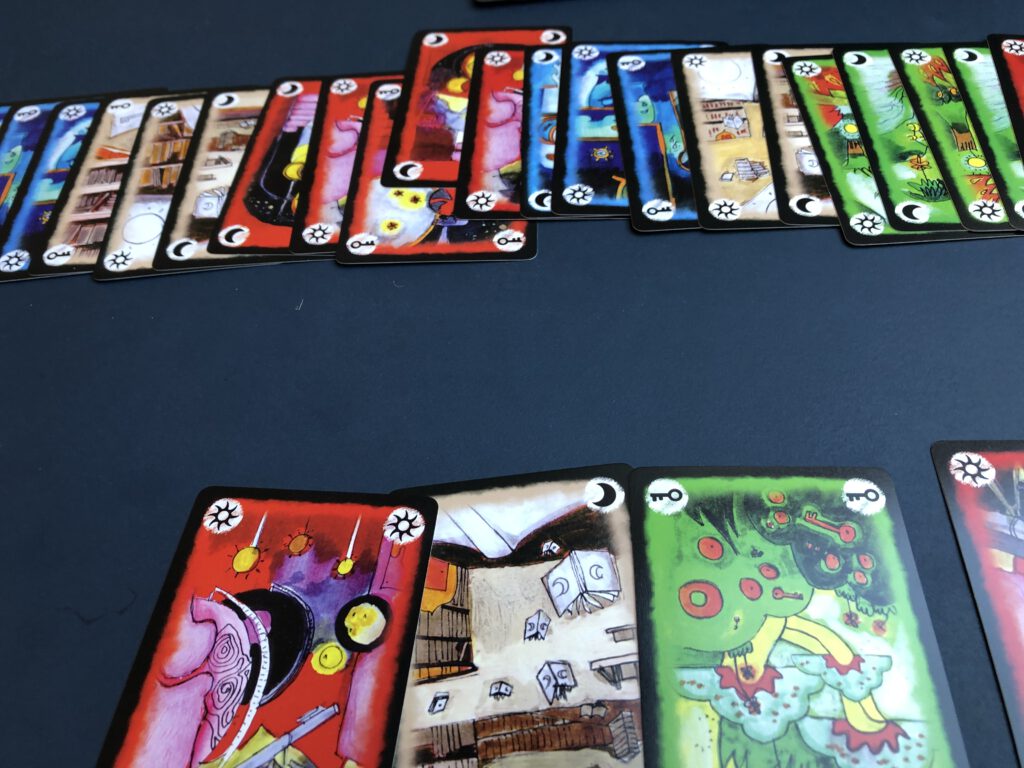
The deck is shuffled and somewhere within it are the eight door cards you need to uncover to escape this dreamworld, and win. You began with a hand of five cards, and then run through a fairly simple process – you either play or discard a card, and then draw a replacement from the deck. Playing a card is adding it to your line, which is a tableau of cards that grows during the game. Most cards are simply a colour and a symbol: you can play any colour on a preceding card in the line, but the symbol (moon/sun/key) must be different each time. If you manage to play three cards the same colour consecutively along your line, you can cash them in: discard the cards, and find the matching coloured door from the deck: it’s now yours. One door down – seven to go!
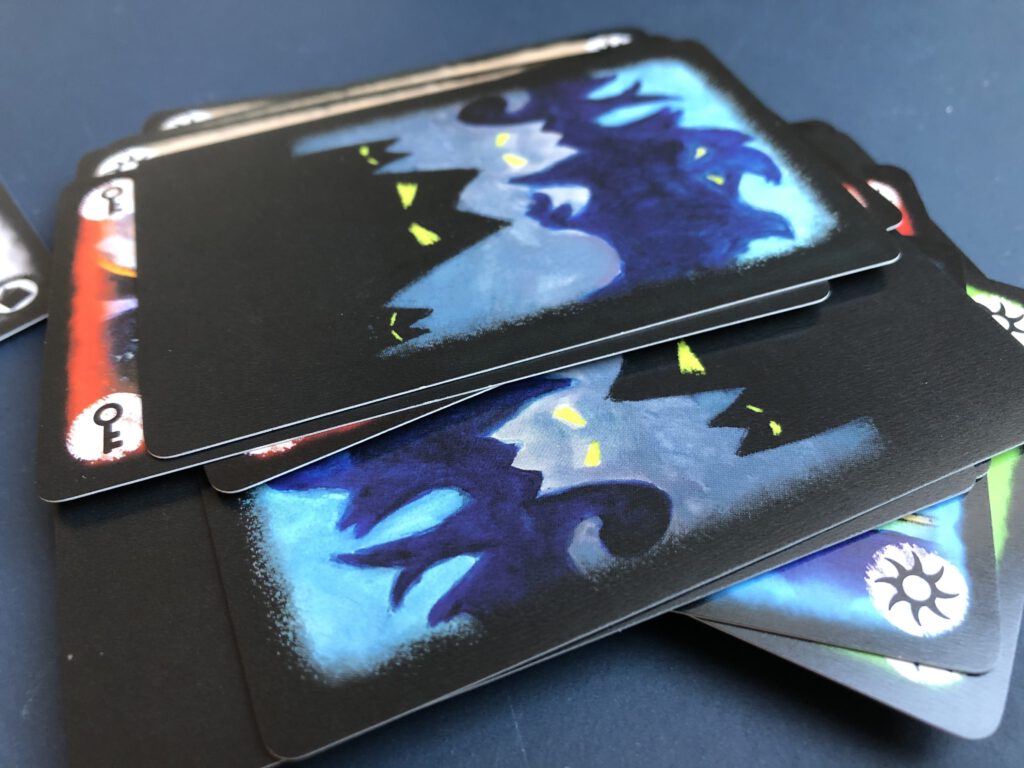
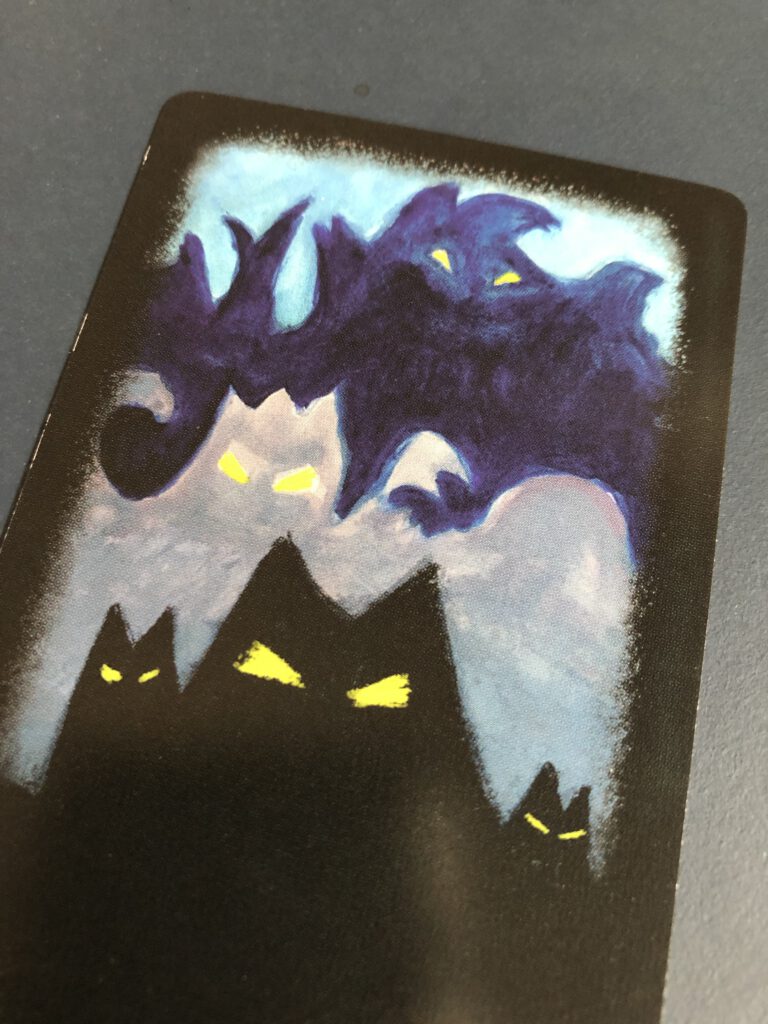
However, we did mention the Nightmare cards. They’re easy to spot – no symbols, just a demonic-looking dude out to spoil your fun. When you draw one of these, everything else goes on hold until it’s dealt with, which you can do in one of three ways: abandon your current hand to the discards and draw a new hand (costly in terms of cards, as once they run out it’s game over), give up a door card back to the deck (not ideal, for obvious reasons) or discard a card with a key symbol (which is probably the best solution, but you may very well not have one in your hand).
We mentioned you can discard cards instead of playing them: this isn’t ideal, as cards are your currency, but it can be helpful in two ways: one, if you’re trying to complete a run of three red cards, for instance, and have a hand of other colours, you can keep discarding until you pick on up. Risky; but possible. Discarding sun and moon cards does nothing, but discarding a key card gives you a premonition: you can now look at the top five cards in the deck and must discard one of those from the game. So you really want to find a Nightmare nestling in there to be rid of – but you may find the five full of wonderful key cards. Who knows.
If you draw a door card you can instantly claim it with a matching key card – if you don’t have one, it’s shuffled back into the deck. And so it continues as you try and attain the right doors needed (two of each colour) whilst navigating the Nightmare cards in your way. Get all the doors ‘open’ – you win. Run out of cards before that happens – you lose!
The second edition of Onirim comes in a slightly bigger box and includes several expansions to give the game more depth and variability
Sam says
I really like how unusual this theme is, and I enjoy the presentation too – the illustrations do have a dreamy, otherworldly quality to them. That said, the game itself didn’t really get its hooks into me – I guess some will find the not-inconsiderable shuffling of cards meditatively relaxing, but I have to be honest and say for me it just felt a bit staccato an experience as a result. I’m not averse to an occasional bit of solo gaming, but I didn’t get a sense of narrative from Onirim, more a slippery number puzzle, and I personally prefer the games we’ve linked to below. But many like it for its puzzly nature and the fact it’s so easy to get out and play: no fiddly set-up, just shuffle the cards and go.
-

Take That!
None
-

Fidget Factor!
None, save for a considerable amount of time shuffling cards.
-

Brain Burn!
The rules are light, but the decisions aren't exactly fluffy. Everything is seeded with risk, and if you indulge in the alleged narrative, it's pretty dark!
-

Again Again!
It's always a similar time-running-out (or cards-running-out) experience, but it does play nice and quickly.


