
Pikoko
Designed by: Adam Porter
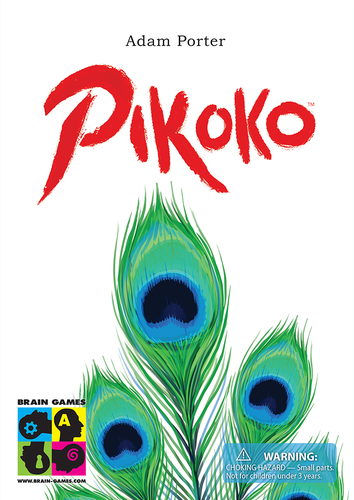
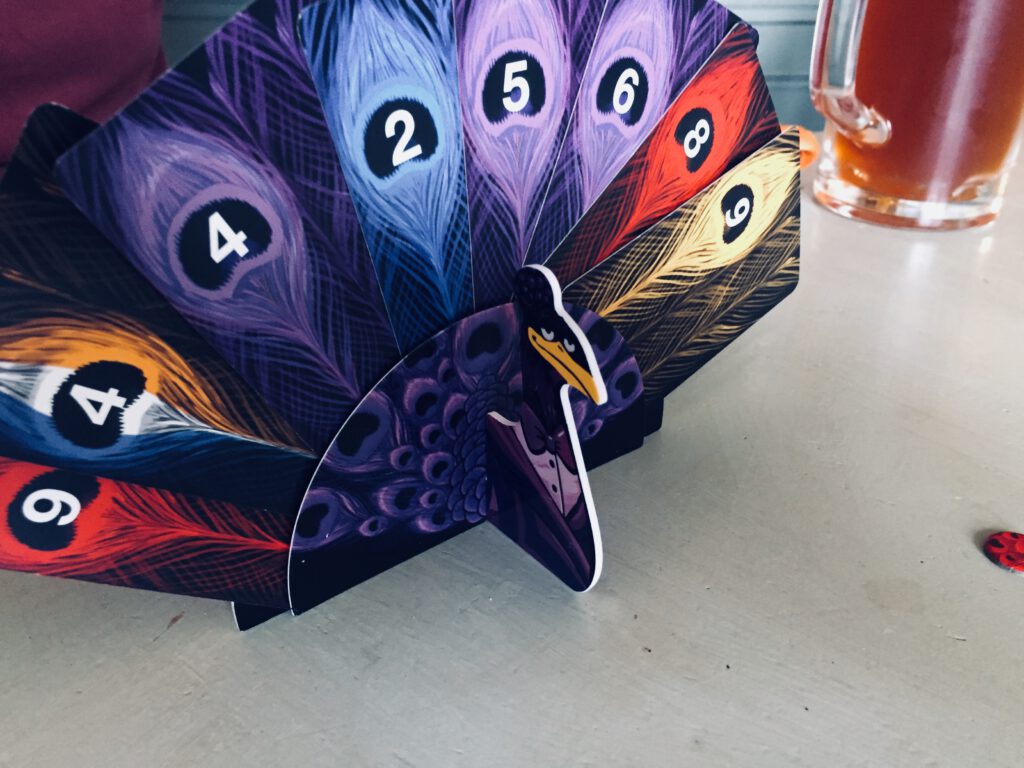
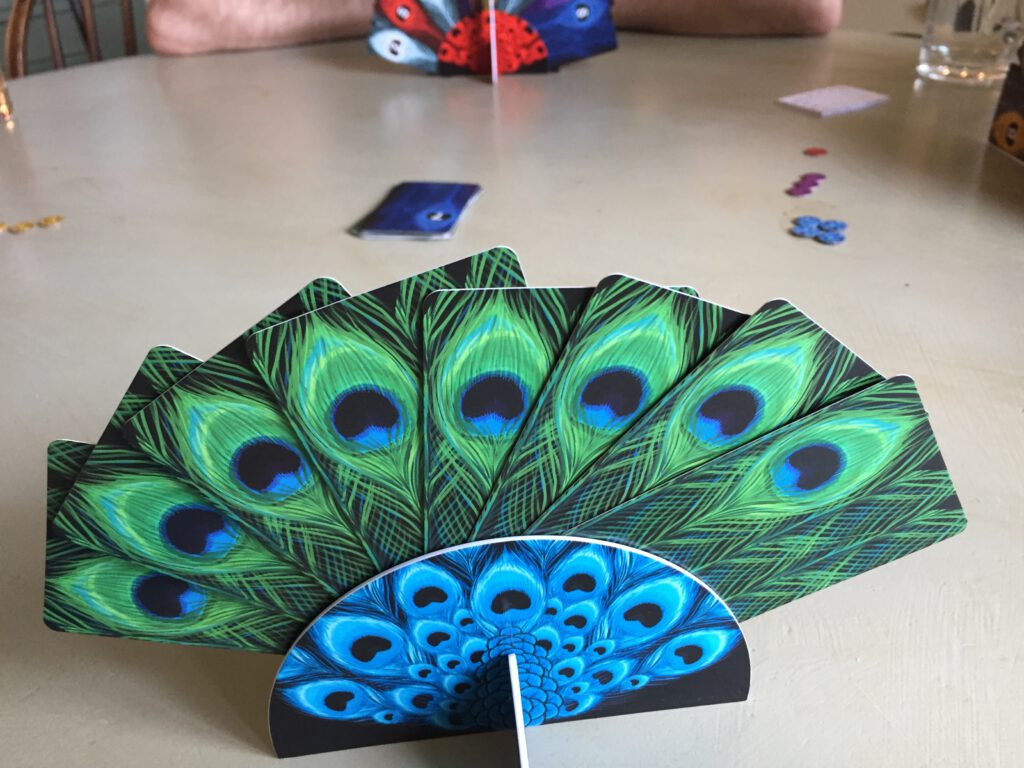
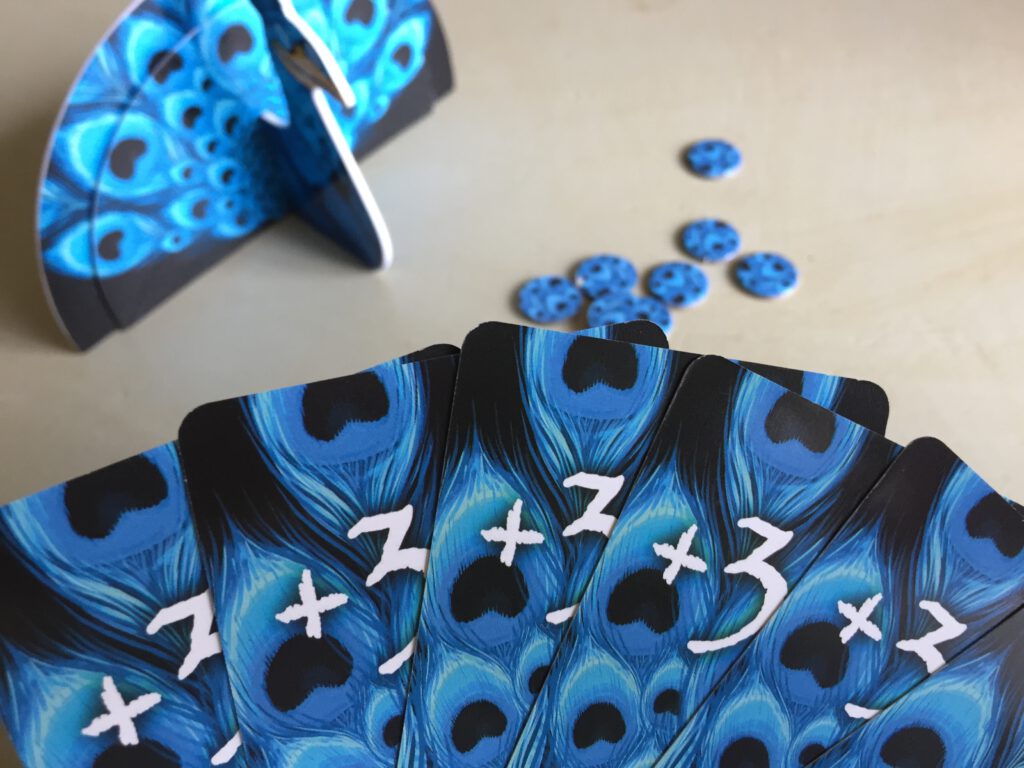
Pikoko is a [simple_tooltip content=’one player leads, other players must follow suit if possible’]trick-taking[/simple_tooltip] game with a twist – you cannot see your own cards!
Each player has a peacock with which to display their cards (see pics!) because when they are dealt to you, you don’t actually look at them but fan them out so they’re visible to everyone else. Eight cards are dealt consisting of five different-coloured suits, numbered 1-7, and a [simple_tooltip content=’strongest suit!’]trump[/simple_tooltip] suit is decided by flipping the top of the leftover cards.
Before play begins players place bids on all their opponents, trying to predict how many [simple_tooltip content=’when all players have played one card, the highest card wins the ‘trick”]tricks[/simple_tooltip]tricks that player will win. You then use this information to try and predict how many tricks you will win too, bearing in mind that the player to your right will be playing for you. You also play a confidence card; betting secretly on which player you’re most confident of winning the tricks you’ve predicted.
You’ll be playing the cards of the player to your left, and as with most trick-taking games, you must follow suit if you can; if you can’t, you can either dump a card or play a trump, if there’s one available. Everyone’s goal is to hit their bids and their confidence card – at the end of each round tricks don’t actually score, but bids do. After one round per-player, the most points wins!
Sam says
Generally I like trick-taking games, and Pikoko is no exception. Like the (co-operative) Hanabi, you have the somewhat counter-intuitive aspect of being unable to see your own hand, and that seemingly harsh restriction makes the game interesting, because you’re judging not only other players’ hands, but other players bids as well. That’s intriguing to me, but it does make Pikoko quite an opaque experience, and – despite pretty peacocks and simple-ish rules – maybe not one I’d recommend for younger kids. Older lovers of card games may find much to enjoy here though – it’s definitely not a game of pure luck, as my repeated drubbings have proved to me…
-

Take That!
None
-

Fidget Factor!
Some short pauses while everyone works out what they're bidding, or occasionally (if they have choices) playing. But nothing chronic.
-

Brain Burn!
Most of the 'burning' here is before play starts - judging the strength of your opponent's hands, the amount of control you have (the hand you play v the hands you won't!) and trying to judge the strength of your own hand as well.
-

Again Again!
It's simpler than it sounds, and fans of card games may well enjoy the unusual twist.


