
Samurai
Designed by: Reiner Knizia
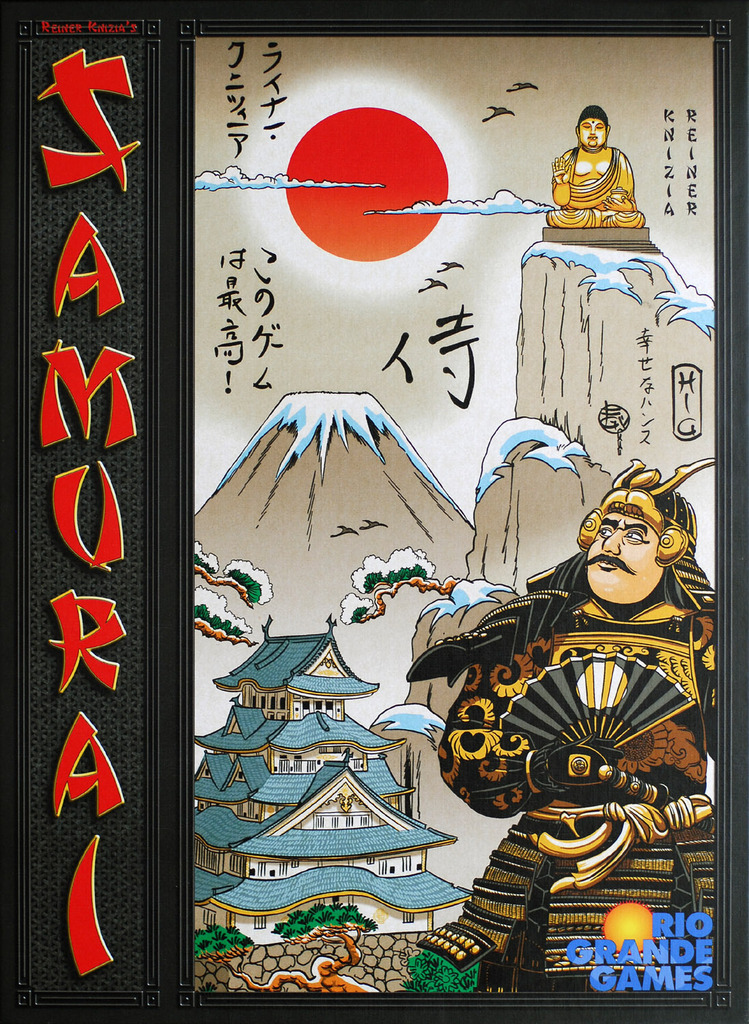
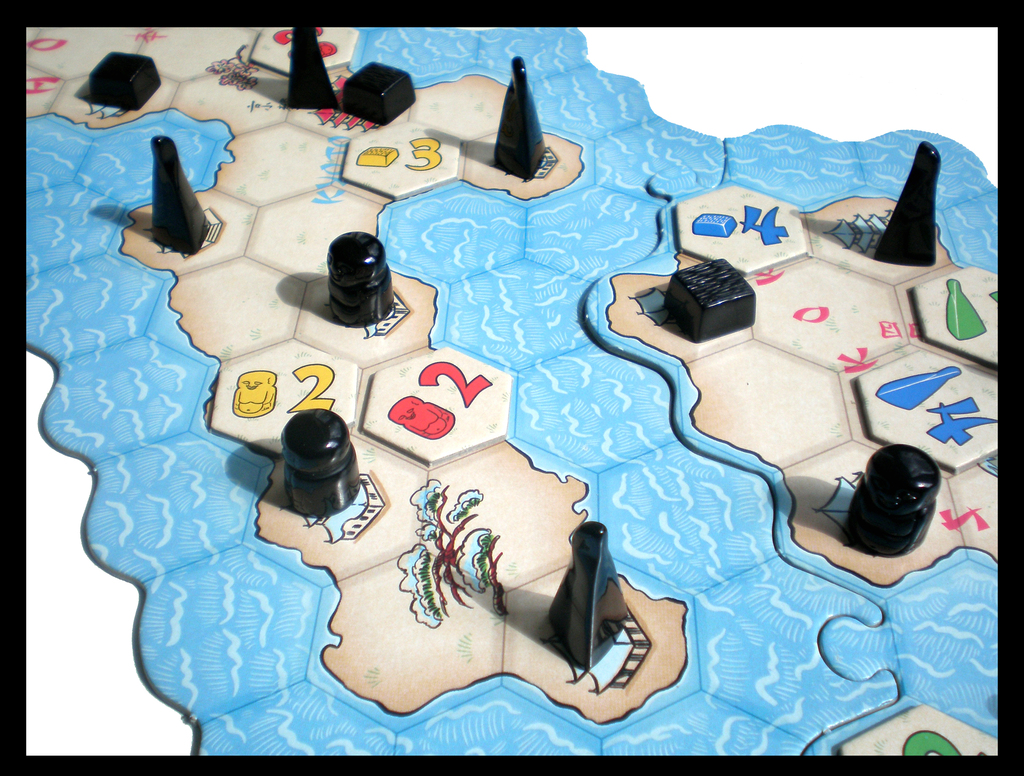
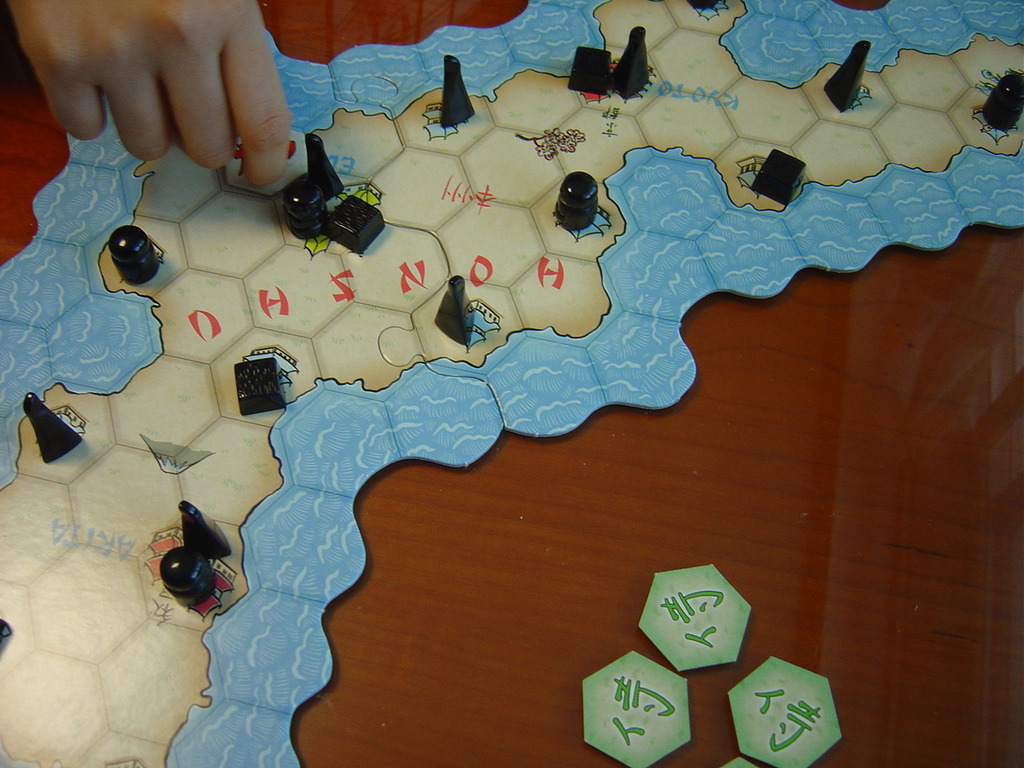

In Samurai players are the warring factions of medieval Japan, hoping to court the most influence.
The is a map of Japan, adorned with cities and towns, and before play begins, the three types of pieces representing samurai, priests and peasants (High Hats, Buddhas and Rice Fields) are randomly assigned to these spots. Your goal is to claim as many of these as you can, using a hand of tiles you keep hidden from the other players.
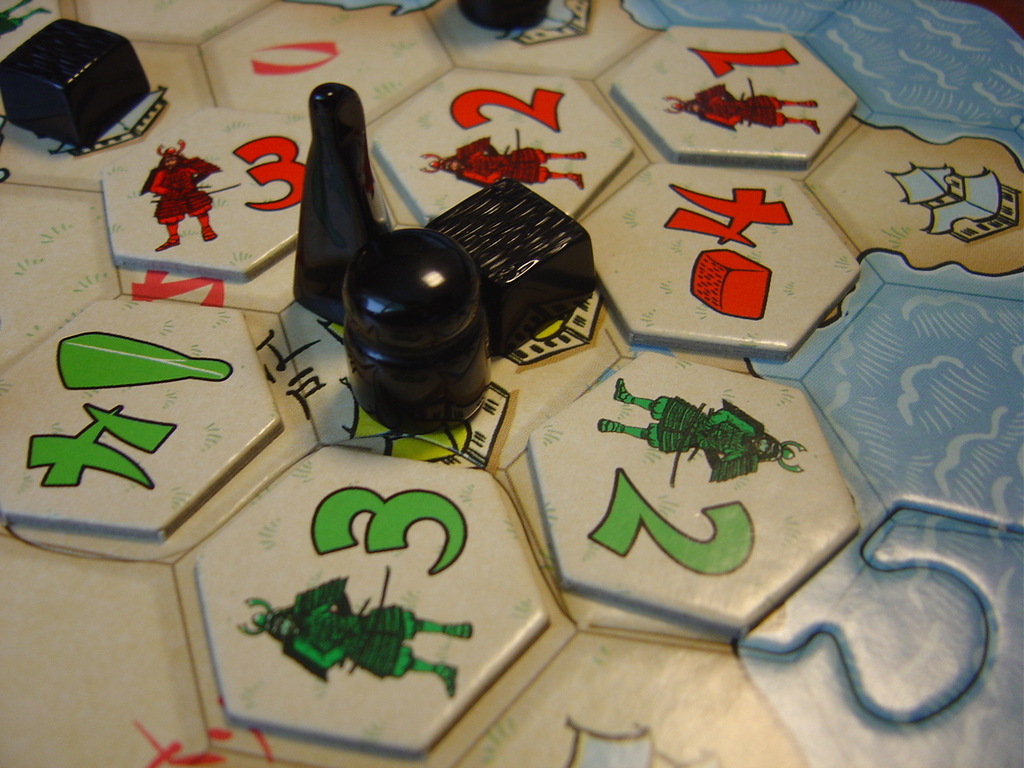
The tiles show a number value that pertains to the aforementioned High Hats, Buddhas or Rice Fields: on your turn, you choose a tile to add to the board. Whenever a town or city is surrounded by tiles, the player with the most of a particular type adjacent collects the appropriate piece from the city – the player with most Buddhas would collect the Buddha piece, and so on. Most towns each have a single tile type to be claimed, but a few have a couple and the city has one of each type. If there’s a tie for most of-a-kind, nobody gets the piece: it’s simply removed from the game. Players keep their claimed pieces behind their screens!
Added to this basic concept is are the Samurai tiles – essentially wilds that apply to your scoring in all categories – and a couple of special action tiles that allow you to swap tiles on the board, or swap pieces. The game ends when the last pieces have been claimed and the scoring is rather unique: having the most of two types of piece (or more) is an instant win, but the game often goes to tie-breakers, meaning pieces multiple players have less of end up being compared.
Recently republished as Hanami, with a different theme and a couple of new special tiles.
Sam says
A classic tile-laying game of deceptively spicy fun: it looks and sounds pretty dry – place a tile, surround a thing – but this is a combative affair where poor placement will come back to bite you on the backside. The fact the tiles are different suits, effectively, as well as different strengths, and the claustrophobia of the board where a tile often goes next to two towns or cities rather than one… it all adds up to a fast-moving and feisty exchange – of the 150,000 board games listed on boardgamegeek.com this is still in the top 200, over two decades since its release. Recently reprinted (with some small tweaks and a slightly incongruous picnicking theme) as Hanami, which is easier to find.
-

Take That!
Players can be blocked out of spaces and out-scored by opponents, and you'll find this is in fact a regular occurrence.
-

Fidget Factor!
Depends entirely on how fast you play, but the winner is unlikely to be the player rushing their moves.
-

Brain Burn!
Samurai is very easy to learn, but with five tiles to choose from and multiple places to assign them, it's a game that rewards thoughtful analysis.
-

Again Again!
The randomness of the tiles coming into your hand ensure the game is always different.


