
Shadow Moon Syndicates
Designed by: Jarrod Carmichael
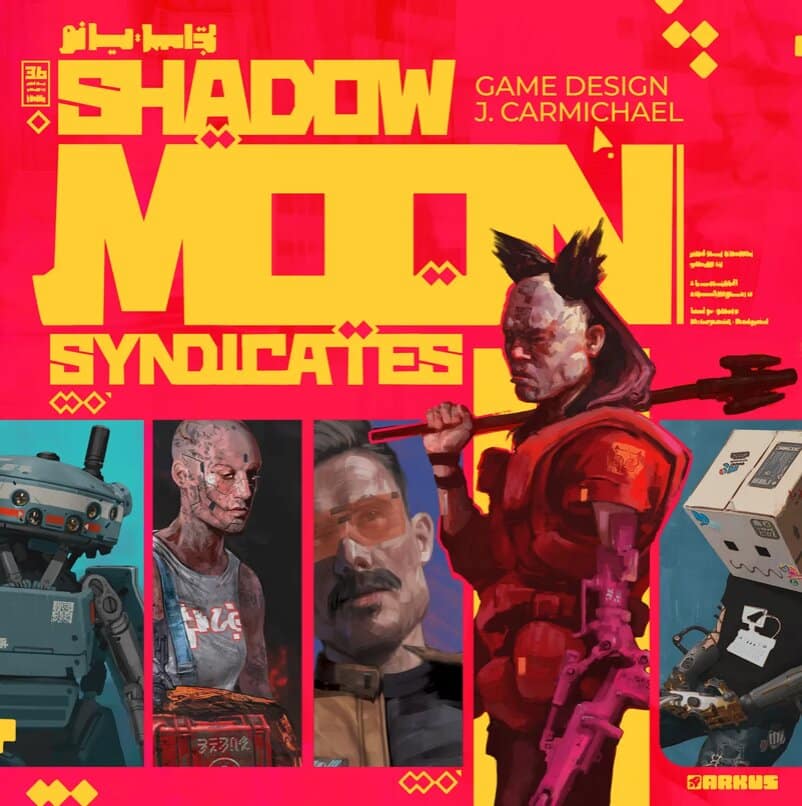
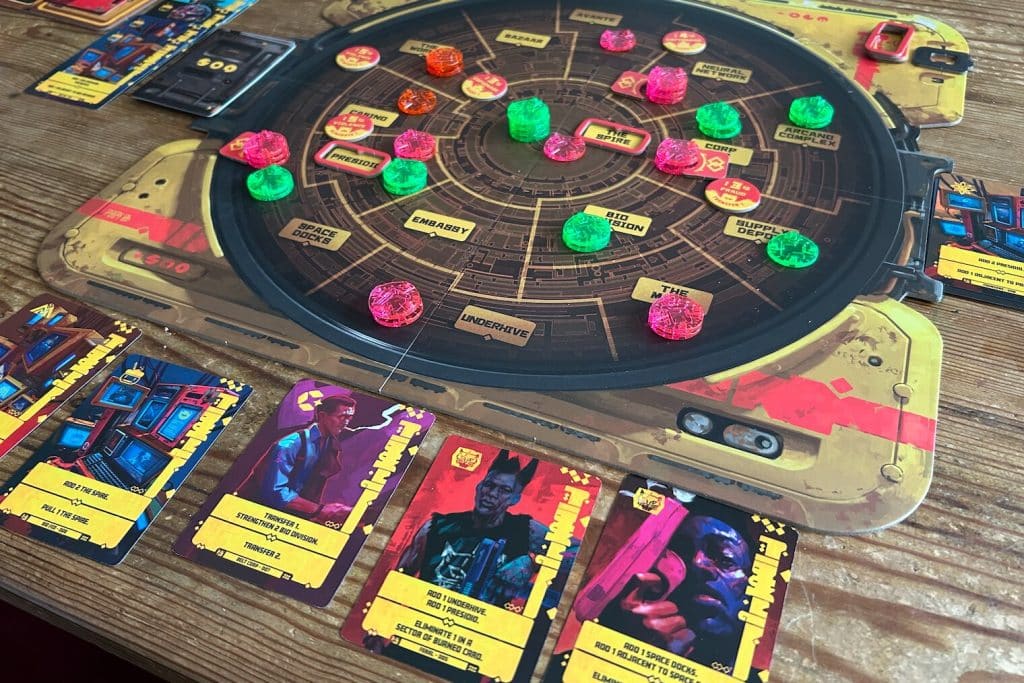
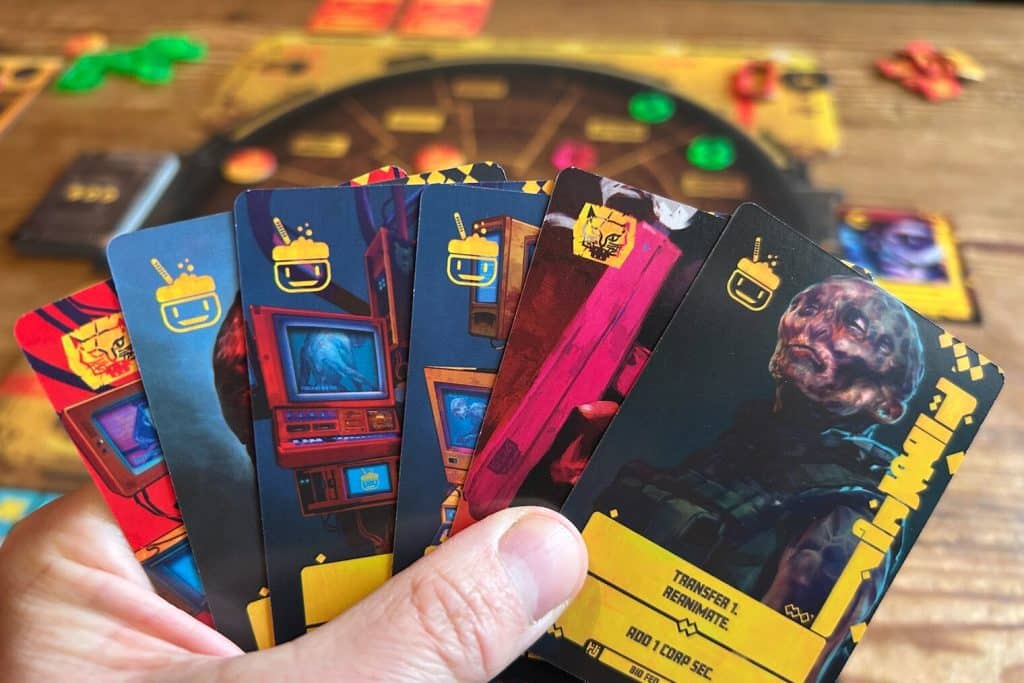
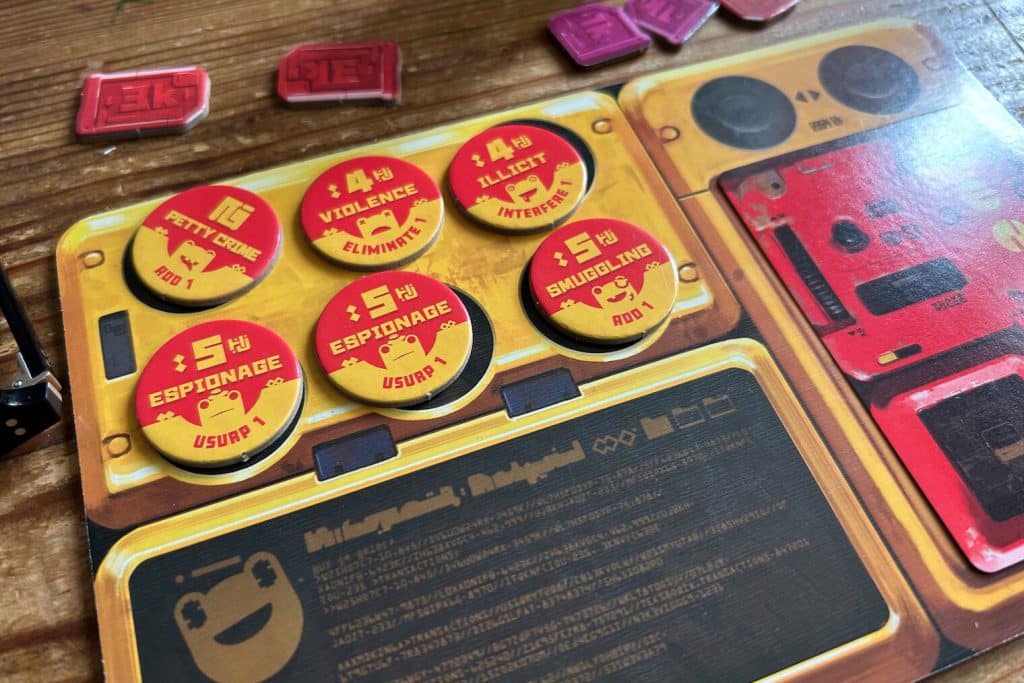
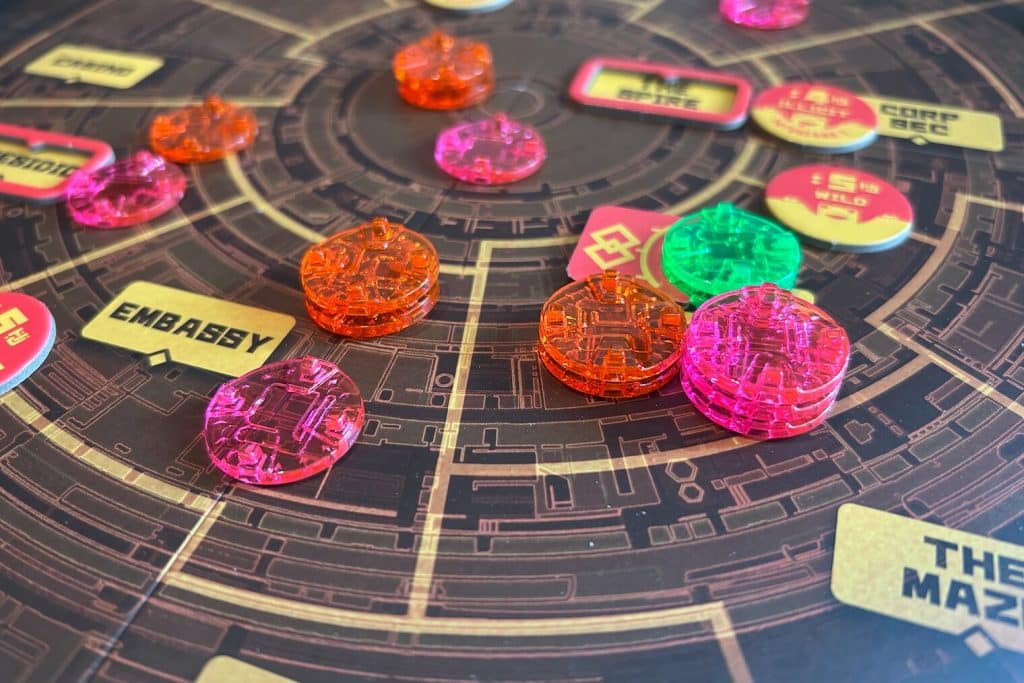
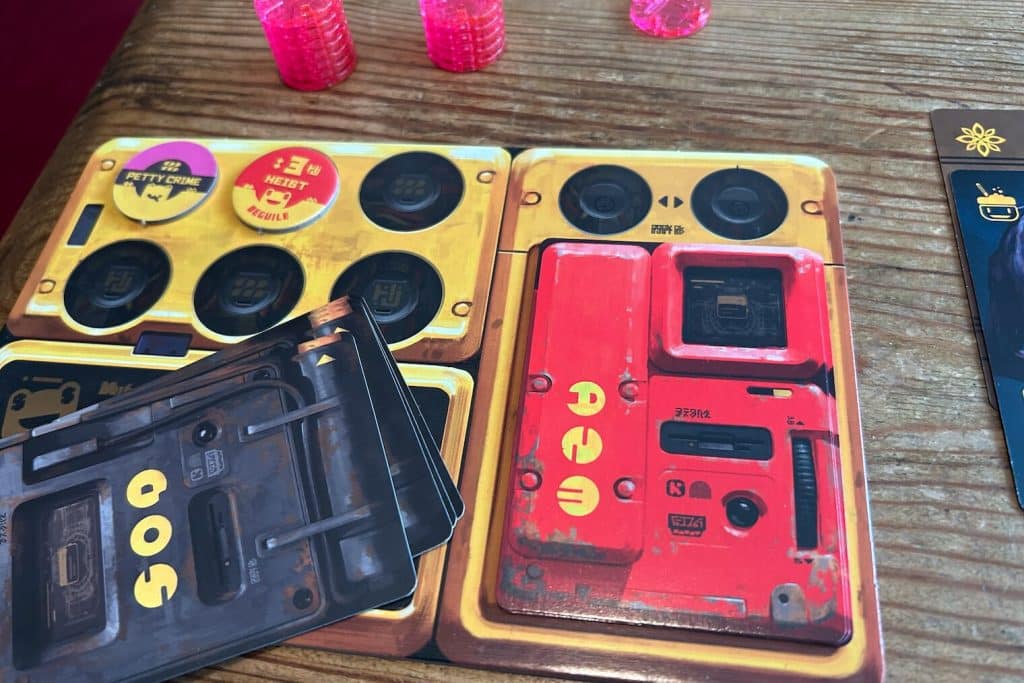
Shadow Moon Syndicates takes place on a distant satellite where mobsters – the players – are jostling to take over running the place from a recently-deceased crime boss. The board itself is the moon, divided into various Sectors. The juice of the game however… is in the cards.
There are ten sets of cards in the box, but each game only uses a certain number of sets (the extras are for variability across multiple plays). The cards let you pursue divergent goals in the game: controlling sectors, claiming Operations, and end-game objectives. It’s actually easier to start with scoring and work backwards, because Shadow Moon Syndicates offers you so many different actions listing them here would lead to an overwhelm of terminology. The key thing to bear in mind is that they’re almost entirely about adding, moving, or removing influence from players on the board: represented by tokens of your colour. Whilst money is the game’s measure of success, your avenue to it is all about where and when you have influence.
The board always has a number of Operation tokens on it, and if at the end of your turn you have enough influence adjacent to an operation token, you can claim it: removing your influence and taking the operation token onto your board. Operation tokens are worth points at the end of the game, but can also give you a boost each round, before being ‘spent’ and flipped over. You score points at the end of each round by controlling a sector: that is, having at least two influence present, and more than anyone else. And finally everyone can resolve an Objective card of their choice – you start the game with three – which reward you for controlling certain areas and having collected specific operations tokens.
There are three rounds. Players are dealt six Agent cards in rounds one and two, but choose three from each of these opening rounds to make up their hand for the finale of round three, so some forward planning is helpful. In each round, players play their six cards one at a time, in turn order, and take the action ‘above the line’ on them: if you look at the pictures above, you’ll see there’s text both above and below the line at the bottom of each card. If the card you previously played this round is from the same set as this card, you also get to activate the ‘below the line’ power as well: so playing cards of the same set consecutively can be advantageous. As mentioned above, there are numerous actions the cards do – seventeen of them! – but they are almost exclusively about manipulating influence on the board: the game could have been called Shadow Moon Shenanigans, because players are constantly jostling for position, outnumbering each other or interfering with the balance of power across the sectors.
When an operation token is claimed, a new one is instantly drawn from a bag and placed on the board (each token tells you its specific location) and when the last card of each player has been played the round is over. In the third and final round, players will play their last objective card face up beside the board: at the end of the game instead each player scoring an objective card of their choice, all objectives will be scored by all players.
Sam says
There’s a lot to like here, from the slick production to the punch-up vibes in how the game plays, which strides into a sci-fi bar brawl and starts flinging vibranium stools around. I love the below-the-line mechanic of how cards of the same suit can be combined (and you can discard any card face-down just to add an influence token anywhere – face-down cards represent all suits). The presentation is good too: the art by Dane Madgwick and Paul M Tobin completes a New Zealand design trio that have put together a highly interactive game. The downside for me is the 17 actions. Rather than have them named with an appendix and player aid, I feel that simply writing what each card does in the card itself would facilitate quicker and more accessible play. Even in round three I still can’t remember what – for example – Beguile, Sacrifice and Burn all mean, and to still be referencing a player aid to make sense of it feels like an overload of keywords – the desire to give the actions their own thematic language is actually in the way of play. My other concern is a slight sense of unwieldiness: with three of us this took well over 90 minutes, and whilst that playtime would undoubtedly drop with familiarity, I don’t think I’d attempt it with five players: partly because it would be that much more chaotic, partly because it would be that much longer. So for us, a qualified success. However, if the theme and the card-combos appeal, these subjective drawbacks may be no issue for you – and with the 100 bespoke agent cards, the game certainly offers a lot to explore.
-

Take That!
High
-

Fidget Factor!
Moderate with three, climbing with four or five. The game works for two, but has a slightly more attritional feel.
-

Brain Burn!
There's a slightly chaotic vibe to proceedings, and it feels more a game of spotting opportunities and exploiting them than one for long-term strategy
-

Again Again!
Huge variety in the number of cards, abetted by the randomness of the operation tokens


