
Shards of Infinity
Designed by: Gary Arant, Justin Gary
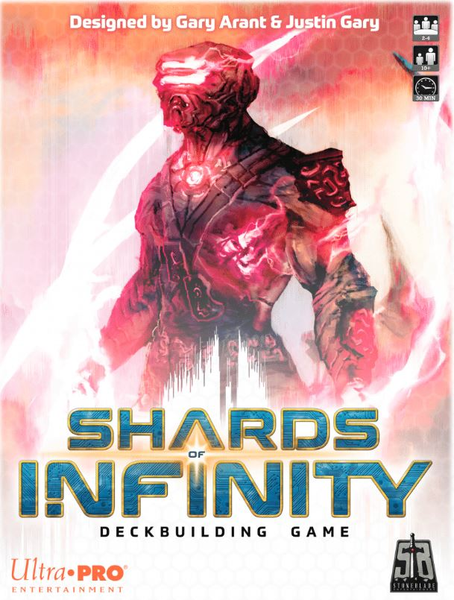
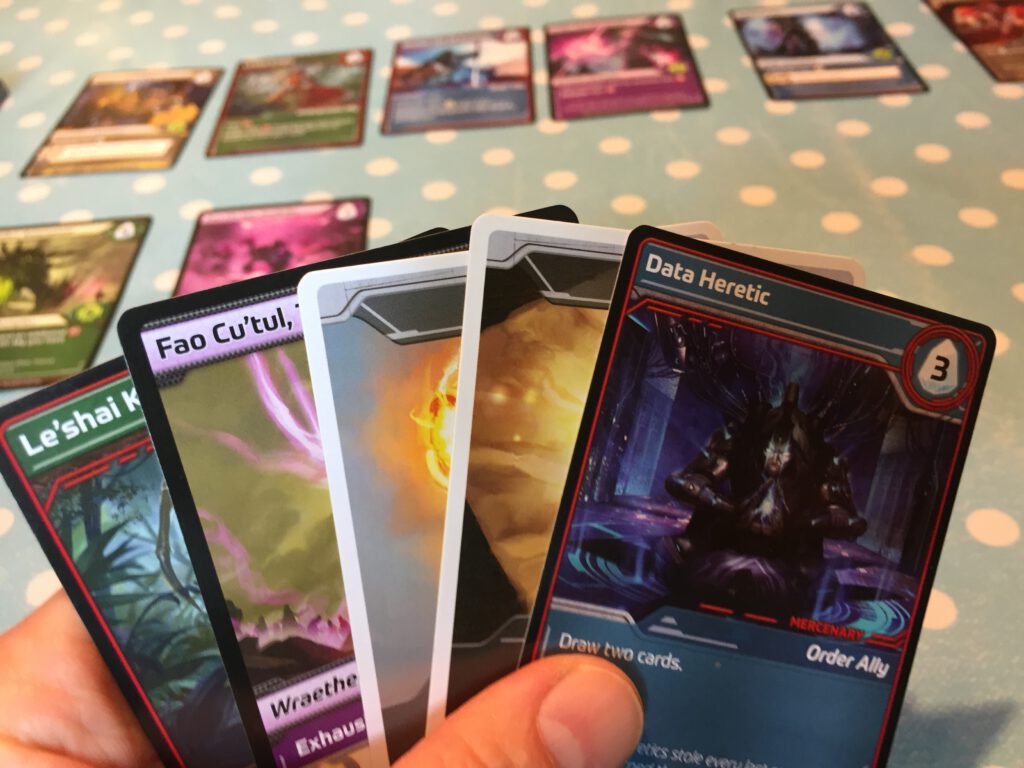
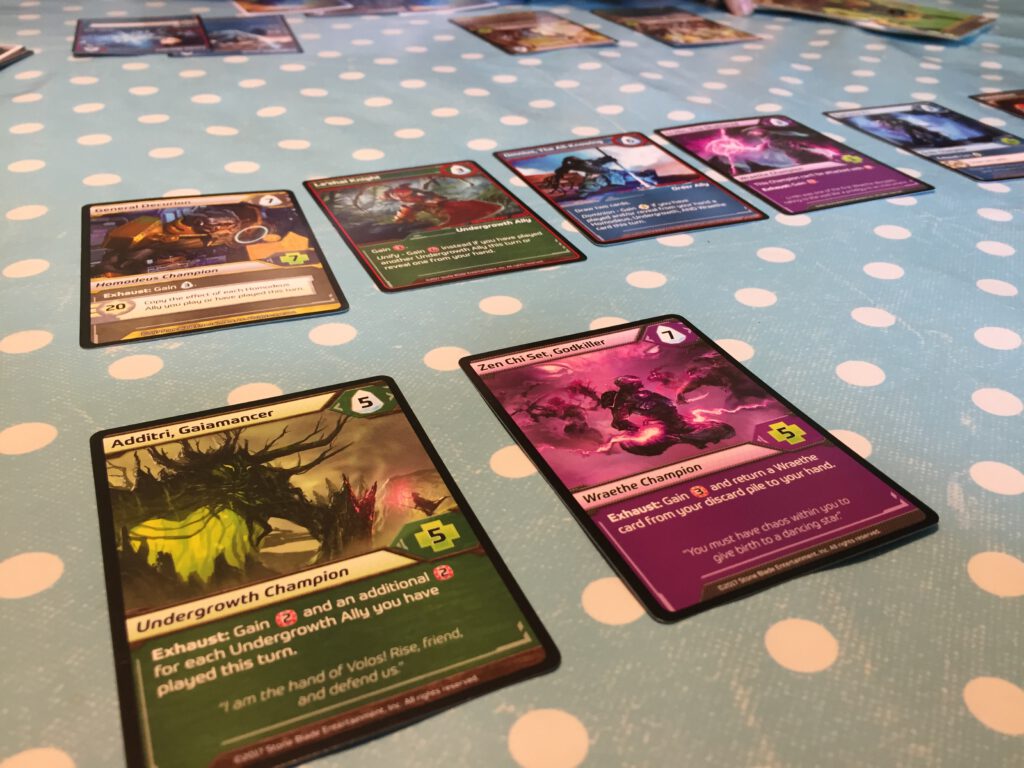
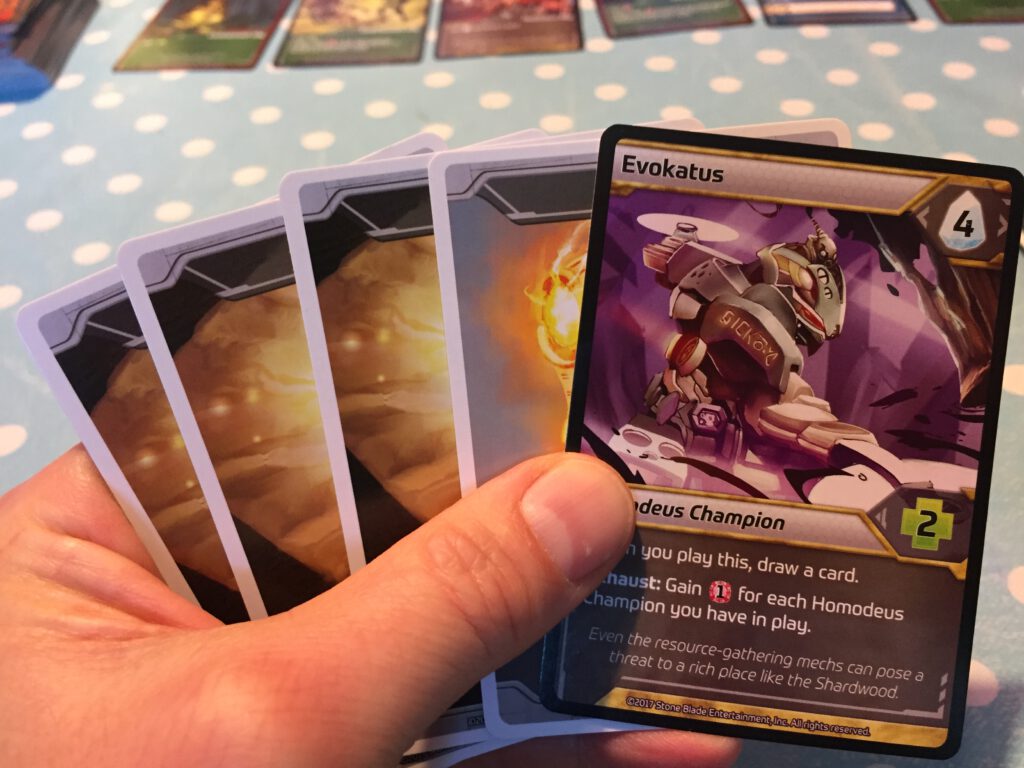
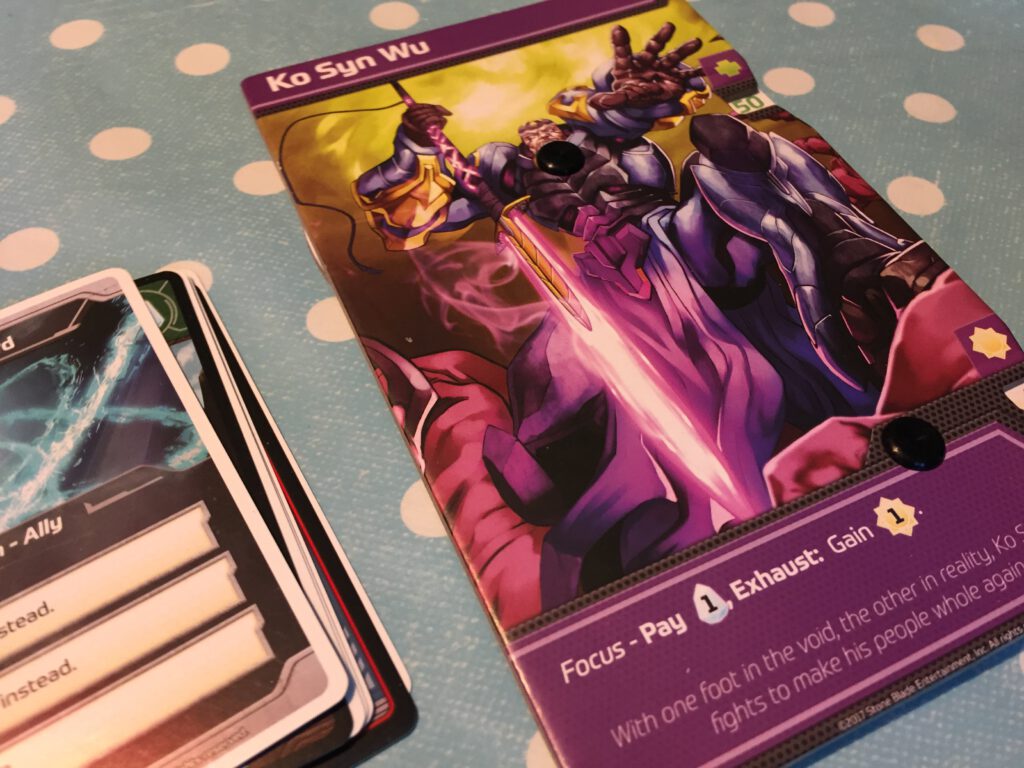
Shards of Infinity is a 2-4 player battle for supremacy between wizards from another world/time/dimension: players attack each other, heal themselves, conjure Heroes to fight for them… and the last one standing is the victor.
Though the game plays four, it’s at its best – we feel – as a head to head battle. Each player begins with a character board with their Health at the maximum of 50, and their Mastery – more on Mastery shortly – at zero. Everyone begins with an identical hand of cards: seven crystals will be used to buy more cards, the Blaster does damage, the Shard Reactor is worth two crystals, and the Infinity Shard, at the start of the game, does a couple of points of damage – but both the Infinity Shard and Shard Reactor can become more potent as you improve your Mastery score…
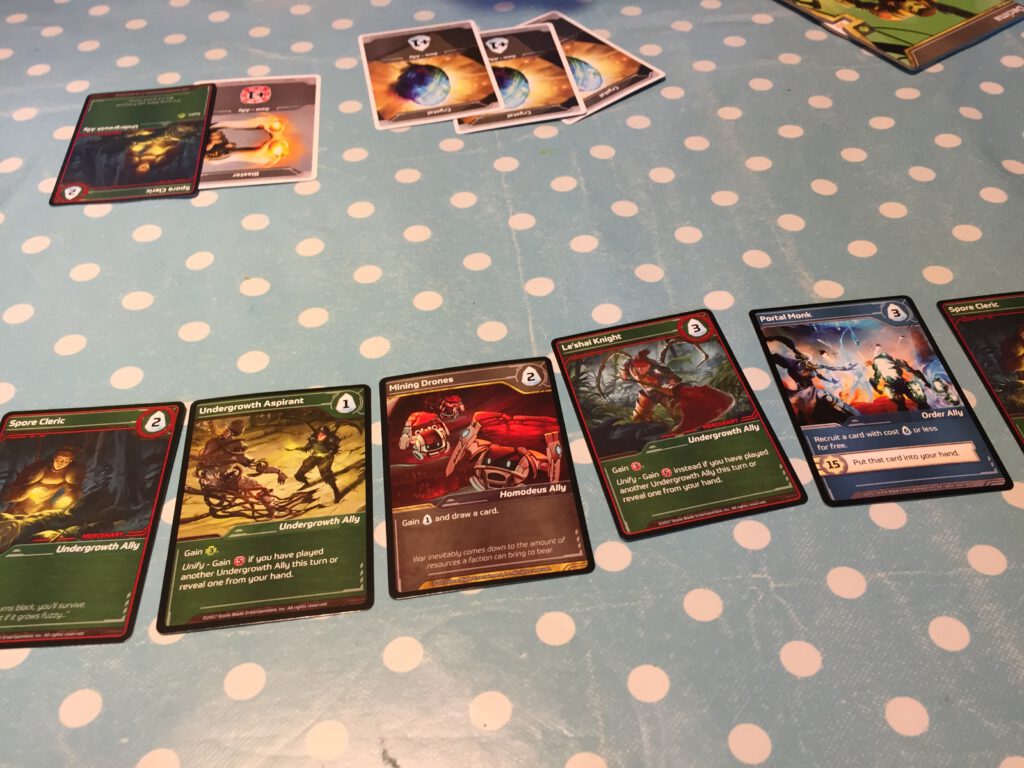
On your turn, you deal yourself five cards from your deck and activate them all. At the start of the game this means dealing out microscopic damage to others, and focusing your most of your play on spending crystals. On the table will be a display of six face-up cards that can be bought (- the display is instantly replenished when a card is bought) using the crystals – when purchased, they go straight into your discard pile, but when your draw deck runs out, your discards are all shuffled to form a new draw deck, meaning these more powerful cards will come into play. The cards are mostly straightforward – they deal damage to others, heal your own damage, supply more crystals or some combination thereof – but you’ll see too that cards of a particular faction (there are three factions in the deck) combine with each other in a variety of ways as well.
Some cards are Heroes that stay on the table in front of you, boosting every turn you have – until an opponent wipes them out, at least. Others provide Shields that can offset damage. Some (Mercenaries) give you the option of playing them straight away, with the not-inconsiderable caveat that you then cannot add them to your deck for future use. And some will increase your Mastery score: increased Mastery improves some of your cards, increasing their damage or healing power – to the point where if you get your Mastery to a whopping 30, playing the Infinity Shard wins you the game instantly.
Assuming that doesn’t happen, however, players are eliminated from the battle until only one remains.
Sam says
These types of take-turns-to-strike card games with variable powers and combos are not the kind of games I seek out, purely on a subjective basis, just because there are others I prefer. The themes are always grandiose and the mechanics can feel repetitive. But those preferences to one side I’ve enjoyed my plays of Shards: it’s more nuanced than it first appears and the system seems to allow for stirring comebacks and swings of dominance from one side to another. We’ve seen some tight finishes and some spectacular wallopings. A lot of game in a small box!
-

Take That!
Plenty.
-

Fidget Factor!
Reasonably low with two, creeping higher with more players. Early turns are very simple, but the more the cards combine and facilitate more card draws, more combinations, the longer turns take. Although it's still pretty brief compared to many.
-

Brain Burn!
The strategic question is whether to push up your Mastery and boost the connected cards, or ignore it and push for a quicker win? The latter can backfire if you don't finish opponents off. The former can see you wither and die before your improved mastery takes effect - and in-between times there is the tactical decisions in how the cards combine to pull off big plays. Bear in mind too that some cards are Mercenaries: these can be added to your deck as normal when purchased, or played instantly as a one-off...
-

Again Again!
Although the flavour of the game never changes - it's a battle to the death - there's lots of tactical variety here in the huge deck of cards.


