
The Hobbit: There and Back Again
Designed by: Reiner Knizia
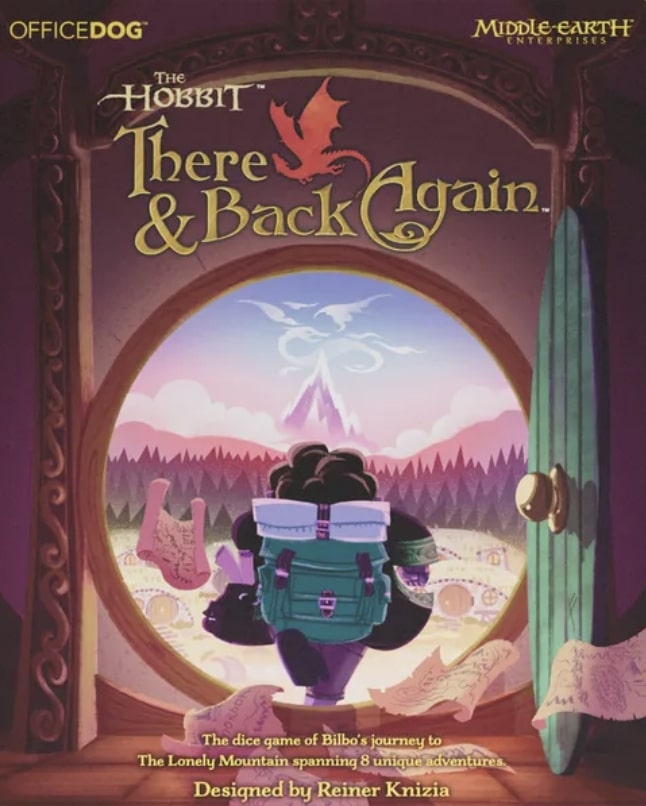
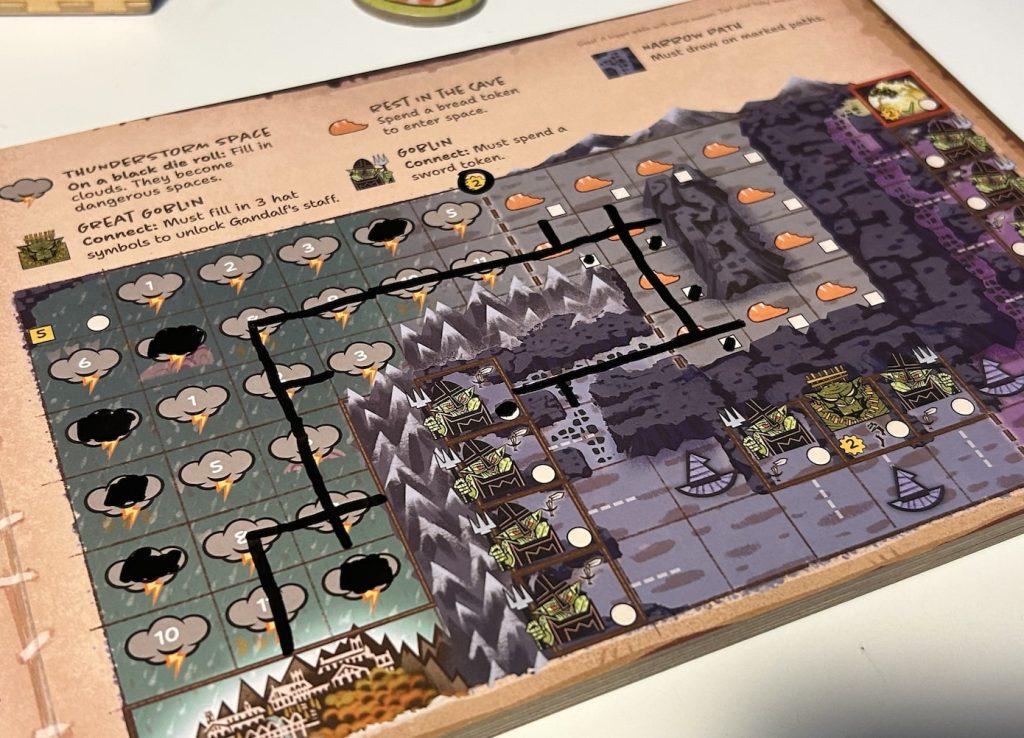
There are many games inspired by Tolkien’s books, from the co-operative challenge of sweeping epic Fate of the Fellowship to the head-to-head brinkmanship Sauron v the good guys in The Confrontation. The Hobbit: There and Back Again takes a gentler approach than both, offering you 8 games in one as you travel with Bilbo and the his companions from the bucolic Shire to the lair of the dragon Smaug. Whilst the game is competitive, however, everyone is – quite literally – choosing their own path…
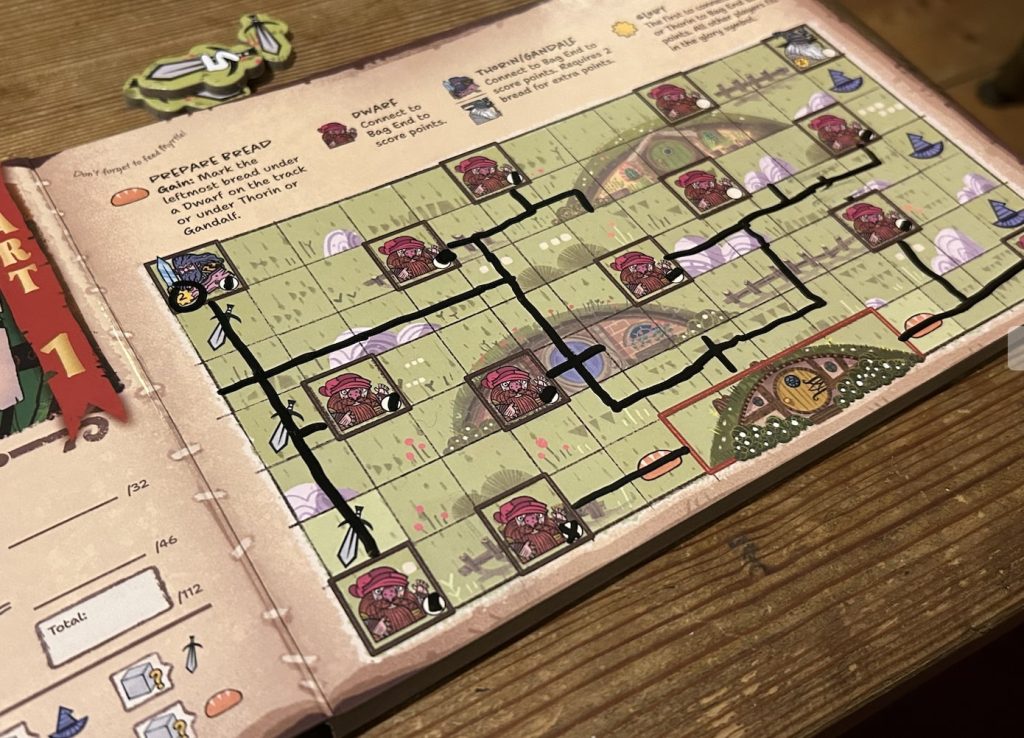
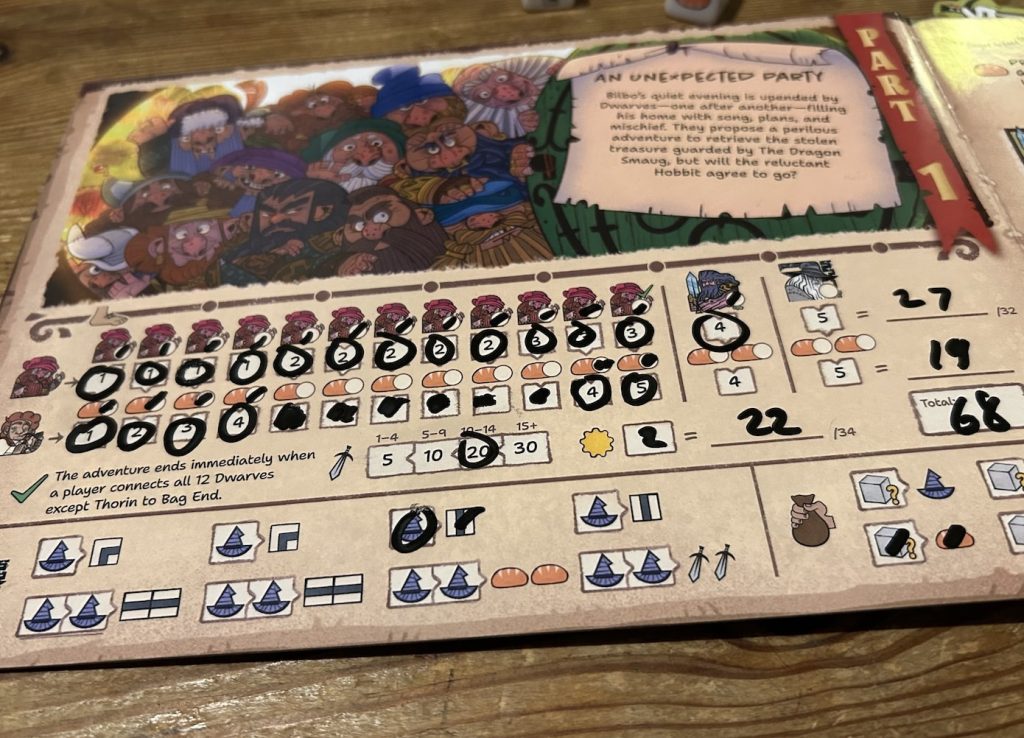
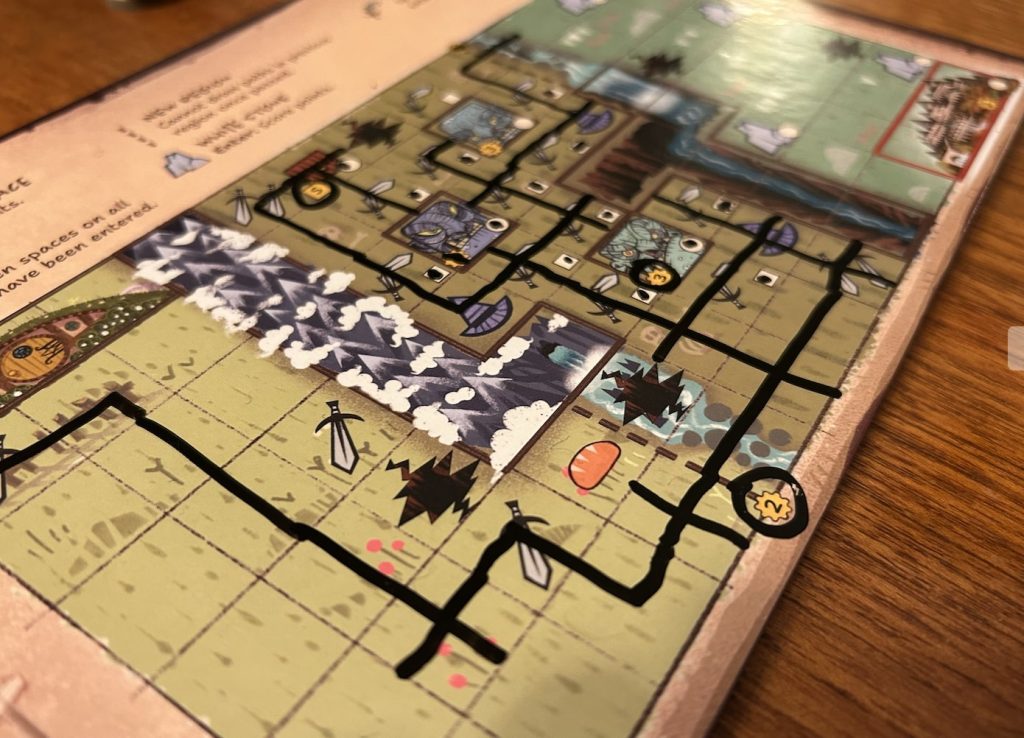
This is a roll-and-write game, where dice are rolled and their results are shared between the players. In this instance the writing – or drawing – takes place in each player’s own book, with each double-page spread representing a part of the story, from the beginning (-the dwarves and Gandalf arrive at Bilbo’s home) to part eight, where your goal is to defeat the fire-breathing Smaug as he terrorises the town of Esgaroth. The structure of the game remains consistent, however: each round the starting player rolls all the dice, and then in turn everyone chooses an unclaimed die and uses it in their own personal book, either as a path, or to gather a resource of some kind. For example, in the first game, the goal is to connect all the dwaves to Bag End by drawing paths for them to follow, and the game will end as soon as any player connects the twelfth and final dwarf in their own book.
But it’s not just a spatial puzzle, because also shown on the dice are bread, swords and witches hats! In the first game, having bread ready for when each dwarf arrives means they will score more points, so it’s worthwhile trying to get the stuff (and marking it off on your book) before connecting the dwarves to Bag End. The swords in the first game just reward you with points (more swords = more points) so having lots of them is helpful. And the witches hats can be used to trigger little bonuses such as extra paths or extra bread. There are also bonuses for connecting Gandalf and Thorin to Bag End as well, and big points if there’s bread waiting for them! The Fellowship are big lovers of yeast, it seems.
In game one, that’s pretty much it. It takes around 15 minutes per player (as long as someone can teach it clearly) and strategically you can rush toward a quick endgame or go for a more bread-based victory. Turn the page and the next game asks you to navigate the tricky path to Rivendell, where the swords are more important, as they’re used to fight off threats along the way. And as you continue through the book, following Bilbo’s famous tale, the game gets a little more complex but without straying into crazy-complicated territory. In each instance, there’s an endgame trigger but no guarantee that the player who triggers it will be the winner.
Sam says
Some games just work. I like Tolkien, but I’m no uber-fan. I think roll-and-write games are fun, but I don’t love them: I prefer more direct interaction than they tend to offer. So The Hobbit: There and Back Again should have been the epitome of vanilla for me, but each play of it has been perfectly pitched to hit a sweet spot where both family and hobby enthusiasts can get a kick out of it. It doesn’t feel epic and, if we were being picky, even completely logical: are we all Bilbo, each inhabiting their own reality and taking slightly different turnings on the same journey? Ultimately, it doesn’t matter. This is a lightweight puzzle, dice-driven but absolutely not devoid of meaningful decision-making. I have watched people play and seen their expressions change from mild bafflement to complete engagement, thrilled at getting to draw a black felt-tip line on cardboard. To me, that speaks to how amazing games can be. This one wouldn’t be in my top twenty, but I cannot deny the type of fun it offers.
-

Take That!
None, outside of the indirect claiming of certain bonuses before others do
-

Fidget Factor!
Low to moderate. Each round players take a couple of dice at most, so the puzzling is more about the spatial challenge on the boards
-

Brain Burn!
See above! The primary goal is mostly the routes - get from A to B - but there's enough going on around that to give you interesting choices
-

Again Again!
You can play the 8 games and be done with it, but each one is also completely revisitable: the books are wiped clean after playing


