
Via Nebula
Designed by: Martin Wallace
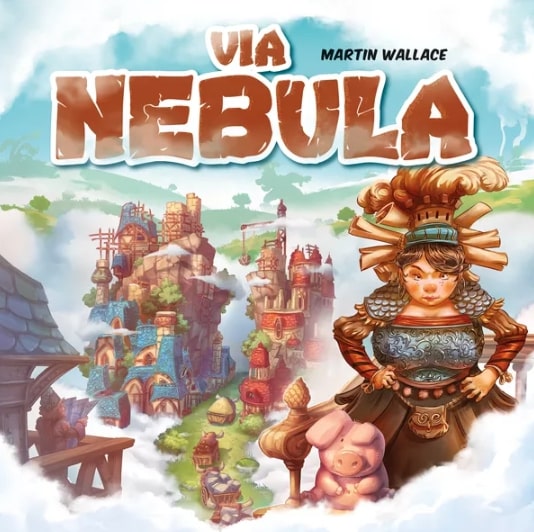
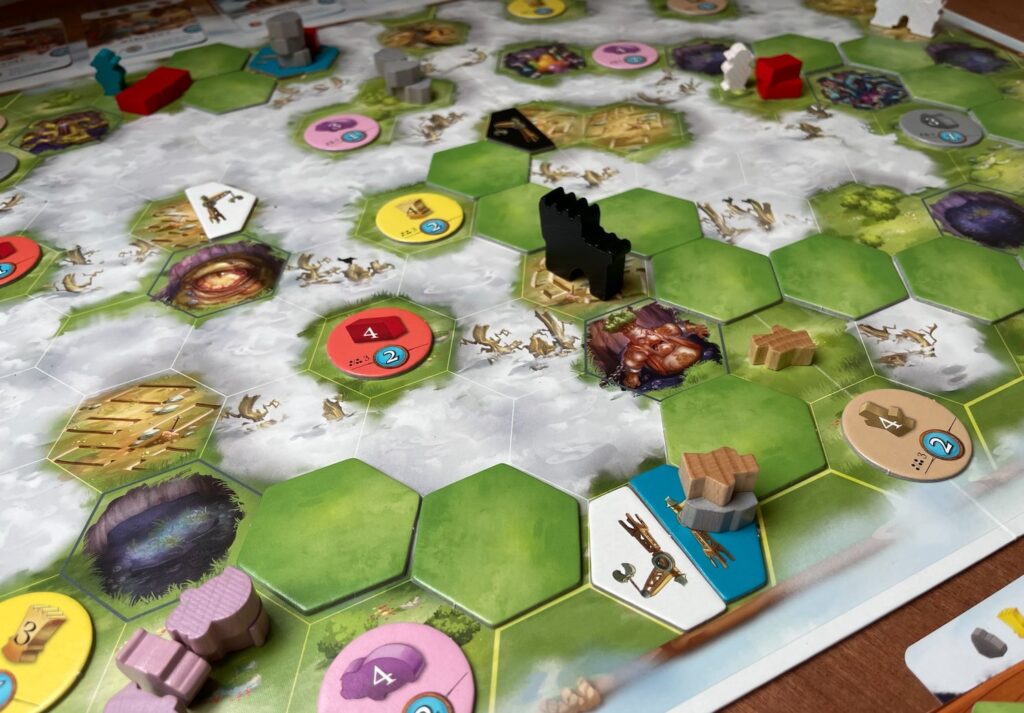
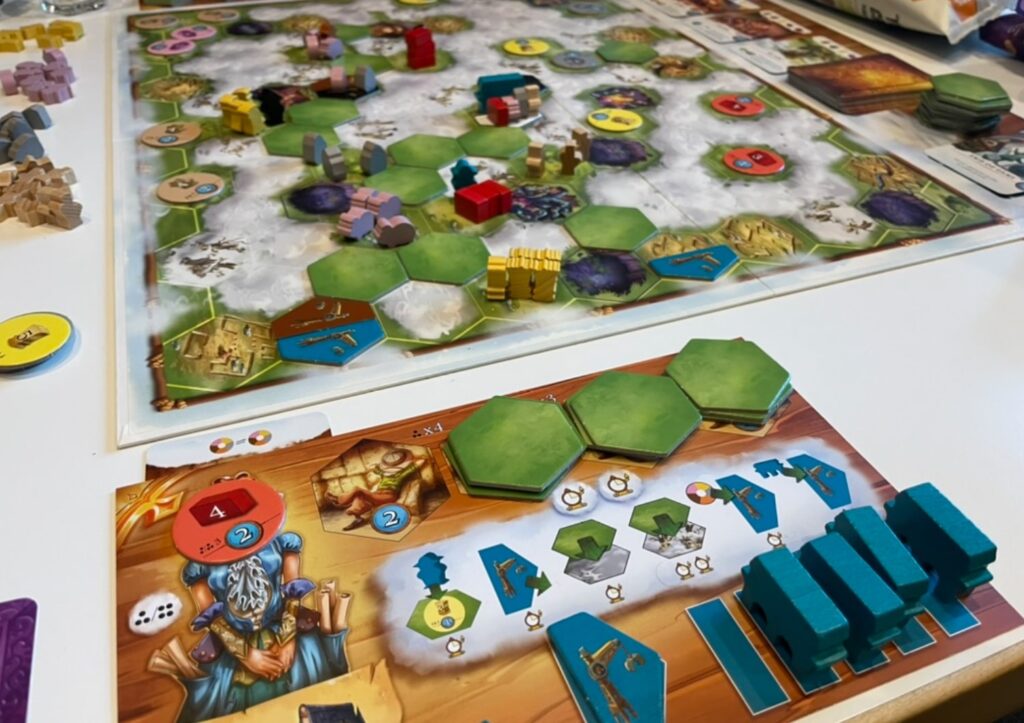
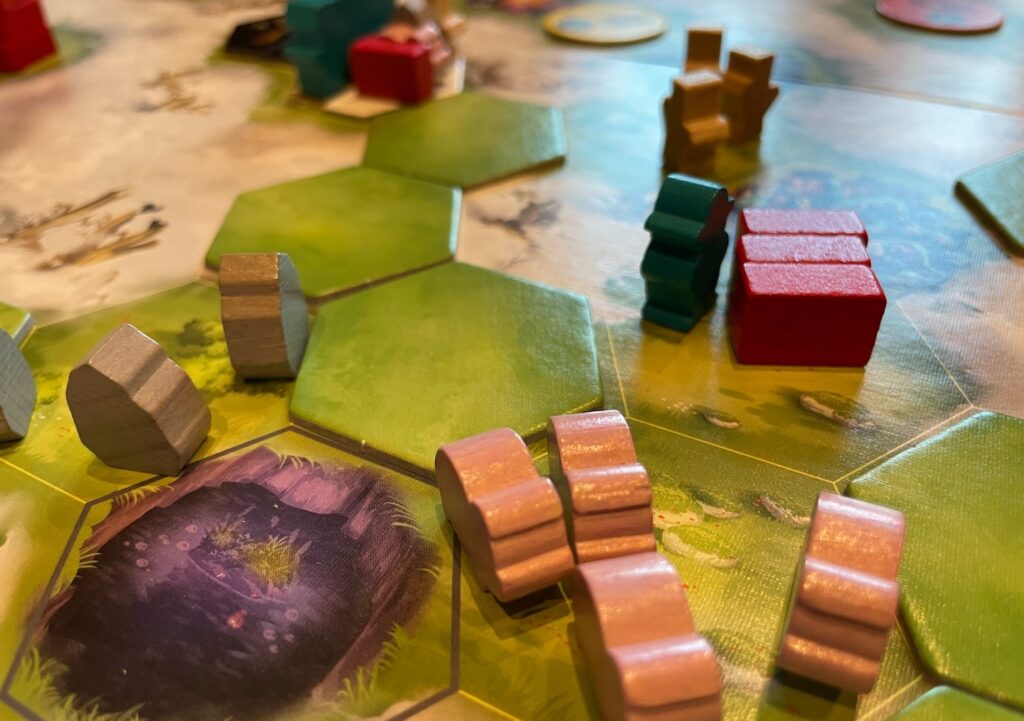
In Via Nebula, 2-4 players are constructing buildings. Whilst that may not sound the most compelling premise, the game’s engagement works across several fronts: sharing resources, delivery networks, and building sites mean the game bubbles with tension.
The large shared board is the world of Nebula, broken into hexes and populated at the start with a few readily available resources, and several exploitation tiles where more can be found. Each player has their own smaller board for storing meadow tiles, buildings and workers, and begins with two secret contract cards – they simply tell you what resources to collect to complete them, which is your primary objective in the game. When you complete a contract, you also construct a building, and there is a slight race element here as when a player builds their last building the game will end.
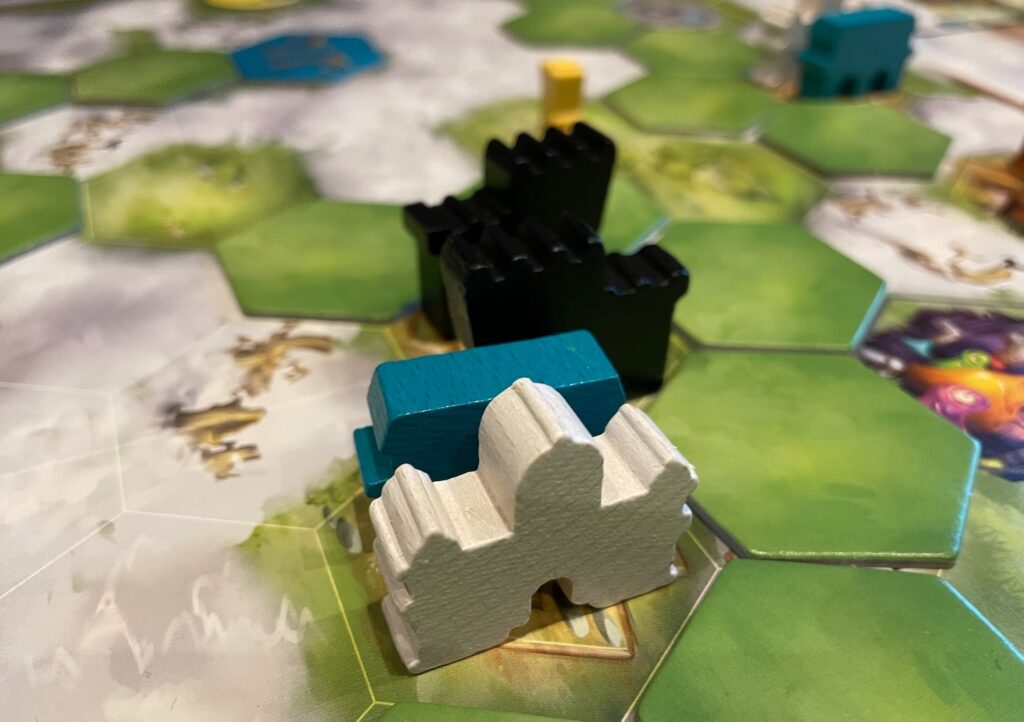
On your turn you take two actions, the kinds of which are shown on your player board. One is placing one of your workers out on an exploitation tile, taking the tile for yourself (it’ll score at the end of the game) and placing the resources it shows on the board, in the hex you took the tile from. A second action is placing a building site on a ruins hex, which is where resources can be taken from to complete a contract. A third action is moving resources to one of your building sites, which is where the game gets interesting. Resources can be moved as far as you like as long as they can travel through open meadow spaces (ie green and empty hexes). But these paths neared to be cleared, so that’s where your other actions come in, placing a meadow tile over a fog hex (1 action) or over a petrified forest hex (which costs both actions!). Finally, once everything is in place, you can spend an action completing a contract and, in doing so, placing one of your buildings out on your building site. As well as the two contracts in your hand, there are always four available to be claimed by anyone.
Once you’ve taken a few turns, the rules become clear. But the tricksiness of the game is how anyone can access each other’s resources, and everyone uses the same delivery network of open spaces. Not only that, each ruins hex has room for two building sites, so players can end up sharing the same hex. Workers are also a precious resource, because they do not return to you until all the resources they’ve found have been delivered somewhere. So it’s a sort of bunfight crossed with a race. When anyone places their fifth and final building, every other player gets one last turn, and then points are scored across four categories – and lost on a fifth one. But rather than get into the weeds of the scoring, we’ll wrap up the overview here.
Sam says
It’s hard game to track down, even online, perhaps because at first glance it looks a bit complicated and at first blush it seems so too – certainly it’s simpler than the explanation makes it sound. But the basics all make sense: find resources, make paths to building sites, move resources there, build to complete contracts. What makes Via Nebula marginally less immediate is also what makes it so good – to me at least: its opacity. The fact resources, once dumped on the board, are accessible by all players gives the game its tension and drama, without making it feel openly combative. Weird in a good way, and if it feels more abstract game than the theme alleges, it’s a good abstract.
-

Take That!
There’s no direct combat, no stealing and nothing arbitrary. But the game can be tense and can hit you with setbacks when someone else takes resources you want, or snags a public contract you were building towards.
-

Fidget Factor!
Early in the game turns move thick and fast – it’s about grabbing real estate, placing workers for resources and building routes between the two. As the game proceeds however, and players find their best-laid-plans messed-with, there may be the odd lull whilst rejigging takes place.
-

Brain Burn!
Once you have the actions down, the rules aren’t brain-burny at all. The challenge is spotting opportunities, maximising them and trying to make each turn feel palpably progress.
-

Again Again!
There’s enough variety in the basic game (set-up and contracts) to give each play a sense of a new challenge.


