
Zoo Vadis
Designed by: Reiner Knizia
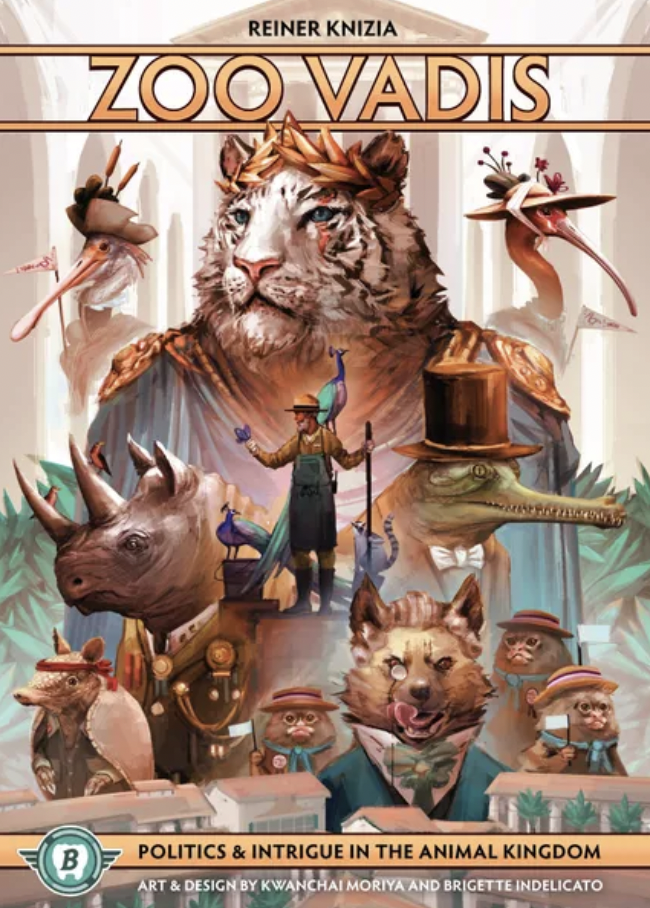
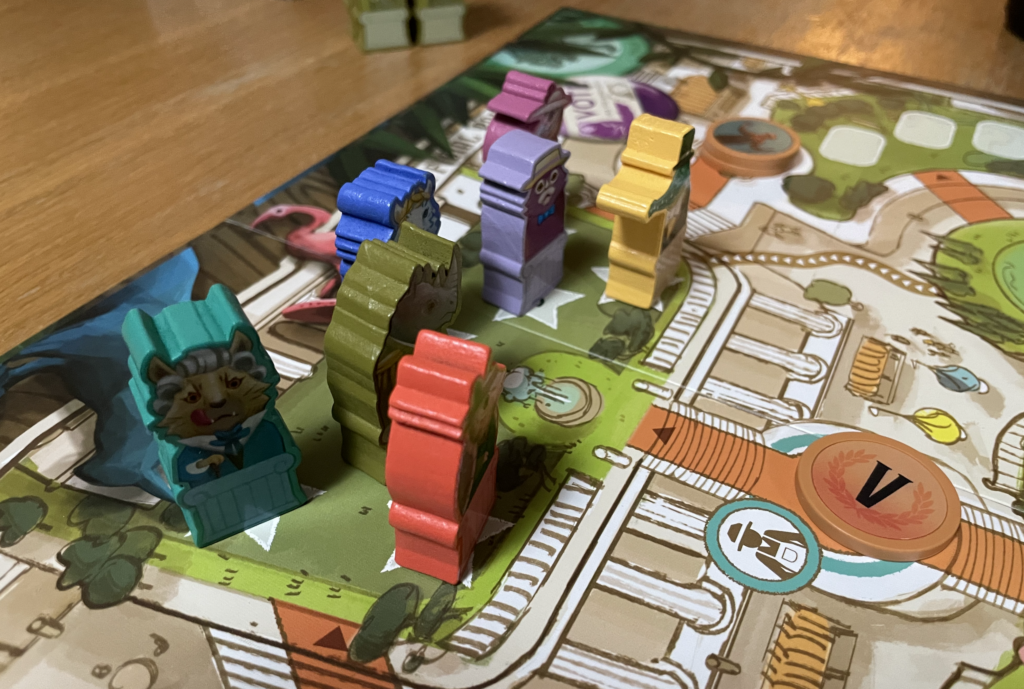
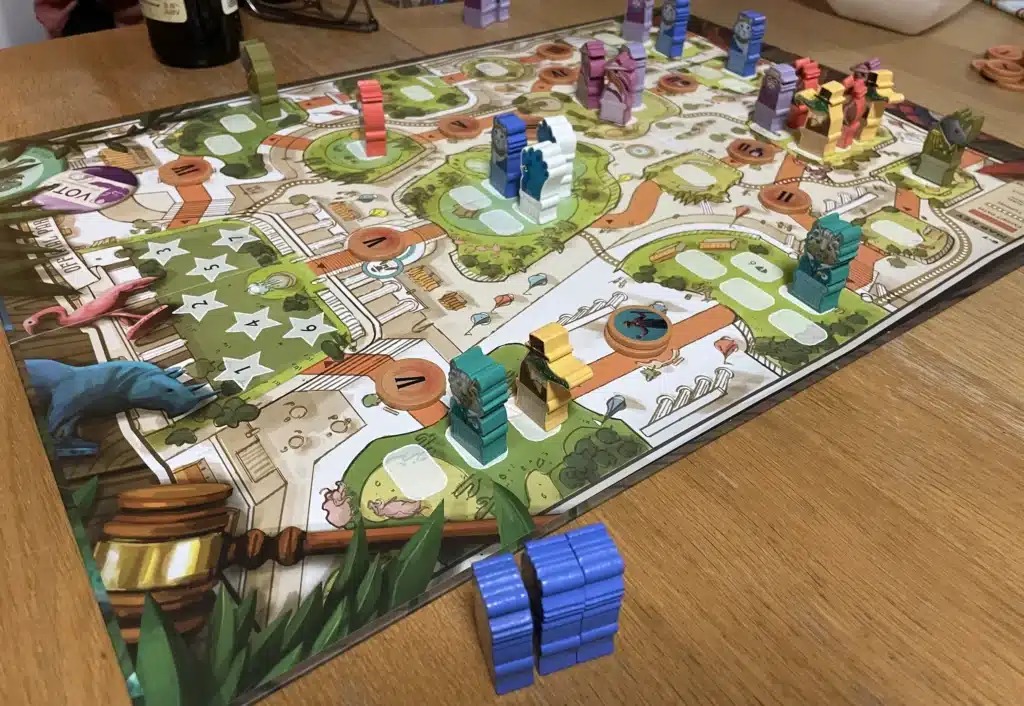
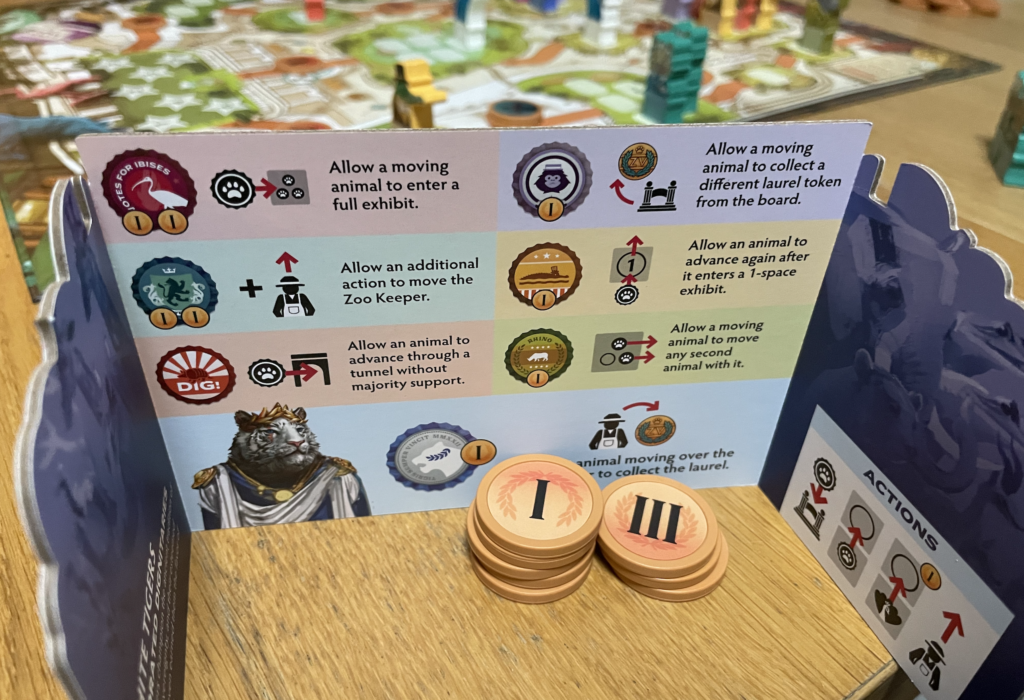
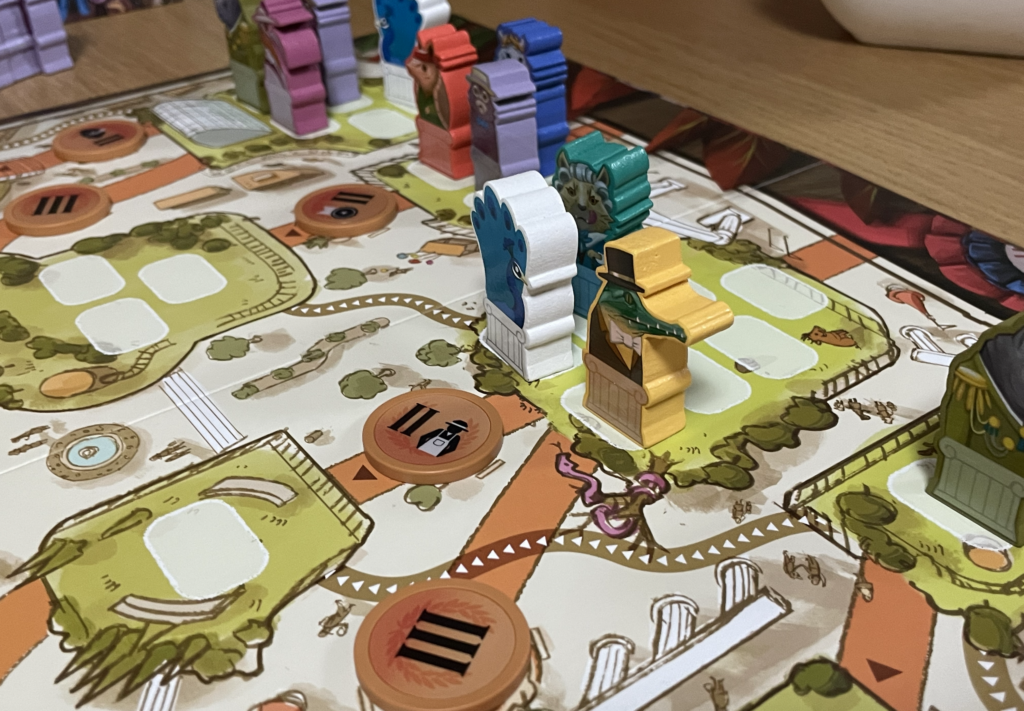
Based on the 1992 title Quo Vadis, the animal-themed Zoo Vadis works on similar principles: it’s a game of negotiation; of maximising what you can from other players and trying to further your own progress at less extortionate prices.
The theme is that the animals are taking over the zoo, and board shows the paths you must follow from the bottom – where your animal pieces enter play – to the top, which at least one of your animals must reach in order to have a chance of winning the game. Everyone begins with a bunch of their own animals and a couple of coins, and on your turn you have four options to choose from. Most of the time you’ll be adding or moving an animal, so let’s look at those first.
Adding an animal is simple: place it on any enclosure with room for animals (-spaces are limited!) at the the bottom of the board.
Moving an animal is slightly trickier. To move up a path to the next enclosure, you need to be voted forward by the majority of animals in your current enclosure: some enclosures only have room for one, so that’s easy: just vote for yourself. But most have space for three, five, or even seven animals, meaning you need two, three, or four votes respectively to move on from them. There might not even be enough animals present to get the votes you need!
Assuming there are, the other players may agree to vote for you simply because doing so always gets them a coin from the bank. But they may need some persuading: an additional coin from you, or a favour of some kind. Perhaps a reward now, or a (non-binding) promise of help in the future. Whenever you move up a path, you also get a reward in the form of coins (between 2 and 5) and take up a space in the next enclosure. But the other players may of course simply refuse to help you, if they feel you’re doing too well and need to be hampered. In which case, you’re forced to take another action instead: adding an animal piece as mentioned above, or moving the zookeeper or a peacock.
The zookeeper always sits on a path somewhere on the board. The benefit of the zookeeper is that you don’t need any votes to move along that path – simply move on up! The downside is that you don’t get to take the rewards on the path, however. And when you move the zookeeper to where you want them, you then need to wait for another turn to actually use them, and in the meantime of course another player may move them somewhere else.
Peacocks function like a kind of automated player. They sit in enclosures and occupy spaces – including, potentially, the final enclosure – which means they can get in the way. But the upside of them is they will always vote for you as long as you pay them at least 2 coins – they won’t ever say no.
Finally, each player has – optionally; you can play without them – a special power. The catch here is that you can never use your powers yourself; they are only available as a negotiation tactic to gift to other players when you judge the time to be right!
Play continues in this way, with promises made and often broken, until the last space in the final enclosure is claimed. At that point any player who didn’t reach the final enclosure instantly loses… and the winner is the remaining player with the most cash of those who made it.
Sam says
What a beast this is! You need a hardy soul, a thick skin and a silver tongue to do well at it, and appearing to do well can be dangerous. Designer Reiner Knizia specialises in rich and occasionally – as here – dastardly interaction from relatively simple rules, and while it may not be as instantly intuitive as some of his simpler titles, that sense of playful menace is present and correct here. While the game is simple and can be played with a friendly helpfulness, it’s probably at its best when inhabited by extortionate sharks.
-

Take That!
The worst that can - and probably will - happen is when you are refused votes. But almost as bad, at times, is the extortionate prices players may charge to help you out. Zoo Vadis is not a benign experience, by any stretch.
-

Fidget Factor!
Pretty low. Turns tend to be reasonably quick, and you're often involved even when it's not your turn.
-

Brain Burn!
The rules are simple, and options are not overwhelming at all: add a piece, move a piece, move the zookeeper or a peacock. The heart of game isn't really about them though - it's about the economy of bribing and favours!
-

Again Again!
Each animal has its own specific power, but even without that asymmetry the basic game offers a very revisitable experience - assuming you enjoy the slightly cut-throat atmosphere it often fosters.


