
Ayar: Children of the Sun
Designed by: Fabio Lopiano, Mandela Fernandez-Grandon
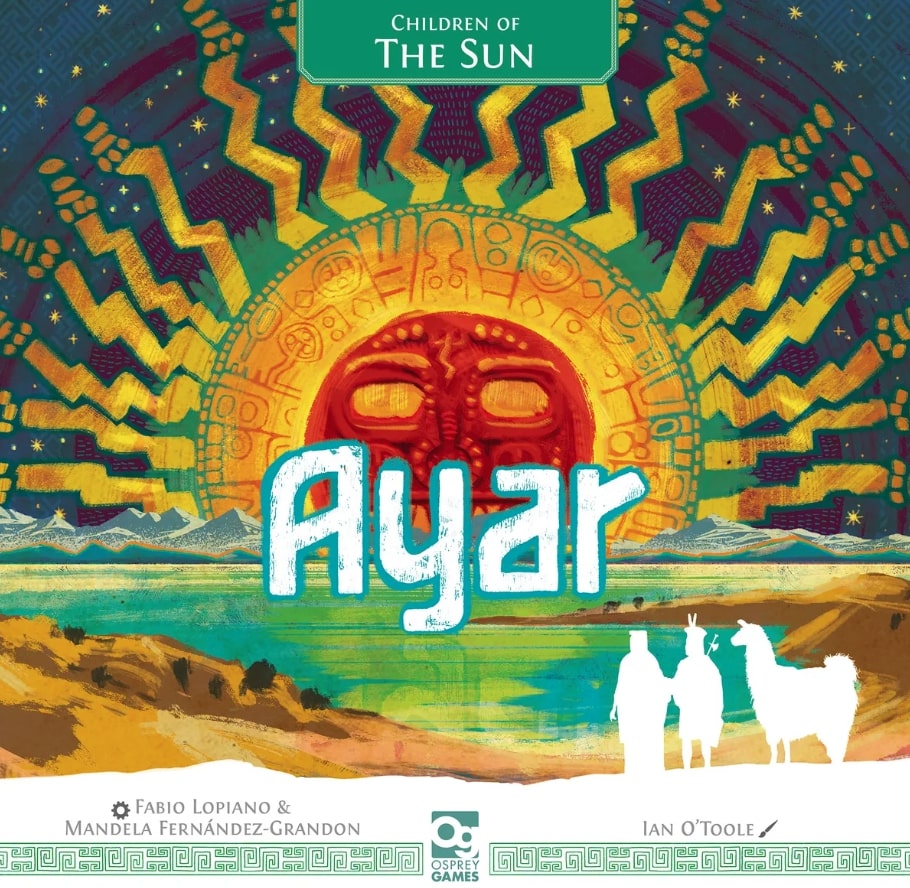
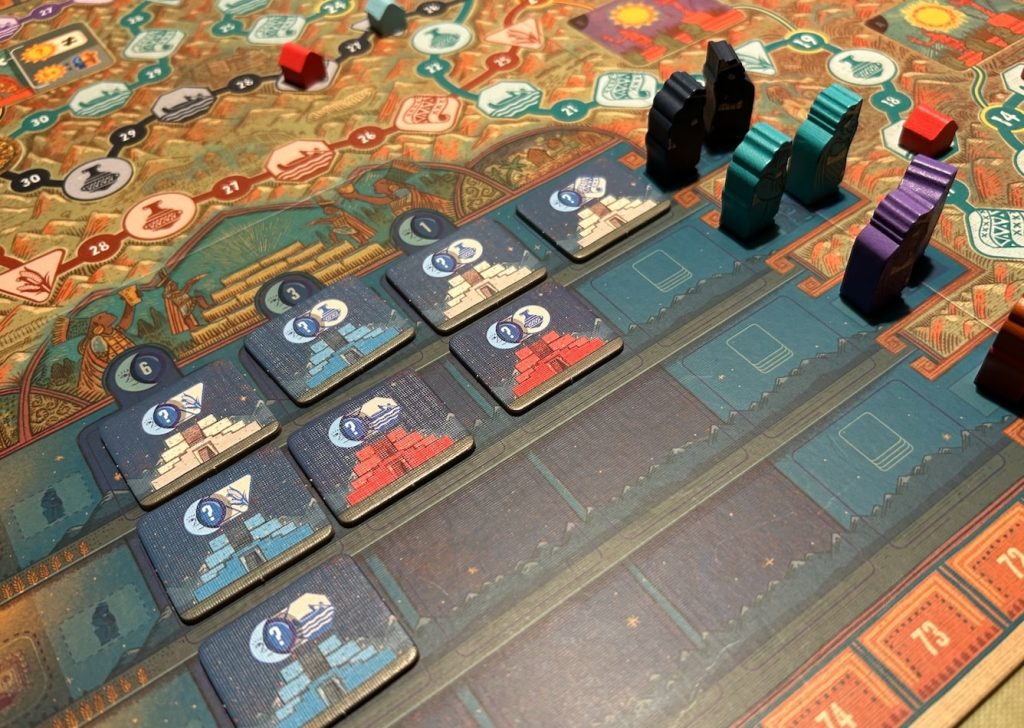
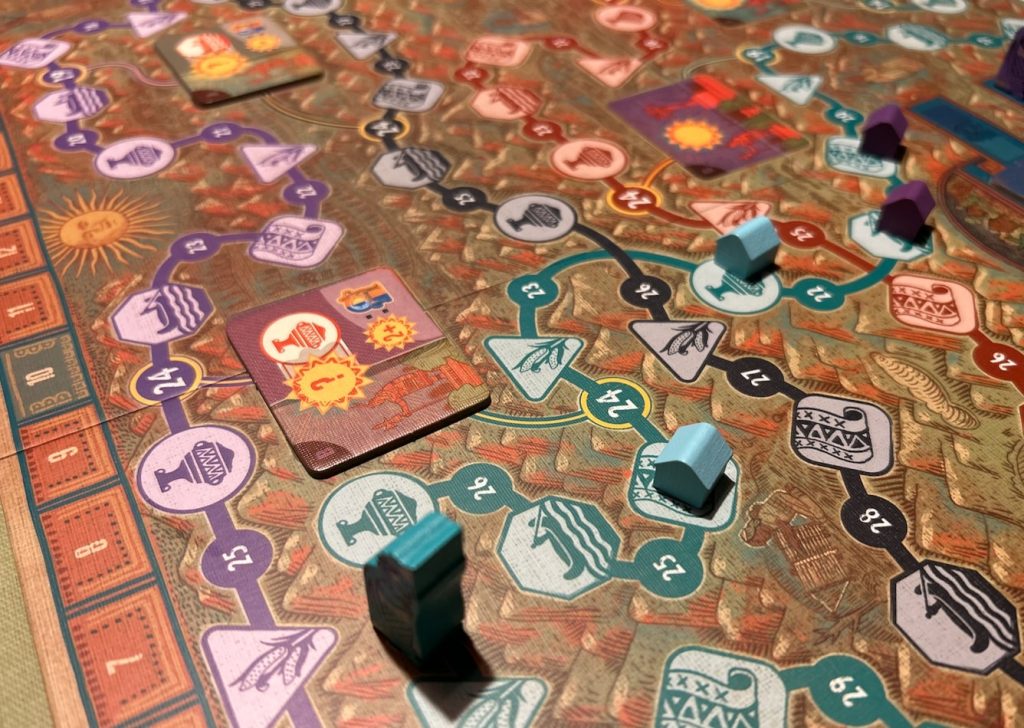
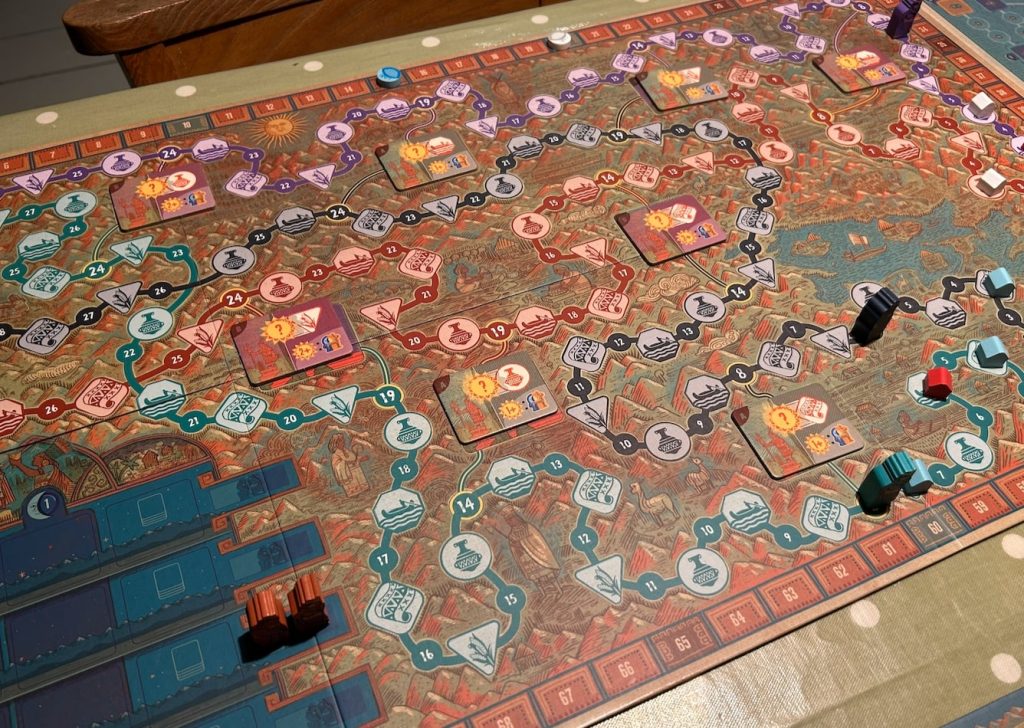
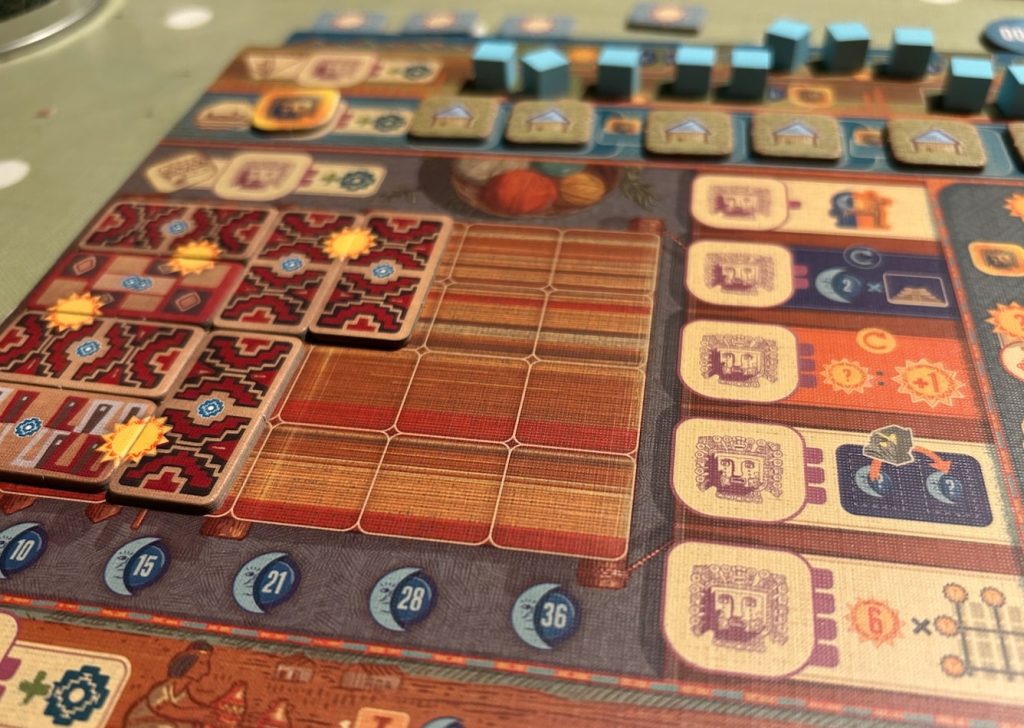
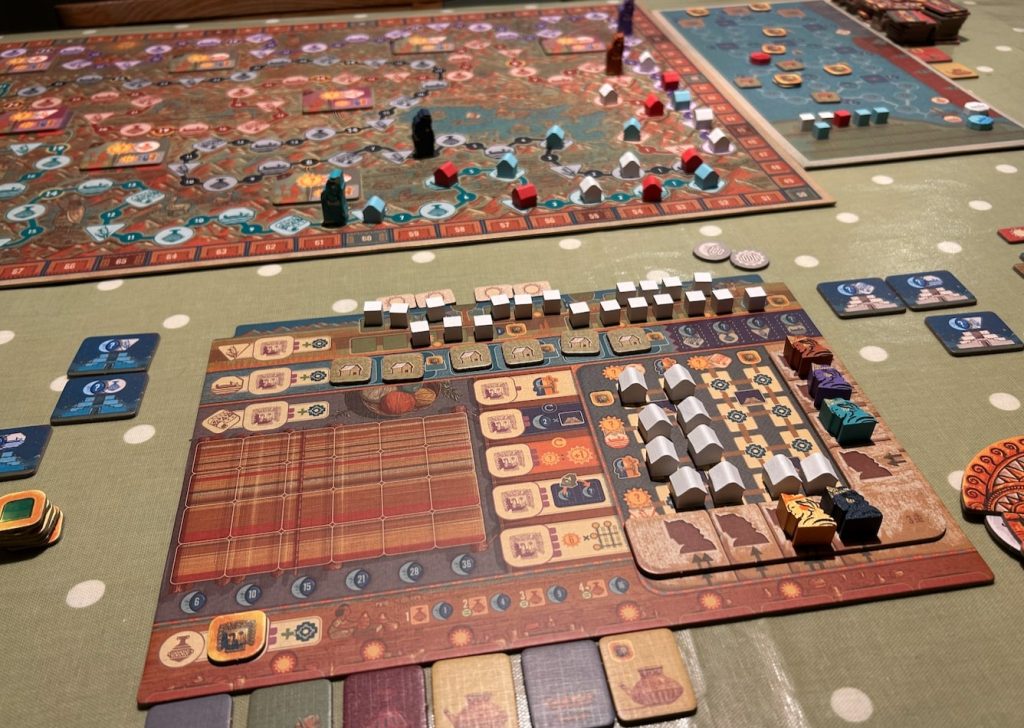
In Ayar: Children of the Sun the theme is the origin story of the Inca culture, when the ‘children of the gods’ travelled the lands teaching the early peoples the ways of their world. But to be frank, once play begins the story falls away and you’re left with an intricate puzzle. On the main board, the four Ayar travel along their individual paths, propelled by the players. But in each of the games’ four rounds, one Ayar will retire, changing the landscape of the game…
How and when the Ayars move is down to the players. Everyone has their personal player board populated with small houses (‘tambos’) on a 4×4 grid. On your turn you place a marker in any empy row or column of the grid: the colour of the marker tells you which Ayar will move along its path on the main board, and the grid itself will tell you how far. Once you’ve moved the Ayar, you can choose any free activity space behind it to place a tambo on from the row or column you just activated. Then, you perform the activity on that space.
There are four activities: pottery, weaving, terrace farming and reed bundling. The power of the action you take depends on the number of empty spaces in the grid, but basically they form six kind of mini-games that offer different ways to score: pottery is a matter of collecting different-coloured pots, weaving a sort of mini-tetris tile-laying game, terrace farming a matter of placing cubes out on a the small Lake board, and reed bundling travelling in a boat across the lake, forming islands. Trying to understand all this thematically is vague at best, but mechanically it all works: once all players have played all markers (one of each colour, plus a wild you can use for any Ayar) the slowest-moving Ayar – the one least far down his path – will retire from the game: meaning that in round 2 you only move three Ayars, in round 3 just a couple and in the last round only the last Ayar will move at all.
At certain junctures on the path, the Ayars will trigger scoring for one of these activities, but Ayar’s twist is that each player scores in two different ways: for Sun and Moon. The scoring mentioned here is always Sun scoring, where everyone checks how many suns they have achieved in each action. But at the end of each round, each player can choose which activity they will score in moon points, and the order is important: once you’ve scored for weaving, say, you cannot do so again. Players will also score sun points at the end of each round, and during play emptying the rows and columns in their grid of tambos triggers some bonus scoring, specific to you only.
There’s a few other things to consider as well – we’re not covering every little thing here – but this is the basic thrust of it. After the fourth and final round the player with the most points will be the winner.
Sam says
Games like this are the hardest to try and distil into a few paragraphs: it’s complicated enough to demand a lot of focus, but thematically so opaque that the story of the Ayar founding the Incan empire doesn’t really help you make sense of what’s happening. The game’s confection of overlapping objectives, scoring systems, and spatial ramifications combine into a brow-scratching undertaking that, in all honesty, has about as much narrative as a jigsaw. Beyond that, the game looks pretty nuts on the table and playing it doesn’t instantly dispel the impression – it’s an intricate puzzle, where timing is crucial and grasping the buttons and levers at play can feel rather elusive at first. But if that sounds like a negative, Ayar will offer a huge amount of fun for the right players: for every dozen who’d find it too abstract, opaque or complex, there’s one* who’ll thrill to the quirky, quixotic and borderline quark it creates on the table.
*invented statistic
-

Take That!
There isn't an overriding sense of Take That-ery, but players can certainly impact each other in how they can move the Ayars.
-

Fidget Factor!
High on a first play or two, dropping to moderate-with-lulls. Ayar has many positives, but it's not a breezy play.
-

Brain Burn!
Very present. Even once you've gotten your head around the abstractions at play, the importance of timing and reacting tactically to the Ayar scoring is critical.
-

Again Again!
It's chewy, it's dense, but it almost demands repeat play (if the first one doesn't put you off) because there's so much going on.


