
Chinatown
Designed by: Karsten Hartwig
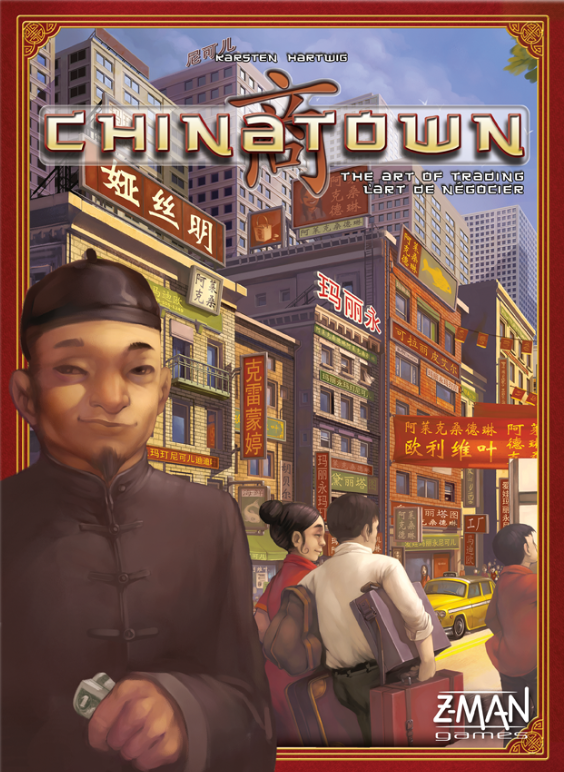
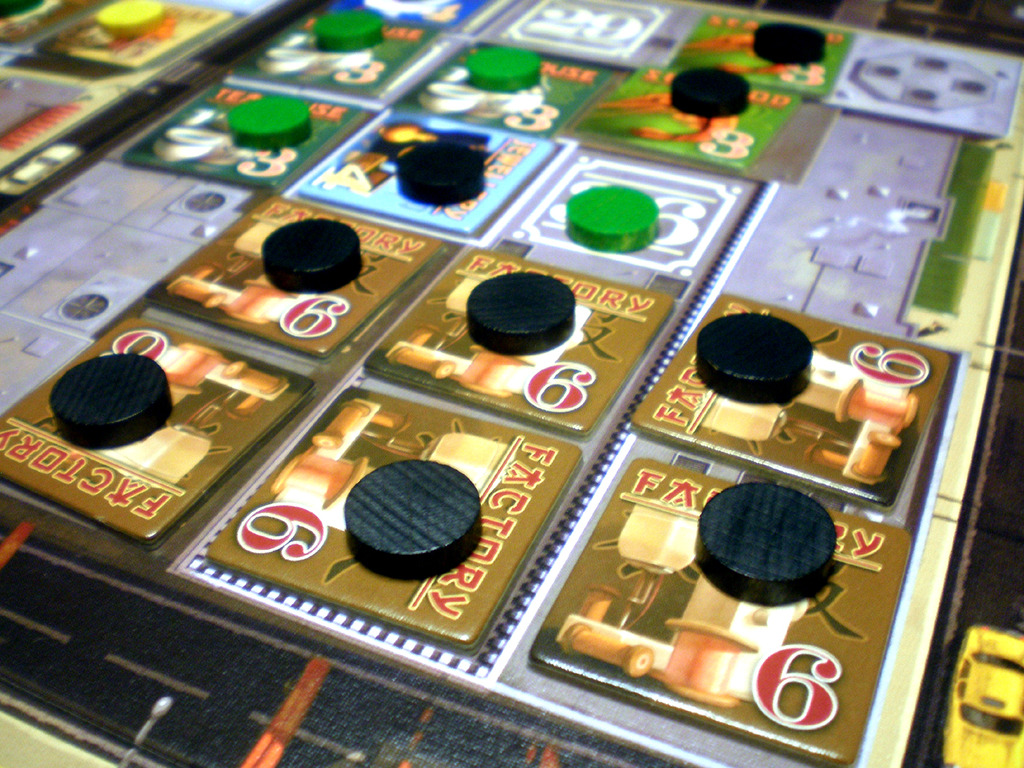
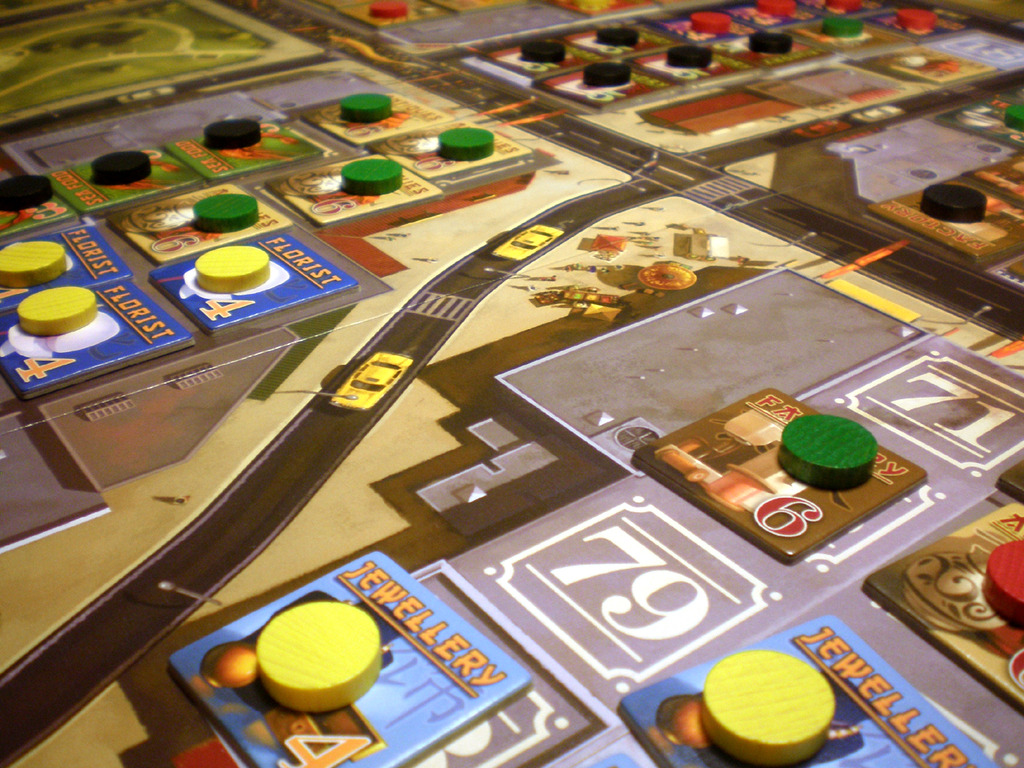

Chinatown is a pure negotiation game. There are cards, and tiles, and money, and counters; but they are all essentially bargaining chips to be traded amongst the players – at the end of six rounds, the player with the most money is the king of Chinatown.
The board shows a couple of blocks of empty real estate, with roughly 90 plots in all. At the beginning of each round, players are given cards randomly assigning a handful of plots to them, on which they put their markers. Next, they receive a random selection of business tiles, ranging from restaurants to photo shops, dim-sum joints to tropical fish emporia.
And then the fun begins. Players trade business tiles, plots they own and money in any combination with each other. The idea is to get adjacent plots, and tiles of the same type of business, because each business needs a certain number of tiles to be complete. After a few minutes the frenetic trading dies down, and players are free to place any business tiles they now possess onto plots they own. Businesses then pay out – completed businesses pay extra, and a new round begins.
It’s simple and intuitive – you can really just start playing without too much preamble. And with the right crowd, it’s a huge amount of fun. If there’s a downside it’s that the last round or two can feel a little flat – most of the property and businesses are settled, so the trading phase is less interesting. It’s also possible to work out exactly what an offer is worth to you, which is a positive or negative, depending on your style of play. But if you enjoy negotiation and trading, there’s little quite as straightforwardly enjoyable as Chinatown. It’s just Chinatown.
Sam says
Chinatown is a great option for players who like to wheel, deal and haggle – there’s lashings table-talk and high-level interaction. For me the downsides are both that it can feel a little lengthy, and as the game reaches its finale the previous speculation becomes more calculable, so the game feels less exciting and hinging on finer and finer margins. I’ve played and enjoyed it, and would do so again, but it’s not a favourite.
-

Take That!
No conflict really, but it is a negotiation game - if someone's getting a good deal, the other person is losing out to some degree. But it's fairly light and fun, so shouldn't ever feel too fraught.
-

Fidget Factor!
No downtime, just perhaps a little careful waiting before you jump in and scupper someone's deal with a counter-offer!
-

Brain Burn!
If you're mathematically inclined, it's possible to assess the relative worth of a business proposition very accurately. Even if you're not, it's easy to roughly gauge how much it's worth. If everyone's doing that, the final scores will be satisfyingly close, and the win will go to the person who's managed to steer deals in their favour by little increments.
-

Again Again!
One of those games with no inherent mysteries to unpick, but perfect for whenever you're in the mood for pure negotiation with other players. Definitely a game you get better at with more plays.


