
Fiction
Designed by: Peter C Hayward
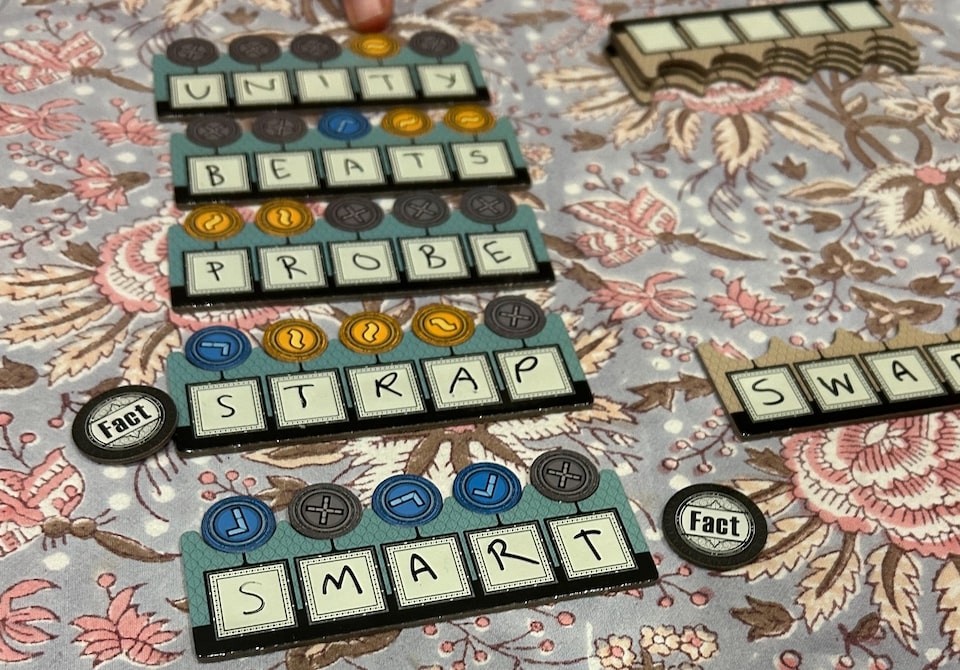
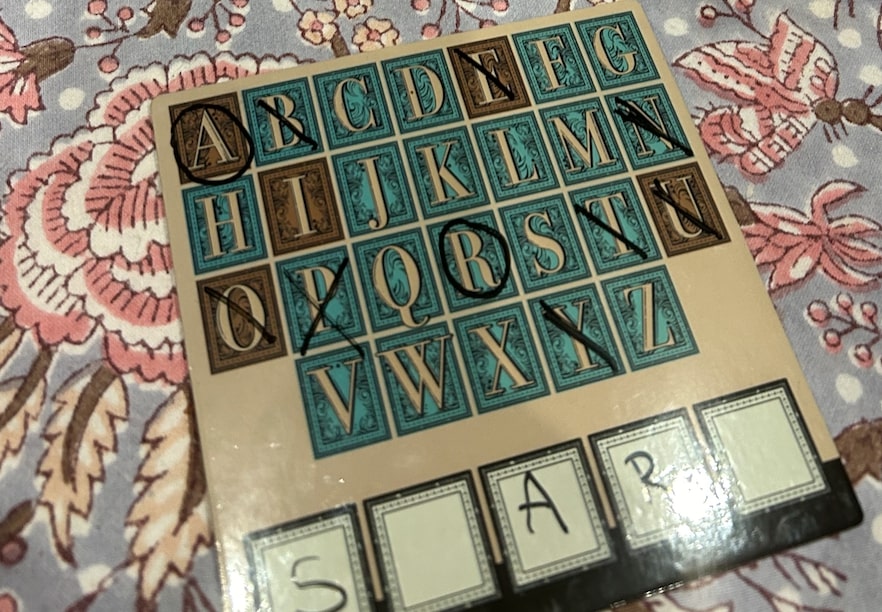
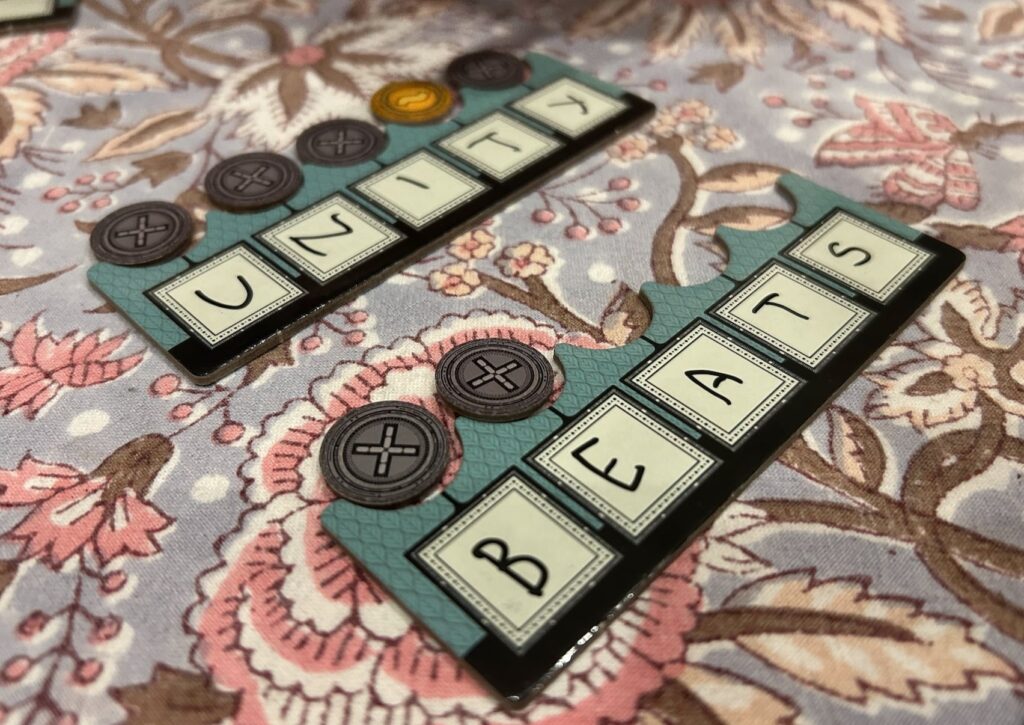
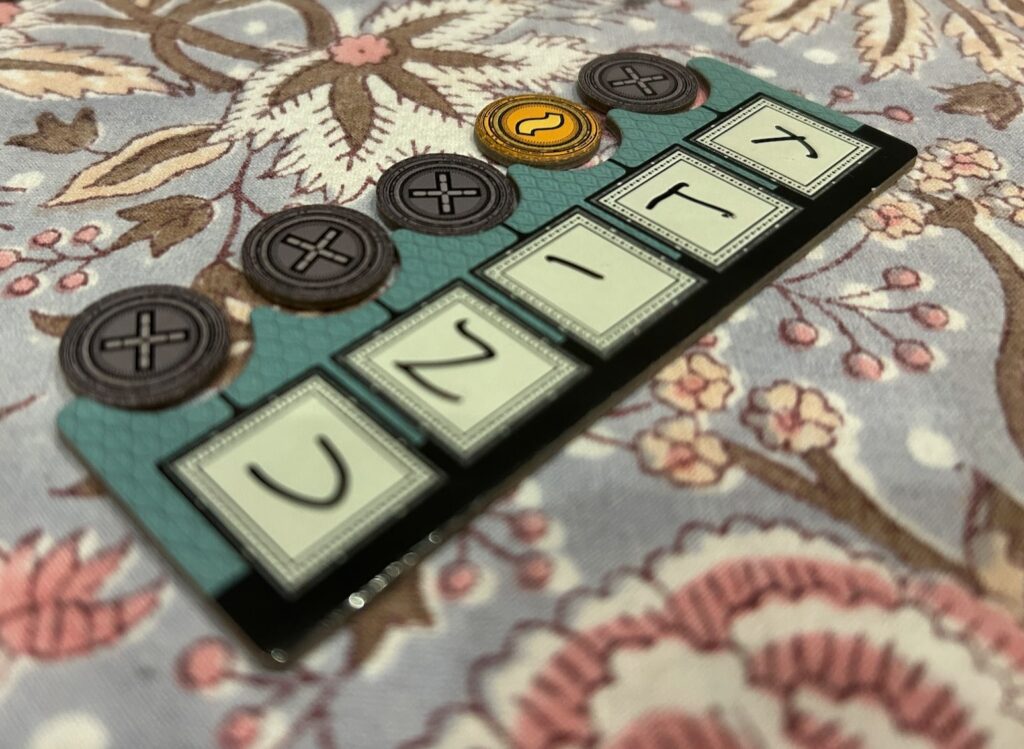
If you’ve played Wordle you’ve almost played Fiction already, as this takes the framework of the online sensation and adds in a significant twist – lying!
Let’s reverse back to Wordle. In that game you have a number of guesses to identify a five-letter word, and in each guess the computer tells you if your letters are wrong (grey) right letter but in the wrong place (yellow) or right letter in the right place (green). With Fiction, one player takes the role of the computer – the ‘lie-brarian’ in the parlance of the game – hoping to defeat the guessers, who all play as a team. The team get ten guesses and the computer player marks each guess as above – but with each answer they will include one lie.
So the guessers job – with a time limit of 20 minutes total – is to figure out the word, but to do so they must also figure out the lies. If they can do that before their guesses run out – they win! And it they cannot, the computer player does.
Sam says
After a couple of years of Wordle I was done, but Fiction’s canny addition of misleading claptrap reignites my interest. As the lie-brarian you’re out of the deduction, but the role isn’t entirely passive: how can you mislead the guessers the best?
-

Take That!
None to speak of, other than the misdirection
-

Fidget Factor!
It’s not a long game, but it is one that suits patient ruminators over biff-pow enthusiasts.
-

Brain Burn!
The rules are very light. The lie-brarian does need to check and double-check that their answers contain just the one lie (a single mistake can throw the game completely out of whack) but other than that the brain-burning is for the deductionists.
-

Again Again!
The game contains a huge deck of cards, each with numerous five letter words the lie-brarian can choose from.


