
Forage: A 9 card solitaire game
Designed by: Mark Tuck
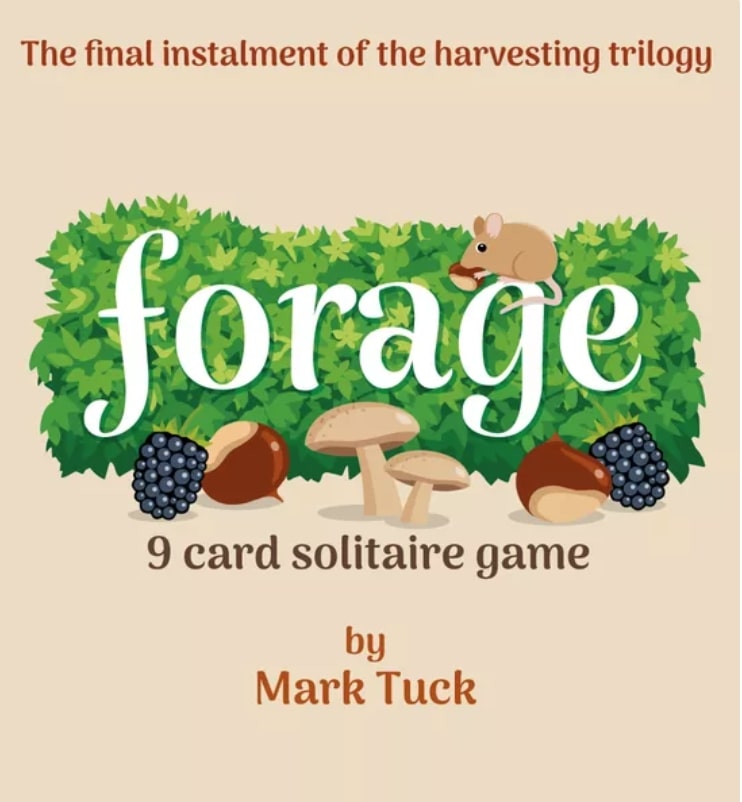
Forage is a solo game of gathering things from the forest floor, and trying to generate as many points as you can from the blackberries, chestnuts and mushrooms you find there.
There are 18 cards in the box but each game just uses 9 of them: they’re shuffled and one is dealt face-up to the table. Your task is to add each of the subsequent 8 cards to the table by overlapping at least one sixth of any card (or cards) already present, as you build the forest floor.
While building, you’re also foraging. Overlapped landscape types that match generate points, whereas non-matching landscapes create obstacles that cannot be built over (and potentially, minus points!). The more you overlap the same areas successfully, the more points you get: dice are placed on these areas that are the sum total of your score, and overlapping the dice areas again mean you get to turn the dice faces to the next highest side: from 1 to 3 to 6 to 10 and eventually 15!
When the cards run out you add up the value of all your dice to give you your score. If your overlapping generated minus points (in the form of mice) then these get deducted. This is the basic game, but you can also mix in the flip side of the cards to give each game specific challengess that define whether you win or lose.
Sam says
I’d heard great things about Forage’s predecessor Orchard, but whether this is a poor cousin or whether the puzzle here is just not my type of game, I didn’t hugely enjoy Forage. Each turn is a matter of trying the new card in various positions whilst also bearing in mind possible permutations ahead. You’re trying to avoid setting traps for yourself and it’s one of those experiences I find clever but just not hugely fun. I’m not a default solo-gamer by any stretch so bear that in mind, however. In Forage’s favour it’s highly portable, looks nice and certainly presents a challenge for each play.
-

Take That!
None
-

Fidget Factor!
None
-

Brain Burn!
Enough to keep you ticking over
-

Again Again!
The game is never ‘solved’ and a few plays do shed some light on possible different approaches.


