
Mille Fiori
Designed by: Reiner Knizia
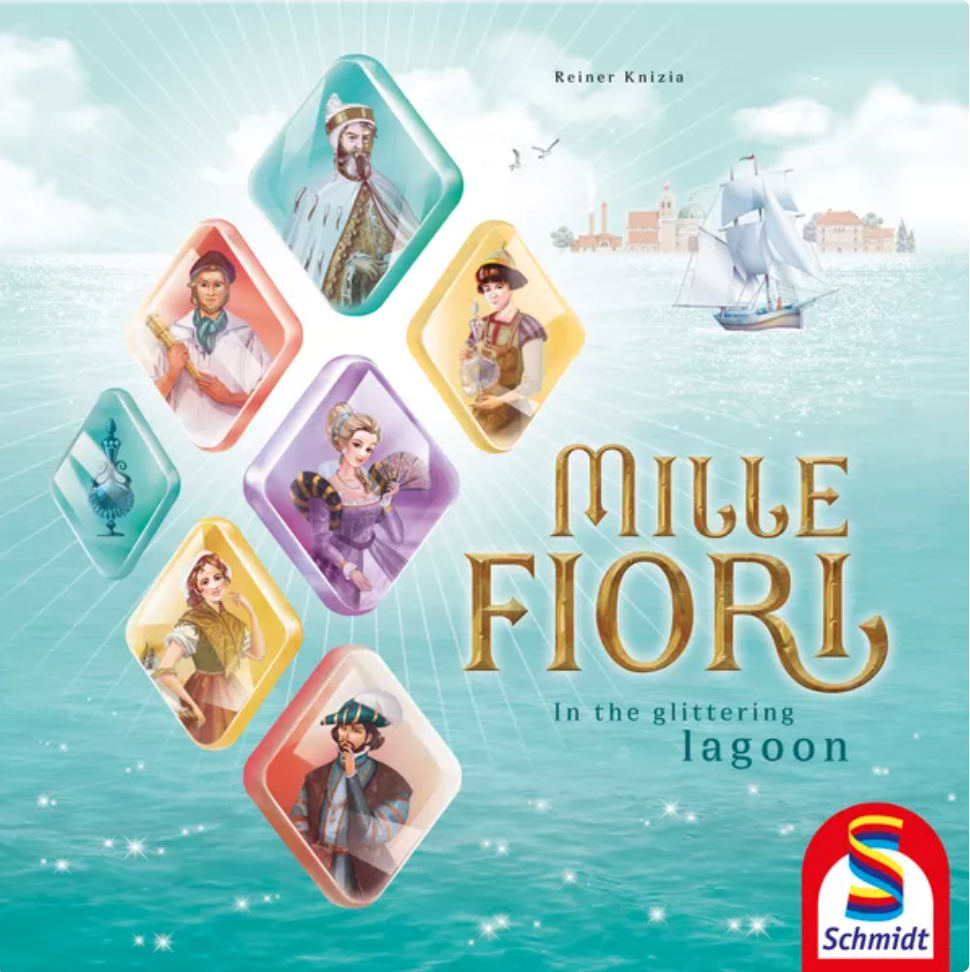
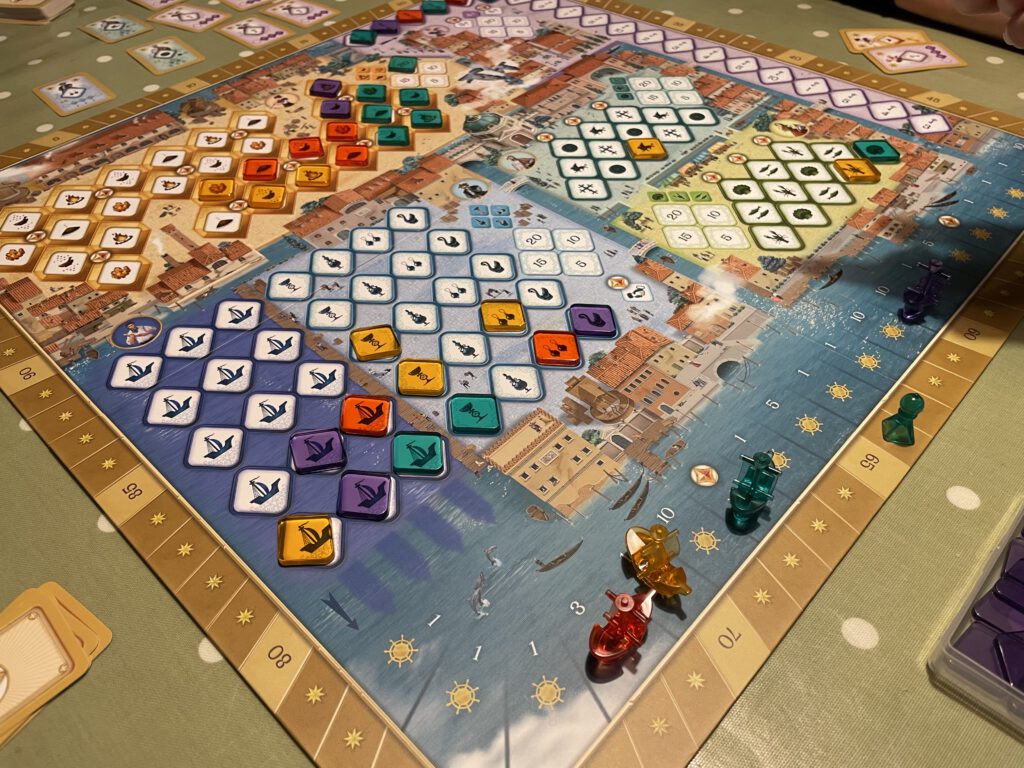
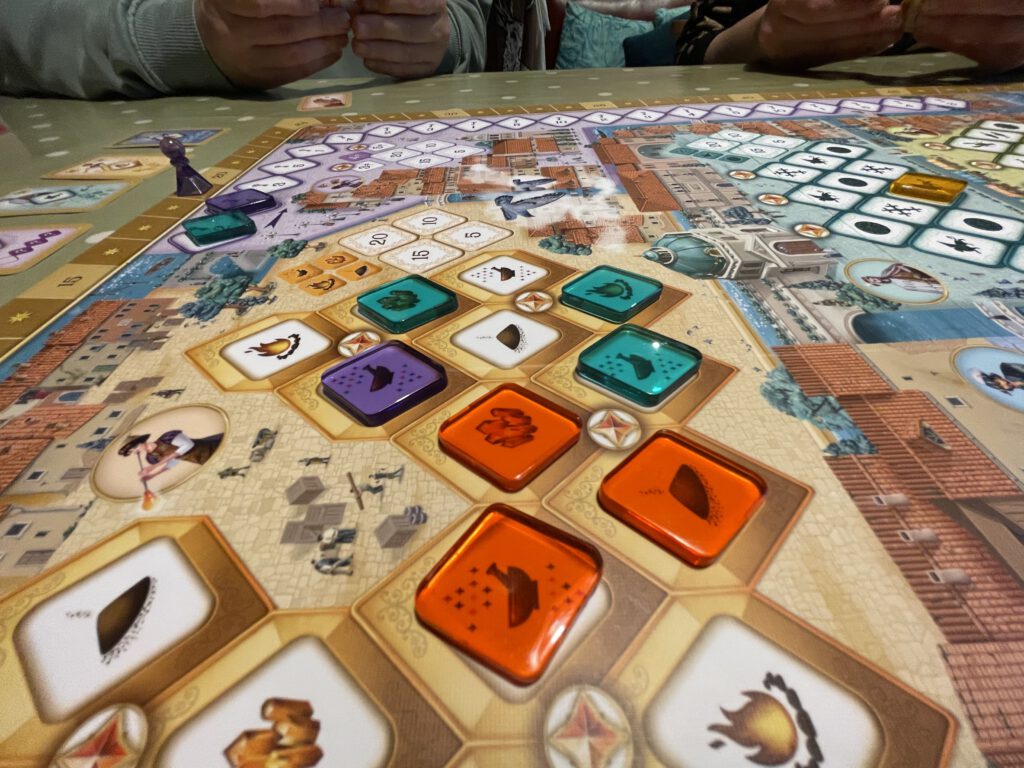
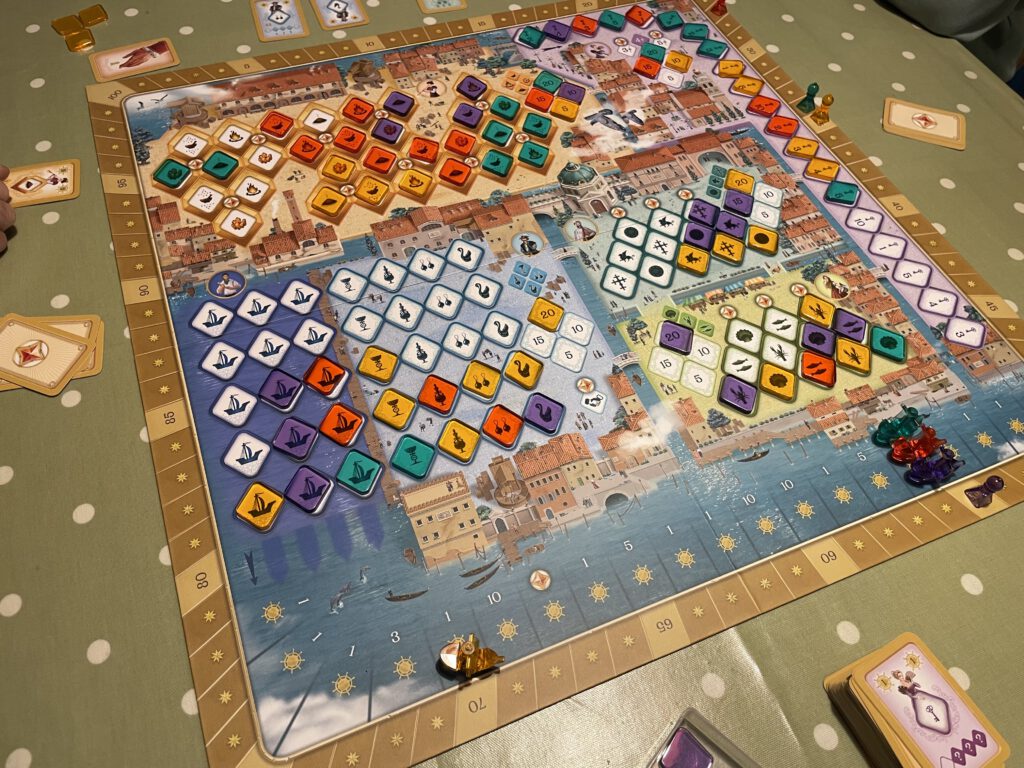
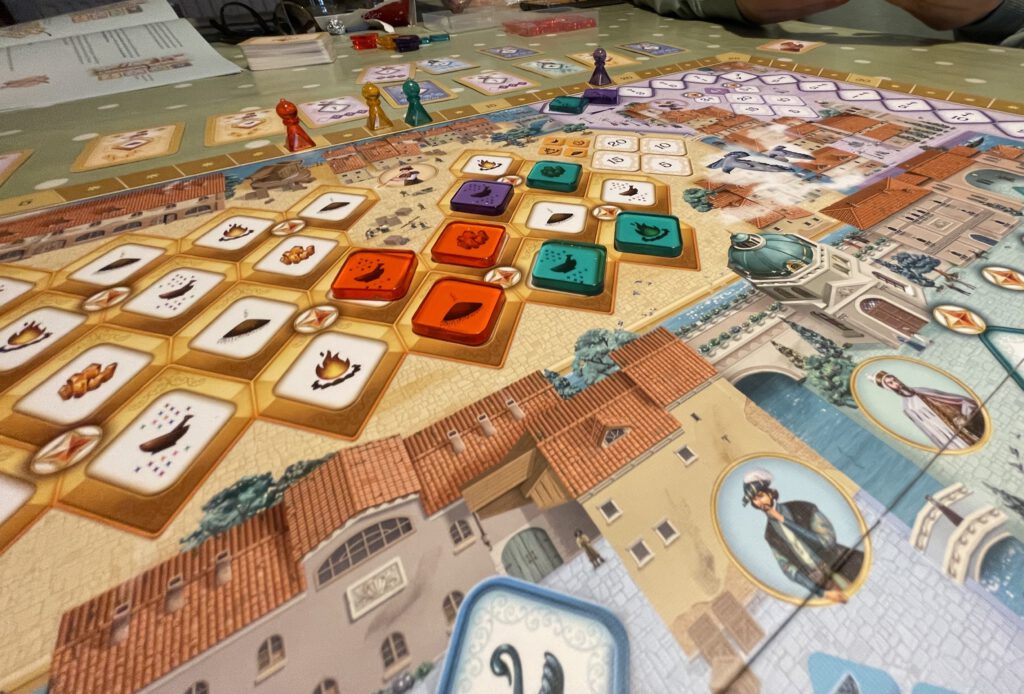
In Mille Fiori the players are glass manufacturers, but if the game’s theme is clear enough to be invisible, the mechanics are engaging and fun.
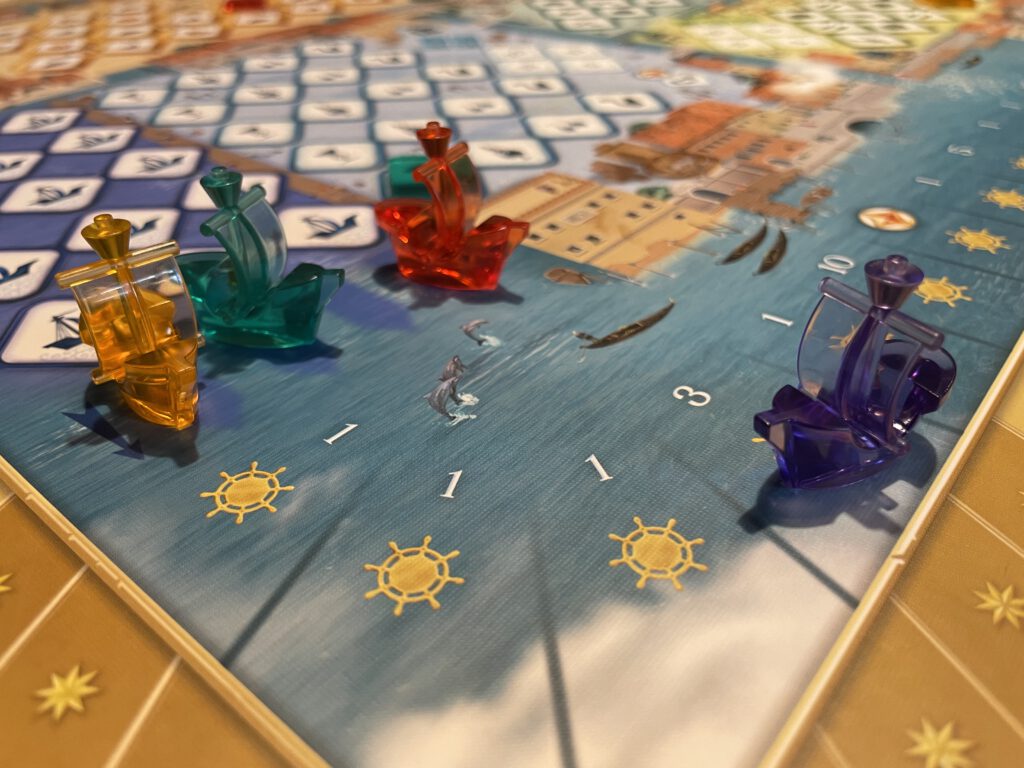
Each player has numerous ‘glass’ diamonds of their colour (as well as a boat and a score marker) and over several rounds, everyone takes turns adding diamonds to various places on the board, playing a card in each instance to do so. Everyone is dealt a hand of cards, chooses one to play and then passes the rest clockwise to the next player, ready for the next turn.
The board destinations represent different aspects of glass production, shipping and retail, but as far as your success is concerned each area is more about how and when your diamonds are added: connecting networks score in one area, pyramids of tiles in another (more points for higher tiles) rows in another and so on. Some areas score for you alone, whilst others award points to everyone in that pyramid/row. You can also use a card to move your boat instead, pushing it along the shipping lane and scoring points at the location you stop at. Various points around the board also give bonus turns when surrounded, and these are taken from a display of cards alongside the board. Finally there are bonuses for having diamonds on various different symbols in each area, and being earlier to get the bonuses is far more rewarding than later.
This continues until someone has played their last diamond, or the cards run out, after which the current round will be the final one. Essentially, the game is a smorgasboard of overlapping tasks/opportunities where tactical play (stopping opponents) second-guessing (who will play what card) and strategy (focusing on one or two things can be more rewarding than several) come together into a fast-playing puzzle.
Sam says
More an abstracted combo of interlocking puzzles than a compelling narrative of competitive glass-blowers, Mille Fiori still manages to be really engaging and fun. Each hand of cards – progressively smaller as the round nears its conclusion – offers enough choices to feel tantalising, and on a larger scale the game offers enough directions to feel strategic as well as tactical. And it’s interactive: you can block people, piggyback or even team up at times. Something of a curio from the great Dr Knizia, but a sparkling one.
-

Take That!
Enough for the game to feel spicy without crossing the the line into arbitrary nastiness.
-

Fidget Factor!
There'll be pauses as people peruse their cards and ponder their options, but everyone does this at the same time before revealing (and playing) in turn order.
-

Brain Burn!
It's a game of spotting opportunities, both short and long-term, and balancing the allure of them with the chance to close the window on others. Ideally at the same time.
-

Again Again!
Lots of variety here, just from how the cards come out randomly.


