
TowerBrix
Designed by: Simon Thomas
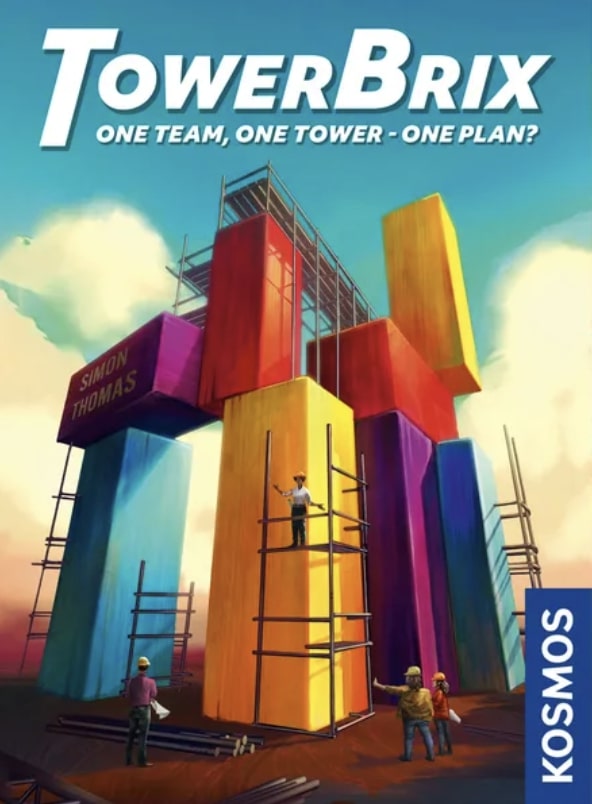
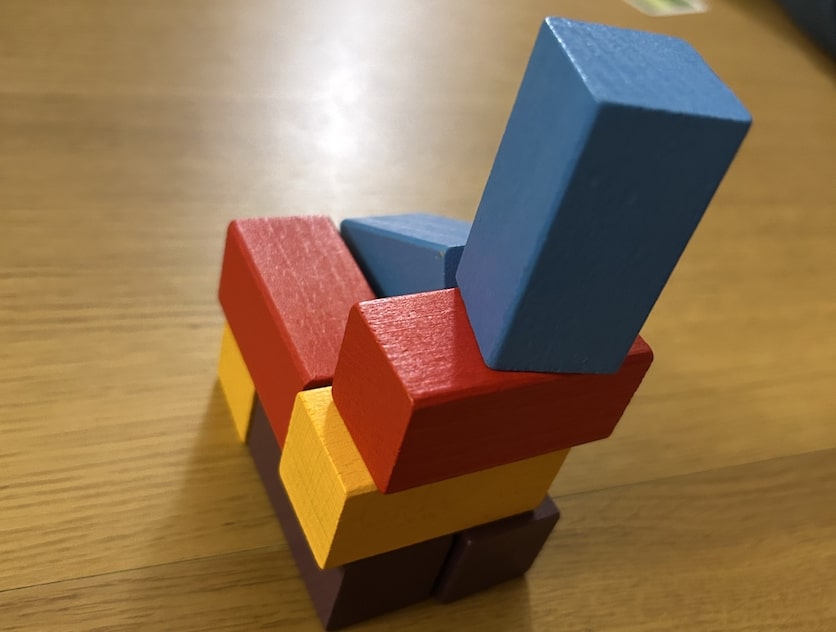
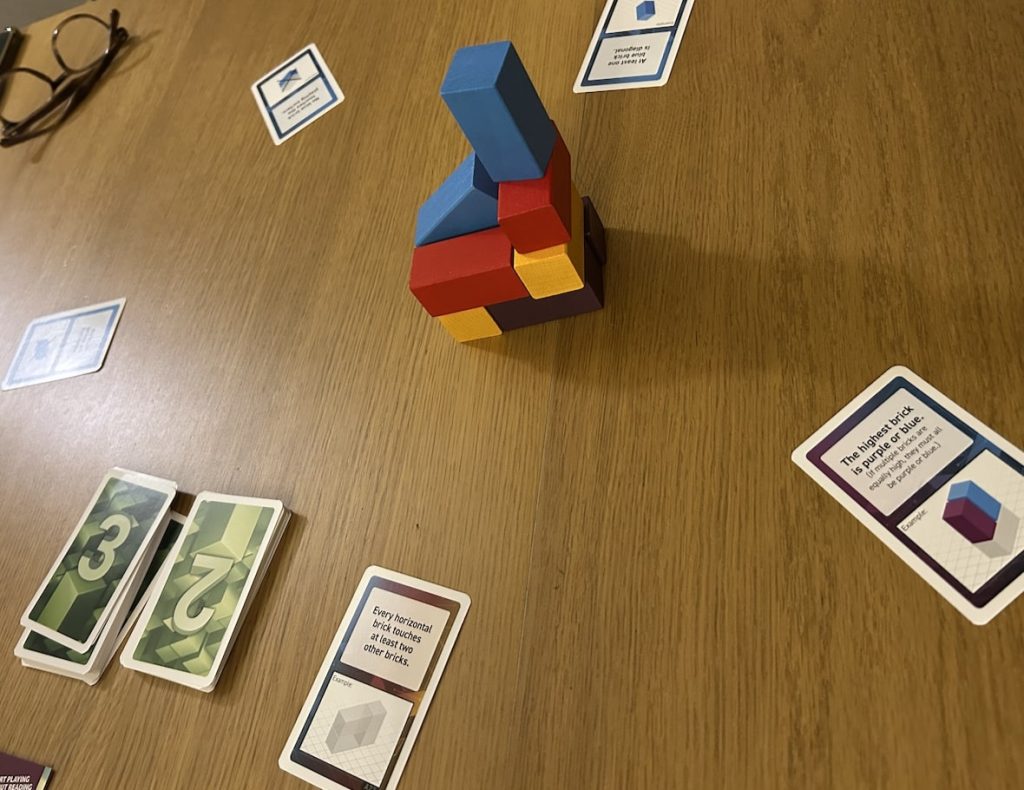
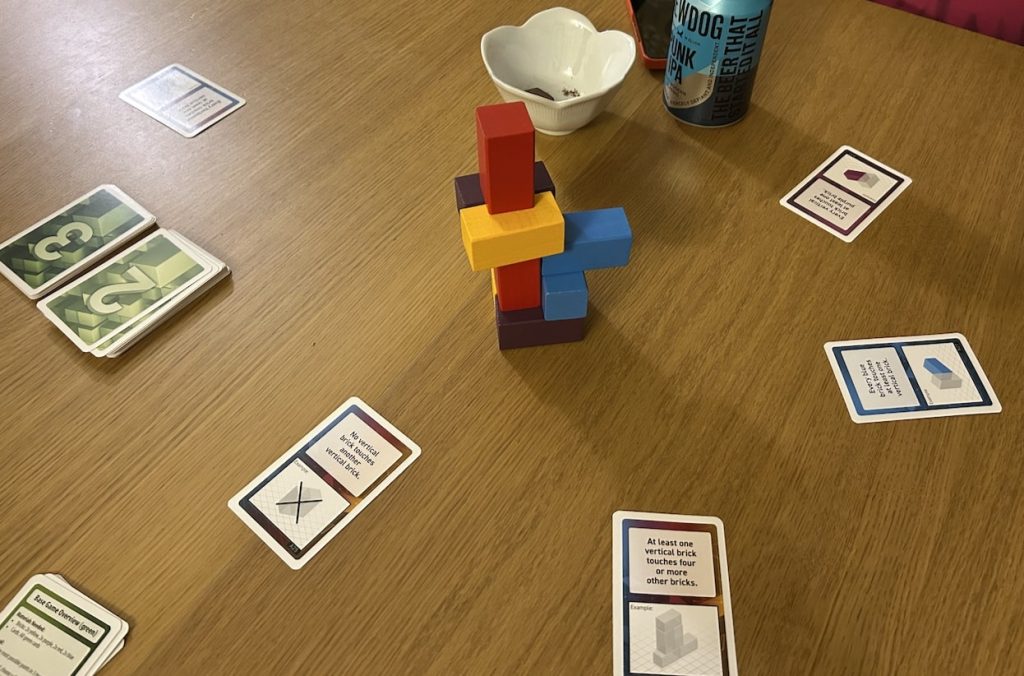
TowerBrix is a co-operative game, where we combine our efforts in building the tower of the title. The catch is, we’re all following different rules about construction…
Each player is dealt a card (or two, depending on player count and ambition) that shows you a secret rule. Only you know, for example, that all blue bricks must be vertical, or yellow and red bricks cannot touch, or that the top brick must be blue or purple. Play begins instantly – there’s no turns, so anyone can jump in and arrange the bricks as they like, following some very simple rules (for example, you’re building one tower, not two, even though that might make things easier!). Then anyone else can jump in and rearrange them. The goal is to construct something that everyone agrees works, because it satisfies all the secret rules. Once you’ve done that, the rules are revealed, read aloud, and the tower is checked to make sure it’s not in violation of any of them. Assuming it isn’t, the players win that round and move on to the next: a game consists of three rounds, and you can choose how hard you want each round to be in terms of points: each rule card has a points value, and your score is the collected total across three rounds – with bonuses for height!
TowerBrix lets you explore different levels of difficulty by giving players two or even three cards each. The game also comes with a ‘campaign’ style system that guides you through multiple plays or escalating trickiness.
Sam says
TowerBrix reminds me of Decorum, with its mildly passive-aggressive theming (couples arguing over interior decorating) now replaced by a more boisterous vibe of a planning meeting where everyone has their own agenda, they just won’t admit to it. The no-turn-order approach here is crucial to the game’s success: if your rule is satisfied, you don’t need to spend time waiting for turns that you’re only going to pass, but can instead watch the unsatisfied planners debate how to resolve their rules instead – needless to say, you cannot share any information about what your rule is! Some groups may find it a little one-note I suppose, and it’s not a game I want to play often. But when we do it’s good for a laugh: a clever design that places its weight on simplicity and player focus rather than fiddly rules.
-

Take That!
None - players work as a team, and - though it may sometimes not feel that way! - the goal is to come to a collective understanding.
-

Fidget Factor!
Minimal at most. If the tower is changing, you need to be checking if it (still) works for your rule.
-

Brain Burn!
Rules-wise, there are barely any. The cognitive singeing here is about trying to establish what, exactly, is in conflict, and what new arrangement will solve it.
-

Again Again!
There's multiple levels of difficulty, and a big deck of cards for the rules.


