
Toy Battle
Designed by: Alessandro Zucchini, Paolo Mori
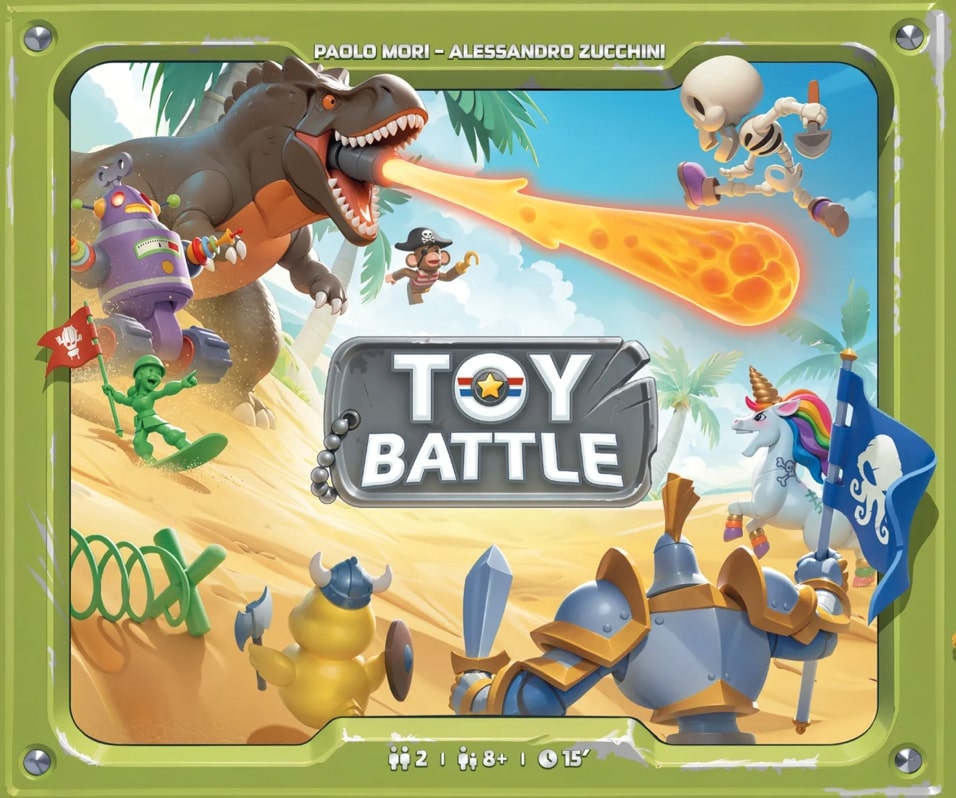
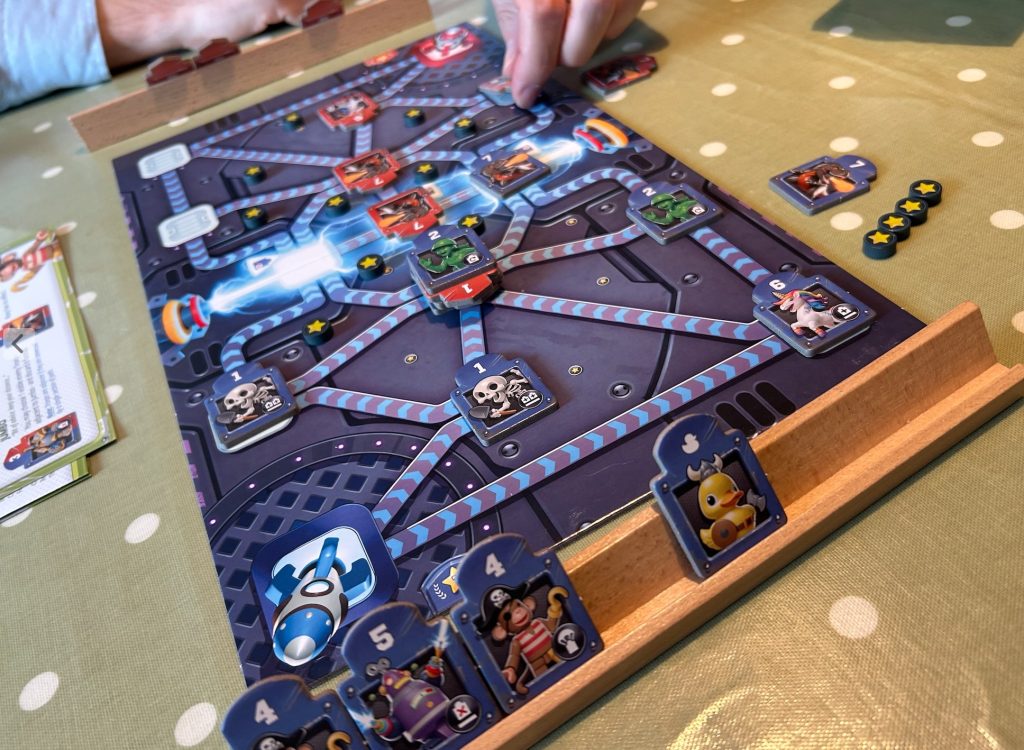
Toy Battle is a two-player game where the title does much of the explaining for you. We’re taking our toys into imaginary worlds where they come to life and, naturally, starting kicking lumps out of each other.
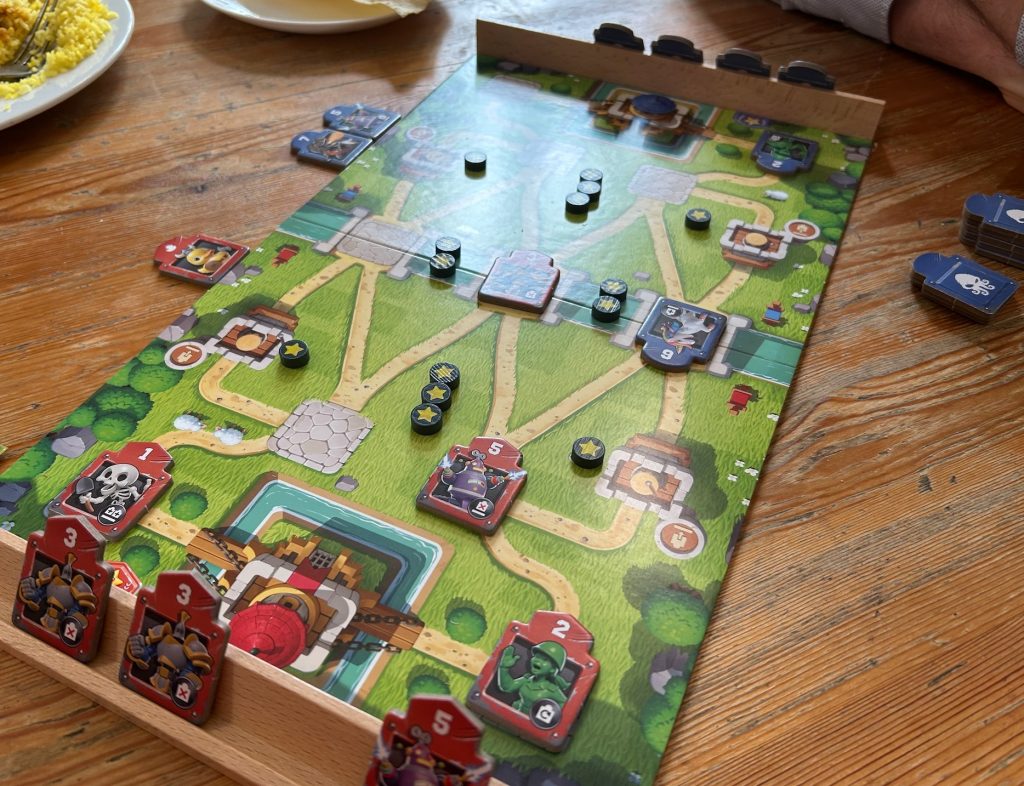
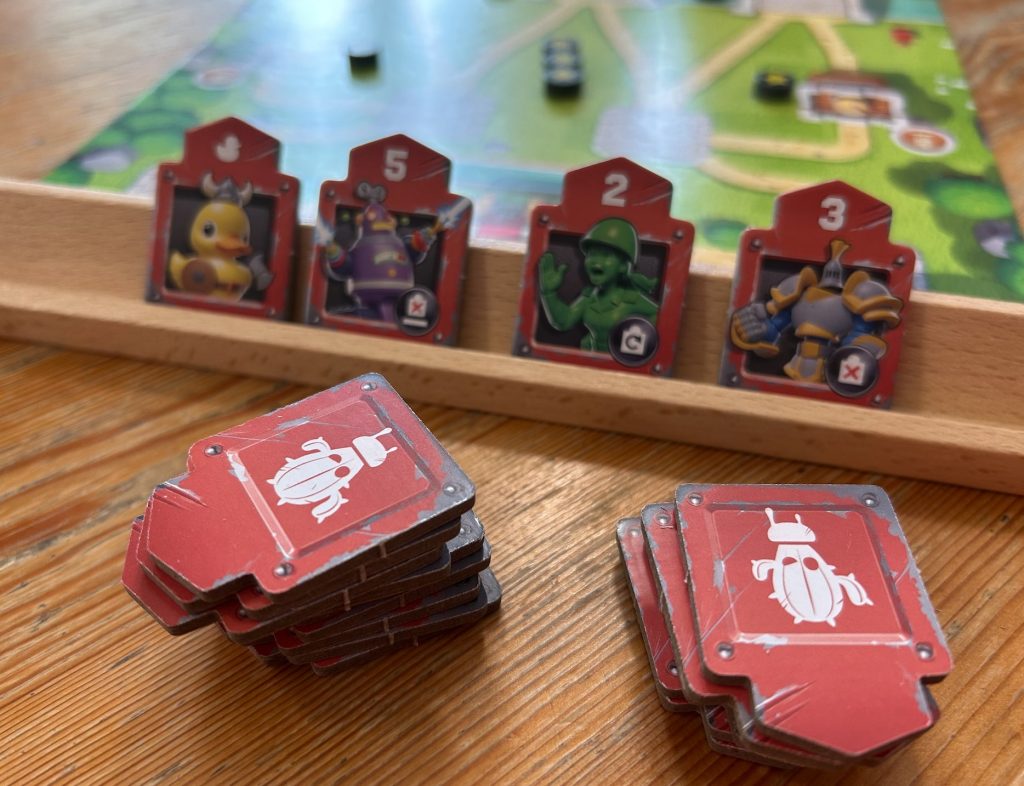
In the box are numerous boards for set-up, each with a Headquarters for both players and a network of paths and bases connecting them. Each board brings its own little idiosyncrasies – we won’t describe them all here – but the basics of how your toys interact upon them remain largely consistent. Troops – the toys of the title – are shuffled into piles and placed randomly face-down. The starting player draws three troops to their rack of their colour and the second player draws four of theirs – then battle commences.
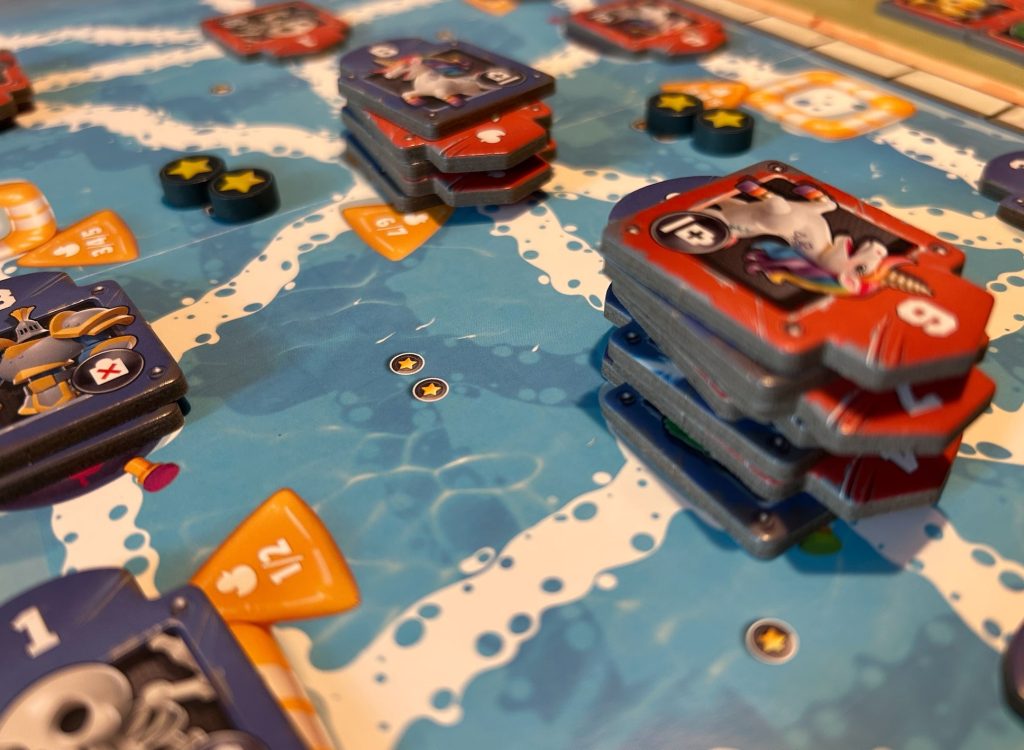
On your turn you can either play a troop to a base on the board, or draw two more troops into your rack. When you play a troop, you need to be able to trace a ‘line of supply’ back to your headquarters: a series of unbroken spaces occupied by your own troops: so battle tends to start at a wary distance as players build towards each other (-not that it takes very long). Your troops each have a number strength from 0 up to 7, and you can place on top of an opponent’s troop (or indeed your own) only if the troop you’re placing has a higher number. If you manage to place a troop into your opponent’s headquarters, you immediately win. If that doesn’t happen, then there is a second criteria; one you should be mindful of during play…
The paths on the board create regions into which Medals are placed at the start of the game. If you ever occupy every base around a region, you instantly claim the medals. The boards also give an instant-win for collecting a certain number of them (usually 7 or 8) but if nobody manages that or the win condition above, then the player with the most medals when the troops run out will be winner.
So it’s all very straightforward: get more troops or place a troop, with higher numbers being much more desirable, it would seem. But Toy Battle’s genius is that every number except the mighty 7 also has a special power. The 1 gets you more troops when placed. The 2 allows you to place a second tile on the same turn. The 3 eliminates an enemy troop from an adjacent base when placed, the 4 can ignore the line of supply rule and parachute in anywhere, the 5 lets you discard an opponent’s troop from their rack and the 6 lets you draw an extra troop. Though it has no strength in defence, the zero has incredible flexibility in attack: it can be placed on top of any number at all.
Sam says
A great little game for kids and adults alike. It literally takes ten minutes to play but packs into that time really engaging tactical and even strategic decisions: go for broke to reach the HQ? Play defensively and try and get the most medals? Maybe a mixture of both? Taking more troops can be agonising because you’re effectively ceding momentum to the opposition. But you need more troops! It may be too light for war-game enthusiasts and too silly for lovers of sweeping epics. But for many others, this is a miniature delight.
-

Take That!
It might be toys, but they are having a battle.
-

Fidget Factor!
A game only takes ten minutes.
-

Brain Burn!
The rules are light enough to pick up in 5 minutes, but the lightly crunchy engagement is about situations, and occasional risk.
-

Again Again!
While the flavour of the challenge won’t really change, the geography of the boards and the (light) additional rules they bring in help vary things. And the fact even card counters won’t know what troops they’ll draw, as four from each player are randomly removed before each game.


