
VAST: The Mysterious Manor
Designed by: Patrick Leder
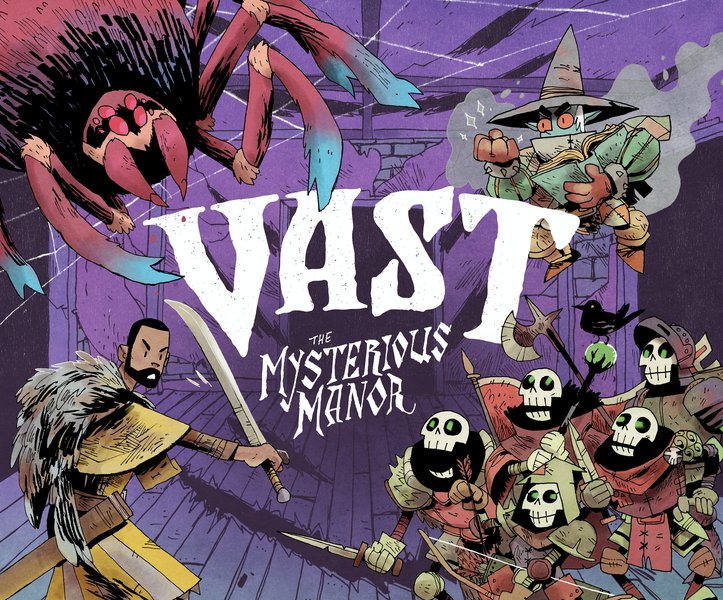
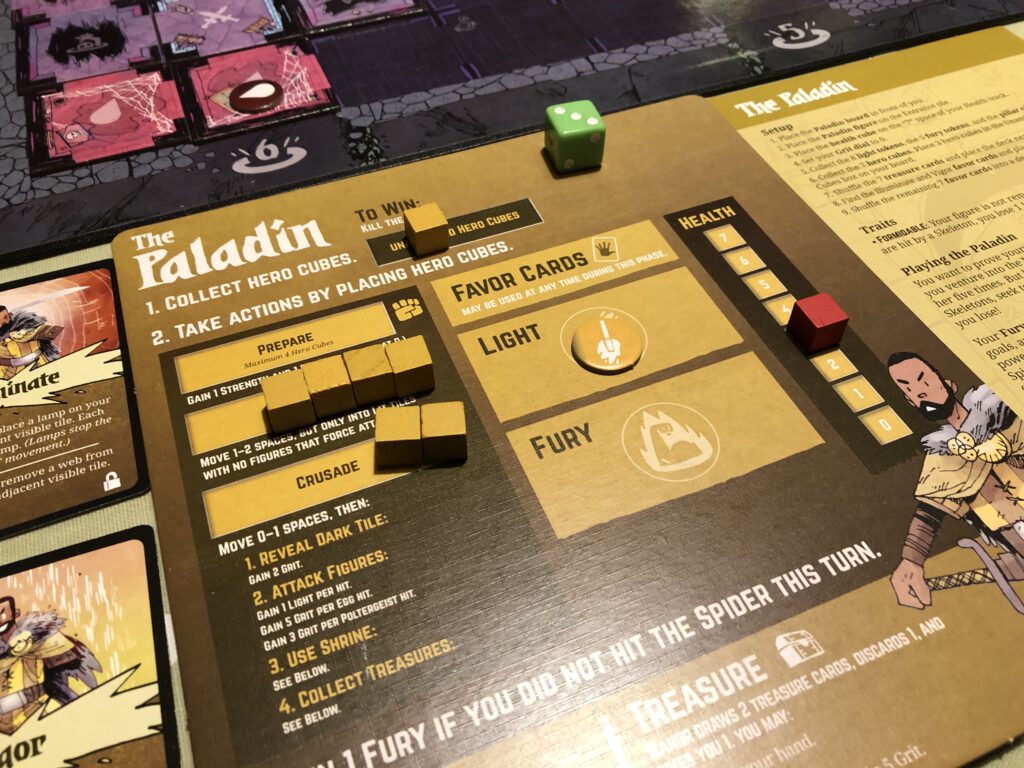
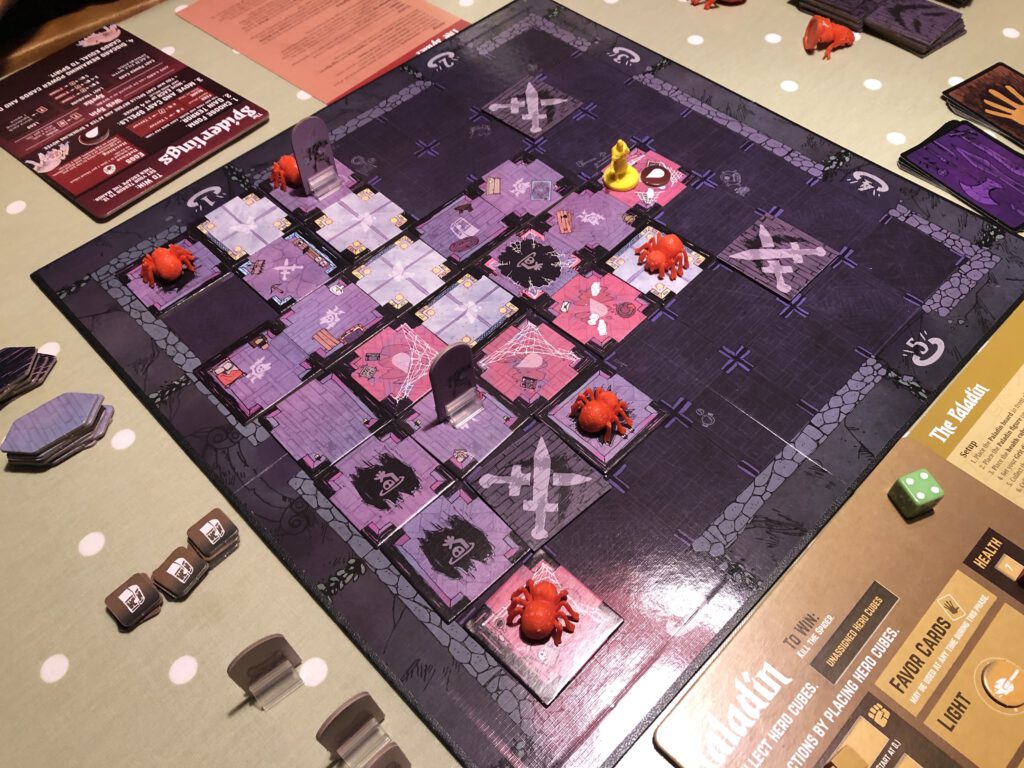
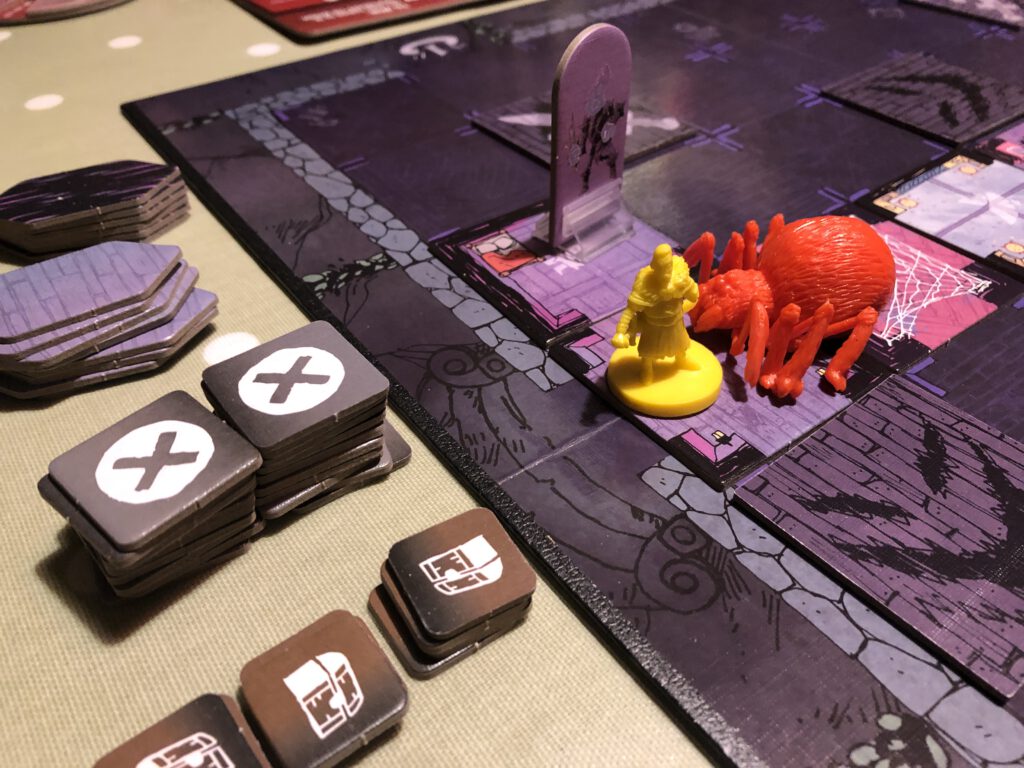
VAST: The Mysterious Manor is an asymmetric board game where you can play one of three parties within the titular manor – Paladin, Skeleton, Spiders, Enchanter – or even the Manor itself. How the game plays depends on which parties you’re playing, because they all operate slightly differently, and each has their own distinct game-winning objective.
As the Paladin, you win by defeating five Spiders. As the Skeletons, you want to defeat the Paladin – and though you start with only two skeletons at your disposal, those numbers can grow, and each skeleton has its own special ability. As the spiders you appear in three forms – giant spider, baby spiders and sorceror – and your goal is to spread terror through the manor before escaping.The Enchanter seeks to dominate five poltergeists or treasures, and if you’re the manor itself, your goal is to trap all the other players in your walls, before presumably subsuming them into your person – even more terrifying than the spider, really.
Turns are taken up by moving around the manor itself – revealing tiles to show what is in each room – and quite possibly battling opponents. As previously mentioned, each party also operates very differently – the Paladin gathers Fury and Light tokens for battle along with hero cubes which can be spent on actions such as movement and attacks. The spider lays eggs and tends them, along with webs and other terror-spreading shenanigans. The skeletons basically make life as difficult as possible for the paladin by attacking him or laying traps. The Enchanter lays curses to achieve their goal, and the Manor completes rituals using its physical form: a purple wraith, wandering the walls like a particularly decayed Jack Torrance. It doesn’t interact with the other players directly, but messes with their minds – and plans – by physically moving the rooms around.
As soon as one player has reached their goal, they are victorious and the game ends.
VAST: The Crystal Caverns follows similar principles but with a different location, and different set of factions.
Sam says
A briefer overview than we’d like to give, but for two reasons: I’ve only played VAST twice, and it’s a complex thing to explain: going into every party in depth would make this entry spectacularly long. Each player’s ‘operating system’ and goal is pretty straightforward, but the need to understand everyone’s methodology (and goal) means there’s quite a learning curve for all concerned. All that said, I enjoyed my initial visits to VAST and would probably have played more already were I not so smitten with Root: a similar game (asymmetry; combat) from the same publisher, which to me is more appealing both thematically and aesthetically. Whilst Root is openly a war-game, Vast feels more like an experiment in gaming narratives, with a slightly skewy combination of things: a setting that looks targeted at a young audience, but a cognitive overhead that is a workout even for long-time rulebook studiers, and even then there are a few unanswered questions. And really, you need players happy to play by the seat of their pants as well: pondering strategists will bring the experience to a shuddering, grinding pace.
-

Take That!
High!
-

Fidget Factor!
Moderate, although you'll need some patience for your first game.
-

Brain Burn!
Prepare for some burning over learning the rules. Once you're through the door, Vast isn't actually overwhelmingly tough in terms of playing your own party, assuming you're not entirely new to it.
-

Again Again!
Lots of variety here both in who you play in the Manor, and how the tiles and cards fall.


