
Catan
Designed by: Klaus Teuber
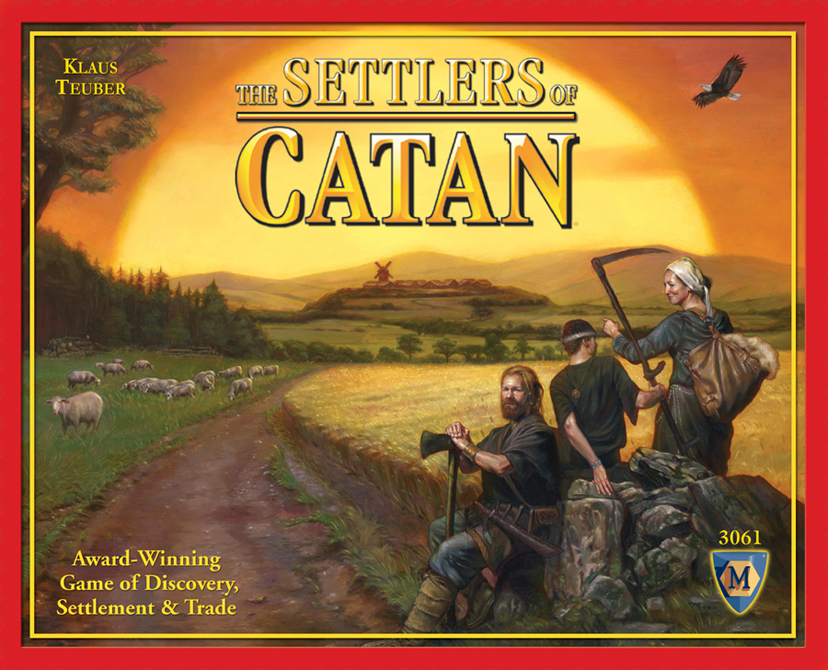
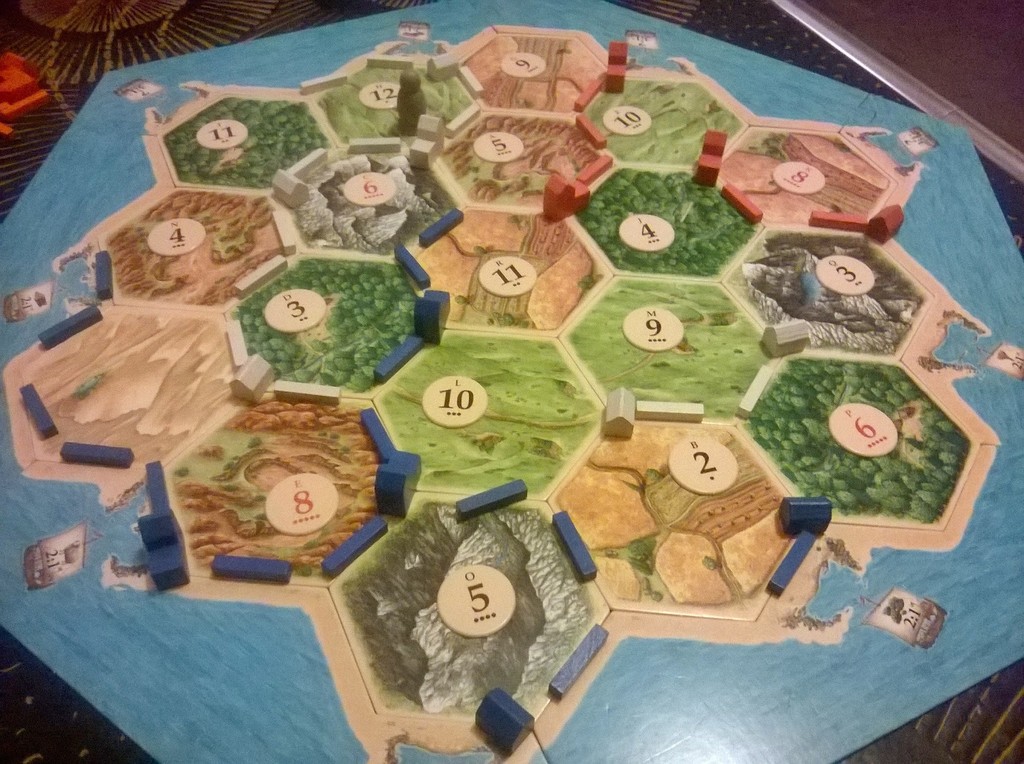

Catan – previously published as The Settlers of Catan – is a classic game of strategy, luck, and trading.
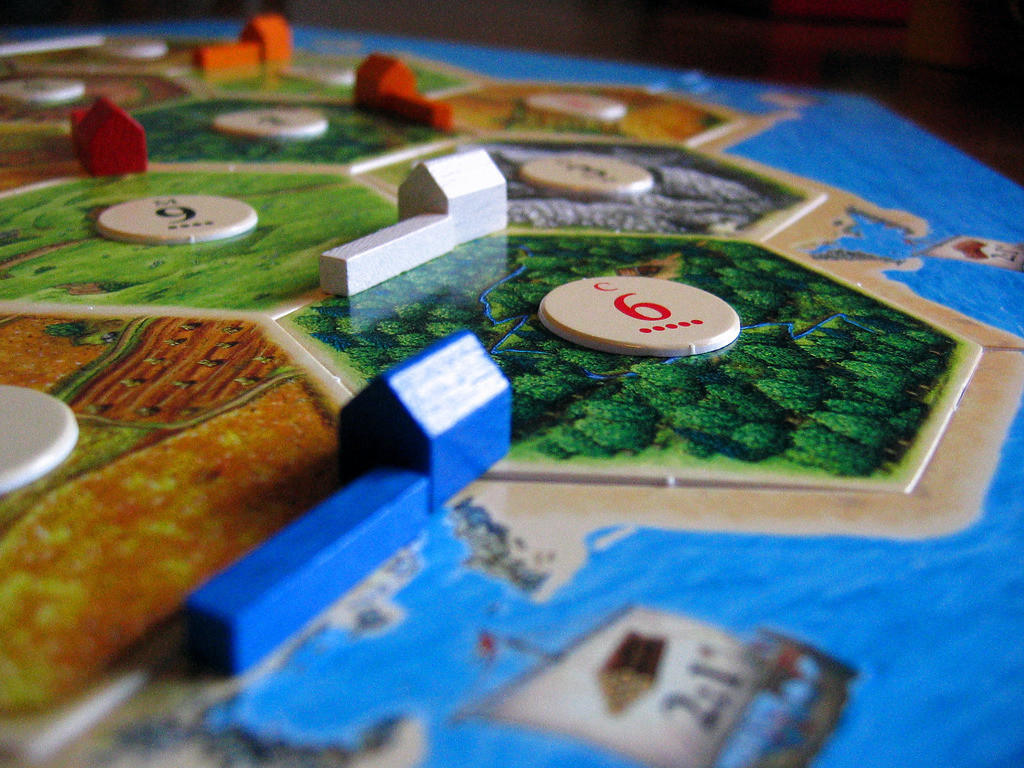
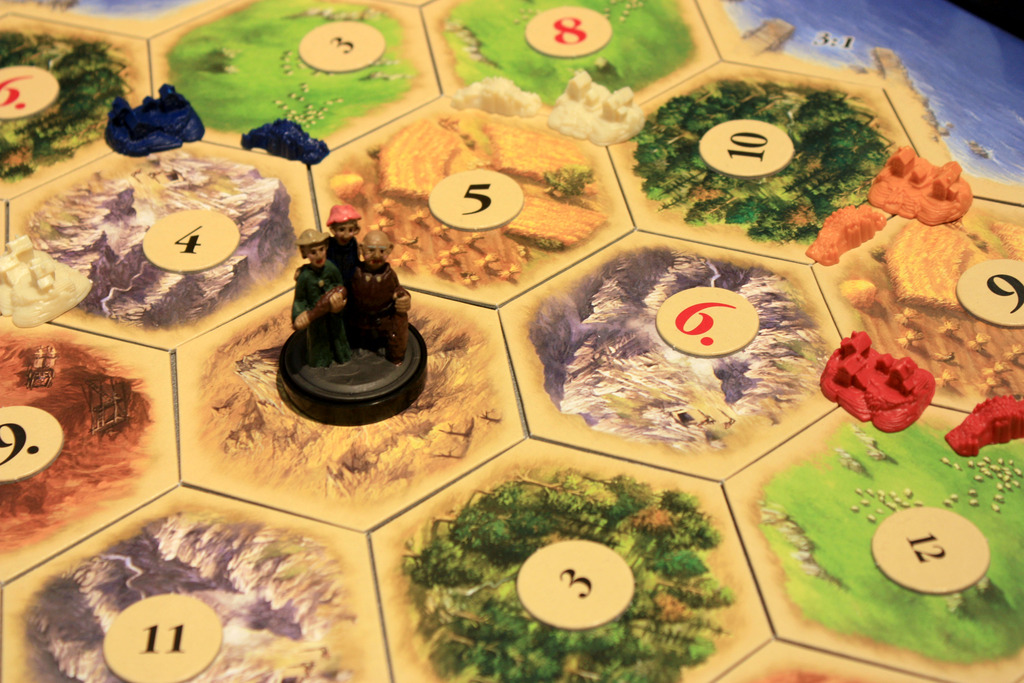
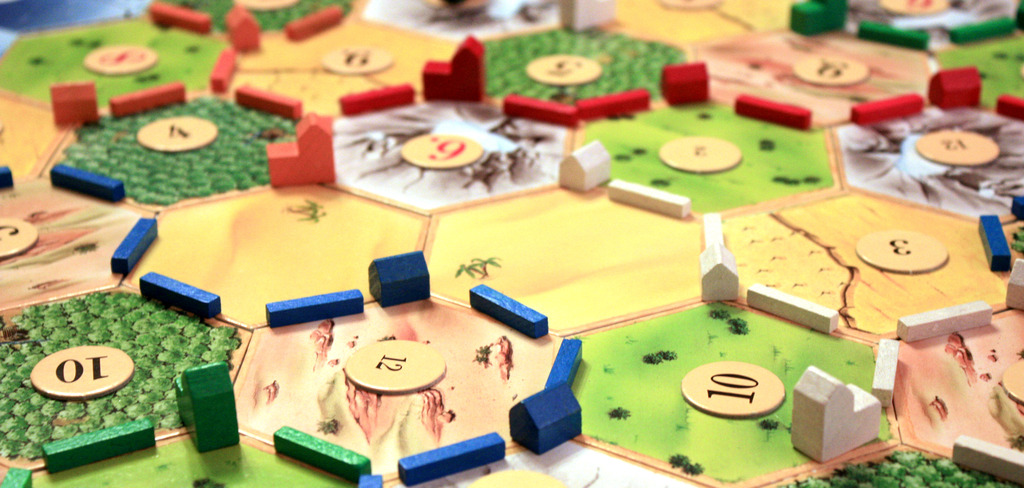
Players inhabit the island of Catan, which is rich in five different resources: wheat, sheep, brick, ore and lumber. Each terrain has a number assigned to it, and at the start of every turn, dice are rolled, and if your settlements or cities are adjacent to a hexagon that produces the numbered resource, you get that resource – even when it’s not your turn. Settlements bring you one respource, and cities two. Your aim – use your resources to build roads, settlements and cities, which in turn give you more resources, and be the first to reach 10 victory points. As well as building you can also trade in resources for cards, some of which can be cashed in for a reward now (place some roads, or grab some resources from other players !) or kept face-down for potential extra points – which are only revealed at the end of the game.
The crux of the gameplay, and what has made Catan an enduring classic, is the trading: “I have wheat, I want brick – who wants to trade?” Rather than simply hoping for the best, this dynamic keeps the players talking and thinking throughout. It’s intuitive and fun; and the dreaded robber, who moves every time a 7 is rolled, will take half your resources if you’ve been hoarding them – so trading is essential!
There is a fair amount of luck, and this can occasionally lead to one player feeling like they are harpooned by fate; but Catan is the game that launched a thousand more, and certainly deserves its place in the hall of fame for modern boardgames.
Sam says
Although it can sometimes go on a bit longer than ideal, I retain a soft spot for Catan as the game that really got me into modern board-gaming: introducing me to ideas that were missing from titles I played growing up. It’s fast-moving, we’re negotiating and trading, there’s – to an extent – manageable luck, rather than just rolling the dice and hoping for the best. And everybody stays involved until the end. A minor gripe is that it’s possible to be left behind if your dice rolling is really flying in the face of averages. But on it’s a solid, intuitive and accessible game, and the fact it involves every player on every turn is great. Thirty-plus years after it came out, the game stands up well.
-

Take That!
There are cards that allow you to steal resources from specific players, which could potentially upset sensitive souls.
-

Fidget Factor!
All players are involved in trading on every turn, so downtime is rarely an issue. That said, if you end up with a shortage of cards for several turns, things can occasionally start to drag.
-

Brain Burn!
There’s no maths here, though it an be helpful to keep track of which resources players have, so a good memory is useful but not essential by any means.
-

Again Again!
The gameboard is made up of modular hexes, so once you’re familiar with the starting set-up, you can place them randomly for endless variation. There are also several expansions which add more players and gameplay options.


