
Psychic Pizza Deliverers Go to the Ghost Town
Designed by: Hayato Kisaragi
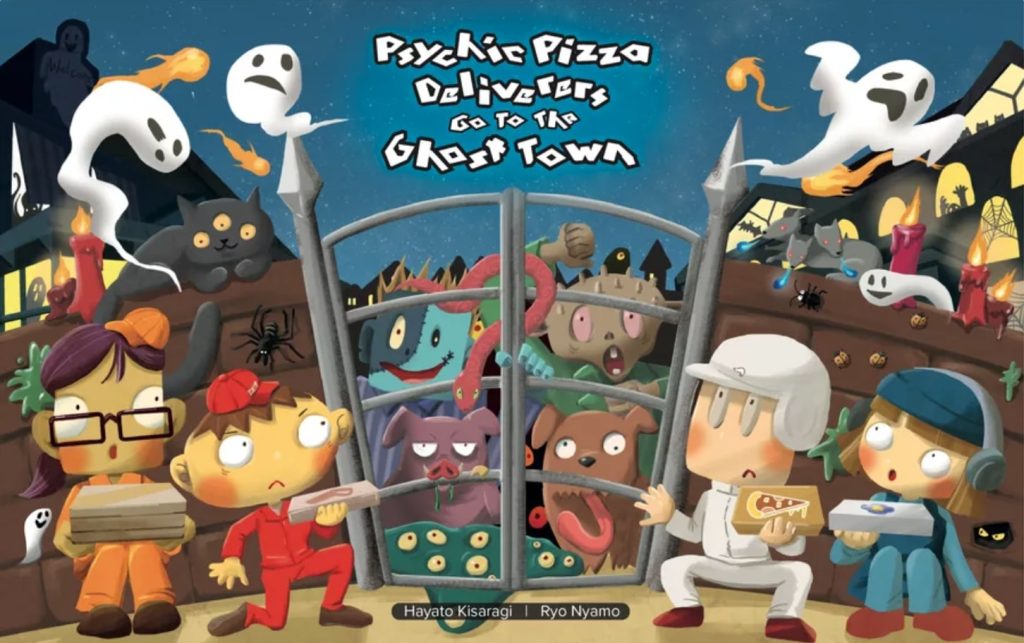
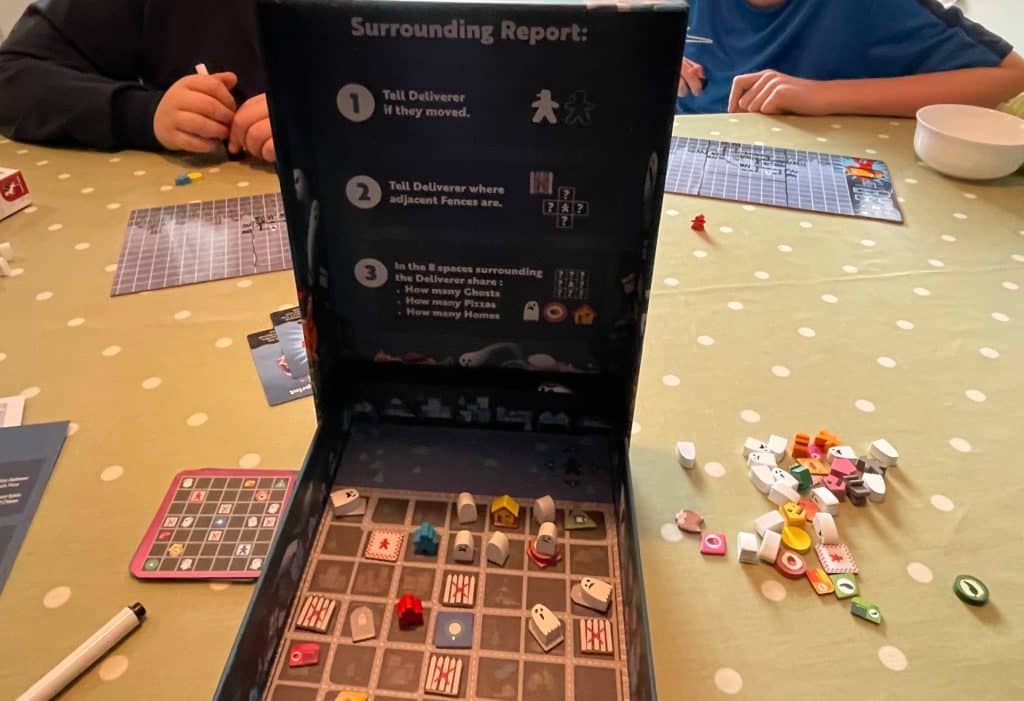
In Psychic Pizza Deliverers Go To The Ghost Town, everyone is trying to be the first to deliver their pizzas – everyone but one player, who takes the role of ‘mayor’. The mayor decides on the geography of the ghost town, and guides the players through it, the catch being that these delivery folk cannot see where they are going. It’s that kinda place.
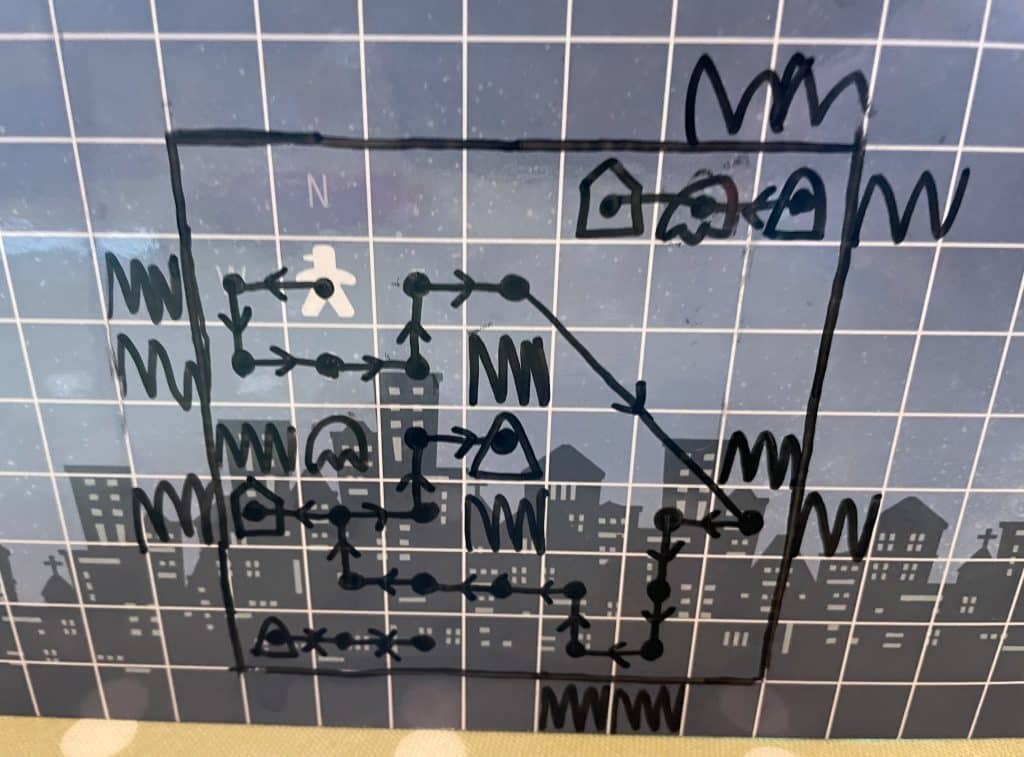
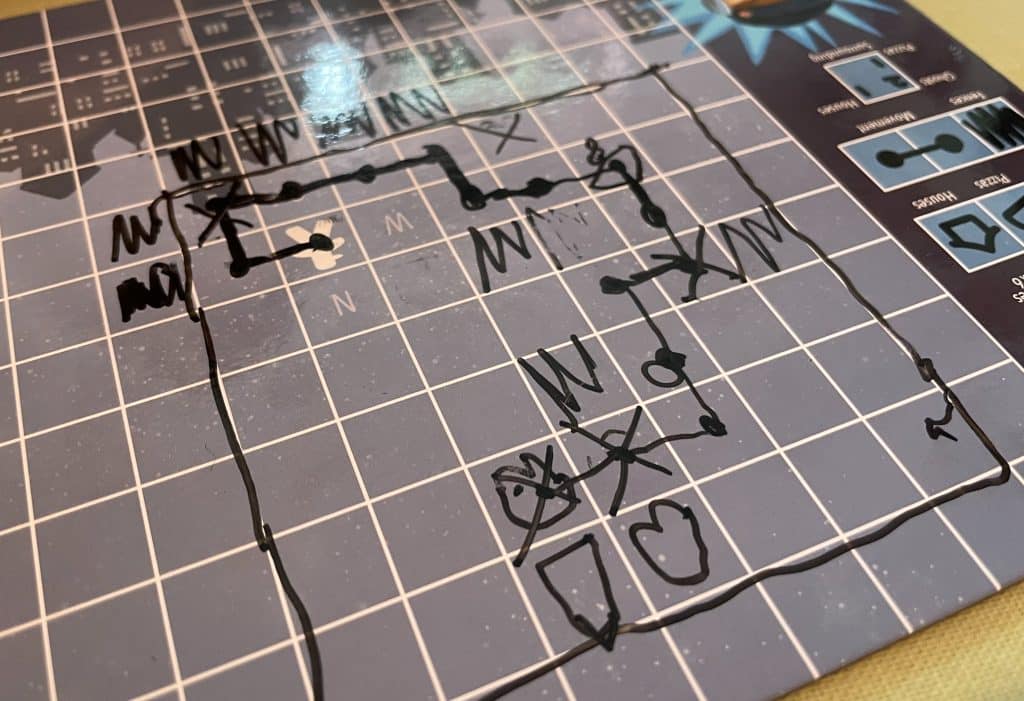
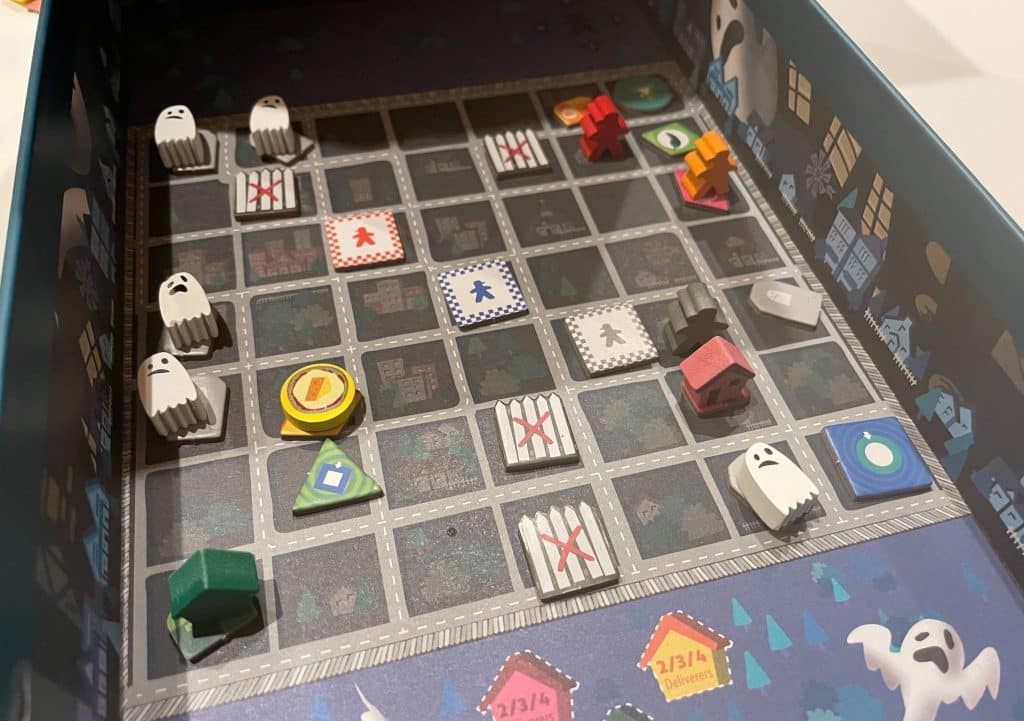
Before the game begins the mayor will construct a town behind a screen, then give each player a different starting point in the town. The players each have a grid on a laminated board and will construct the map of the town as they feel their way around: on each turn they have three options: move, attack, or use a psychic power. When they try and move – always one space orthogonally on the grid – the mayor will tell them if they are successful (ie that direction isn’t blocked) and what now surrounds them in their new location – but not precisely where these things are. For example, you might be told you’re adjacent to a ghost and a house. Ghosts can be attacked to get them out of the way, and successfully doing so awards you a psychic power card that can be played as a one-off special ability.
Your goal as one of the Psychic Pizza Deliverers is to first find a pizza, and then deliver it, and each pizza has to go to a specific house. As the game continues, players may start to see where their individual maps overlap, giving everyone a bigger picture of the ghost town as you combine knowledge. What’s in your way – as well as ghosts – are warp spaces that ping you to somewhere new, and the fact you’re basically stumbling around in the dark. The players have 20 turns to successfully deliver a pizza, and the first person to do so wins the game. If nobody manages to do so, the mayor wins!
Sam says
While it’s competitive (except for the mayor) it’s a game hugely dependent on arbitrary luck, and not one that will satisfy players who want to engage in some puzzly, cognitive thinking. However I’ve played with both kids and adults and it’s been a hit each time: as the title suggests, it’s not meant to be taken seriously, and for all its capriciousness and whimsy, seems to facilitate a fun time regardless.
-

Take That!
No direct interaction, and players can in fact help each other by sharing map knowledge.
-

Fidget Factor!
Very low.
-

Brain Burn!
There’s a spatial puzzle here, but you can spend much of the game flailing about and bumping into things.
-

Again Again!
There are multiple set-ups and some variant tiles in the box.


