
Big City
Designed by: Franz-Benno Delonge
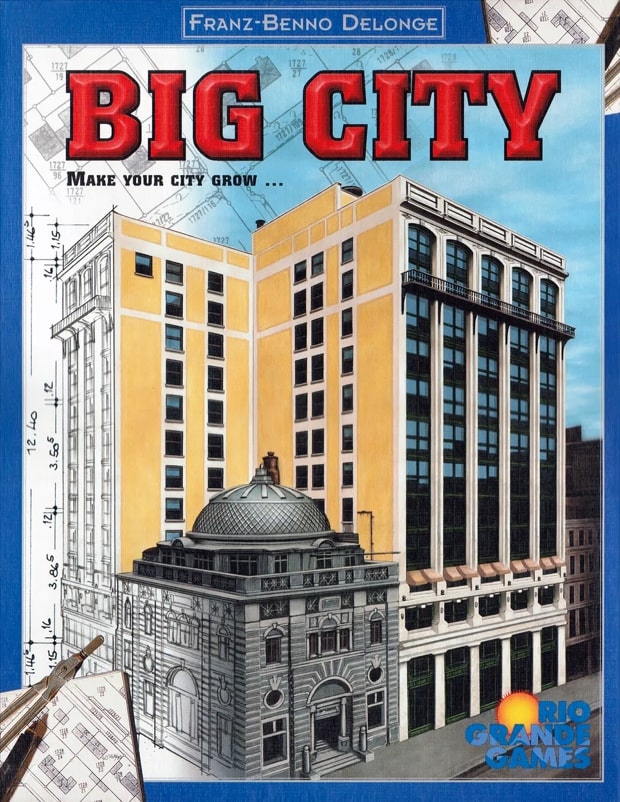
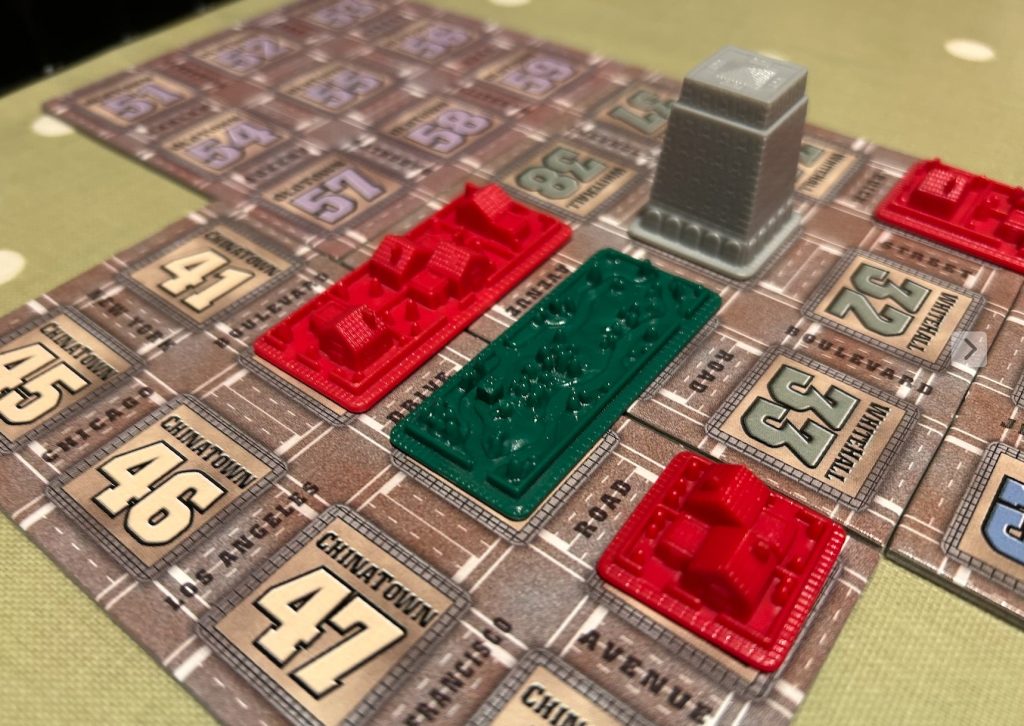
Big City is a game from – just about – the last century, hailing from Germany in 1999. Whilst the years since have seen an explosion of titles from publishers and crowd-funding, oftentimes the games produced have steered away from interaction and towards a gentler, non-combative vibe. Big City takes that genteel approach and slaps a big ol’ building code violation on it.
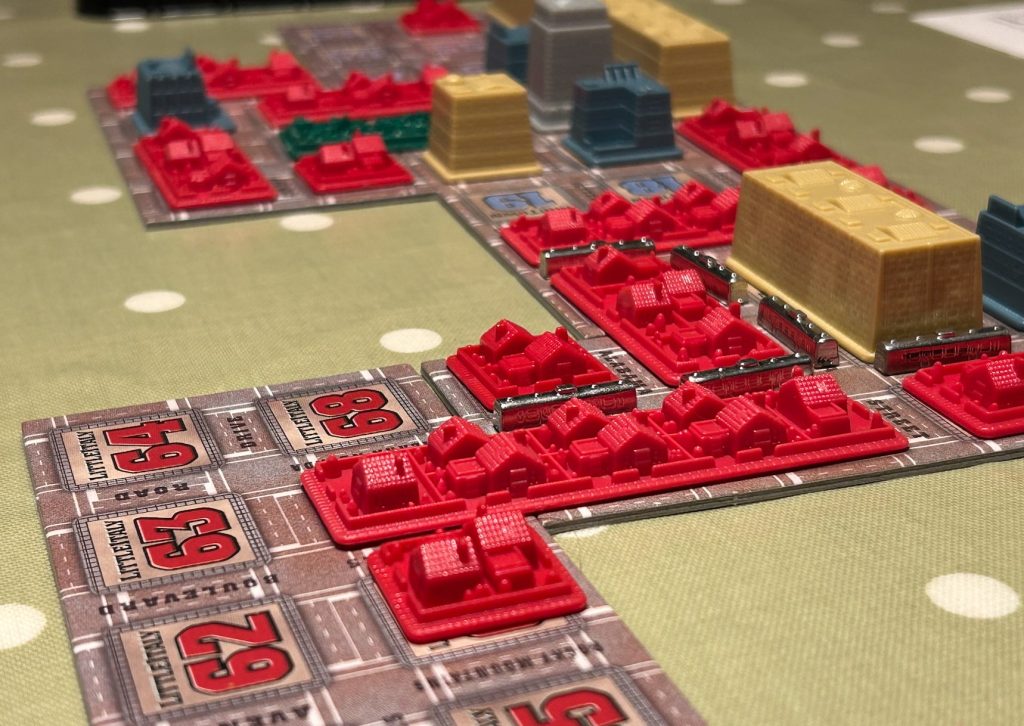
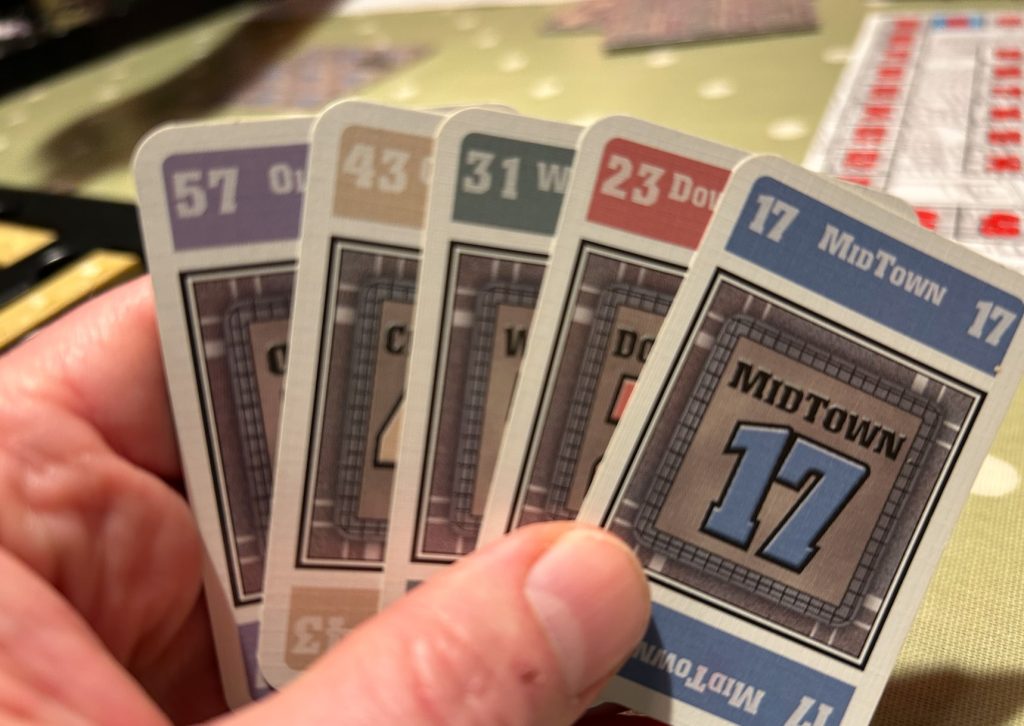
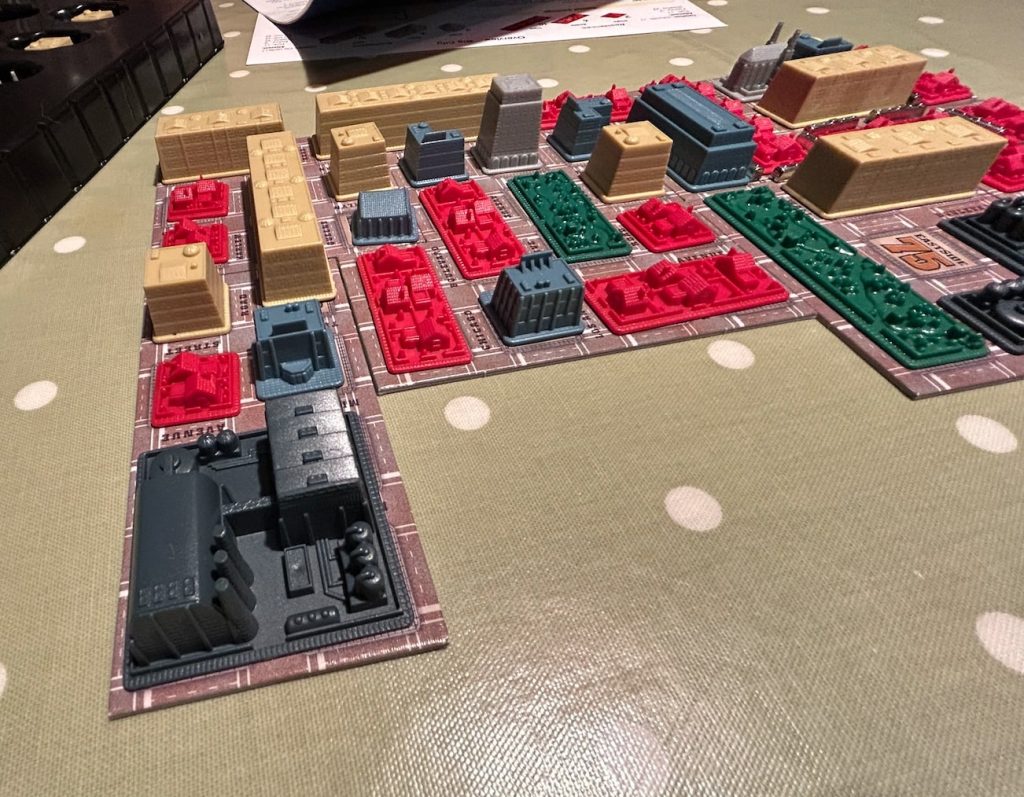
The board is a modular thing, starting small with one neighbourhood and growing during the game as more are added. Players are responsible for collectively building the city of the title, but competitively scoring, with an individual winner. This proceeds through the playing of property cards, each of which matches a plot on the board and facilitates the placement of a new building, which come in various shapes and sizes. On your turn you can discard a card to construct a building on the matching plot. If you have two matching plots, you can discard both cards to construct a bigger building. Three matching plots: even better! Bigger buildings tend to score more points, especially when placed judiciously.
Each building scores in a particular way. Houses for example don’t want to be in the centre of the city, whereas businesses do. Post offices, Cinemas and Banks each have slightly different pre-requisites, and then there are a few other buildings such as City Hall, Factories and Shopping Centres that each desire a certain location – with escalating scoring for how criteria you achieve when building – as well as some mandatory needs in order to build them at all.
All this building costs you cards, but whenever you discard a card you can replenish for free: each part of the city’s neighbourhoods have their own matching deck, and as the neighbourhoods must be played in numerical order, you can predict to some extent which cards will be helpful when. You can sacrifice a turn to place the next neighbourhood, and while this means you’re not scoring points, you do get to place it wherever you like, so can use the opportunity to turn two solo plots into two adjacent ones. Plan ahead!
The other things you can do instead of building are exchanging cards – not ideal, but sometimes necessary – and extend the Streetcar, which runs through the city wherever the players choose to take it, as long as it doesn’t cross over itself. The purpose of the streetcar – beyond moving imaginary people around this tiny city – is to get it running alongside plots you intend to build on, as having a subway adjacent increases the points value of building there.
Neighbourhoods (8) and Properties (74) are finite: as soon as the last possible property is built and all players have passed, the game will end, and the player with the most points wins.
Sam says
With its confection of little plastic houses and churches, Big City may look fairly harmless. And the rules don’t overtly suggest that playing it can be brutal – but it totally can. Your issue is that you really want to do at least two things on each turn, and you’re limited to one. Mixed into the card decks are also a couple of parks, which can be irritating for the player who picks them up – they don’t score any points – but even more so for others, as they can be placed anywhere in the city and make a few of the property cards worthless. But at least they increase the value of buildings next to them… Conversely, the pointless Factories are also a spoiler, as they pretty much devalue everything around them. But while the other players may be harpooning your architectural dreams, fate itself can regularly gift you hands of single-plot cards that don’t combine well. The challenge is to navigate these slings and arrows as best you can, whilst also keeping a watchful eye on what opponents are up to, and making sure you do your best to prevent them from hauling in a huge catch of points from that Shopping mall…
-

Take That!
There is so much potential for passive aggression here, the game practically needs a therapy building. But you could easily house-rule a couple of sharper edges away for a friendlier, less combative experience.
-

Fidget Factor!
With a bit of familiarity, turns tend to move along reasonably fast.
-

Brain Burn!
Big City won’t melt anyone’s mind with the basics, but the building considerations will need referencing and there’s an element of a spatial puzzle to playin
-

Again Again!
If the overall experience remains pretty constant, it’s an entertainingly spicy one and there’s plenty of randomness in the smaller beats of the game.


