
Samarkand
Designed by: Sid Sackson
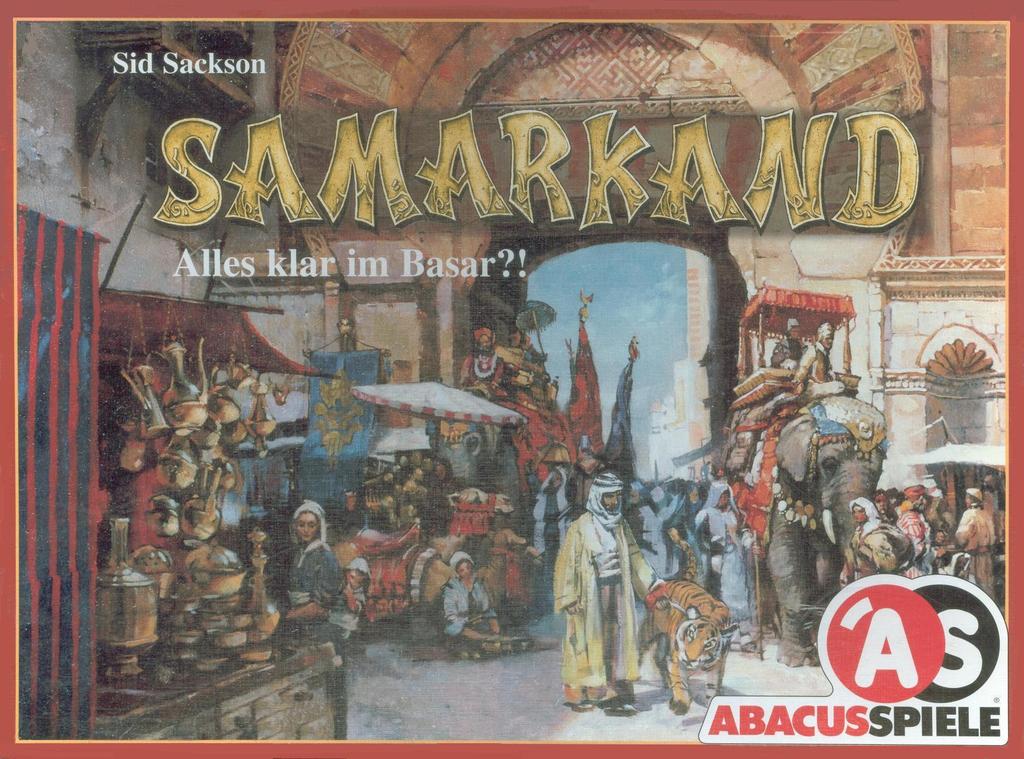
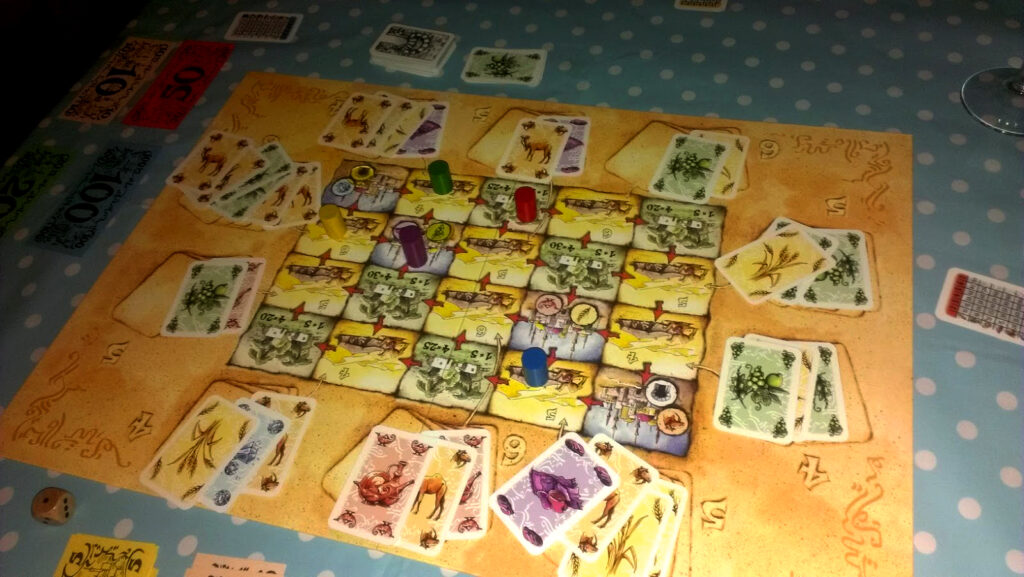
Samarkand is a game of buying, selling and trading. Players take the roles of Arabian merchants, moving around the board and stopping at three different types of places: nomad camps, oases and cities. When and where you travel will ultimately decide your success; as the different locations give you a different action, involving the cards: these represent different commodities, from wheat to camels to jewels. Each player begins with 200 piaster and their aim is to be the first to break 500p.
Oases allow you to buy cards from the deck. Nomad camps allow you to trade with the nomads there: giving them goods in exchange for what the camp offers, although they cost you a card just to pass through. And cities allow you to sell goods; either in sets-of-a-kind, or a less rewarding one-of-each deal. So far, so simple. But when a Nomad camp fills up with goods, the nomads will sell everything in the camp to you for a mere 10p – so timing the moving of your merchant (when, where) needs to be factored in to your thinking too, as you want to beat the other players to these valuable opportunities.
The locations on the board are broken up by directional arrows which the players must obey. They can either move one or two spaces on their turn, or they can pay 5p and roll a die to determine movement. The results can be from 1-5, or a symbol that tells you to move back one space (i.e. against the flow of the arrows). This introduces an element of risk-taking: if you roll the die you must obey it, taking no more and no less movements than the result.
Finally there are also chits to mark what has been sold in which city most recently. These move around the board as sales are made, and selling to a city that’s just had a delivery of the same resource is less profitable. Samarkand has a simple move-and-action rhythm to it, but it’s subtler than it first appears.
Sam says
Fun is a wildly subjective component of course, and can take many forms, even to the same individual. But I found Samarkand slightly creaking with age: whilst it compares favourably to the likes of Monopoly, for what it is it feels a bit long: lacking in interaction and slightly draggy: for every fist-clenching turn there are a lot of rote ones. I think Istanbul does the movement of Samarkand in a more accessible (and attractive) way; and for trading I’d rather the more absorbing and interactive likes of Genoa or Catan.
-

Take That!
The game is about trading but the player's don't actually trade with each other - so the Take That element is low. But there are potential spoiler moves for the eagle-eyed; or those able to keep track of what resources the other players are buying and selling. Trailing around after other players, for instance, can be more profitable than having a player following you!
-

Fidget Factor!
Low
-

Brain Burn!
Low to moderate. You can sit down and play with not much thought, and if you're lucky with the cards, even win doing so. But repeated plays will reveal there are strategies to Samarkand.
-

Again Again!
After that first play Samarkand is a fast-moving experience, and the fall of the cards guarantee randomness.


